Portable Car Battery Chargers for Wholesale Buyers

Get a Free Quote

Our representative will contact you soon.
Email
Mobile
Name
Company Name
Products of Interest
Message
0/1000

Battery charger for car portable

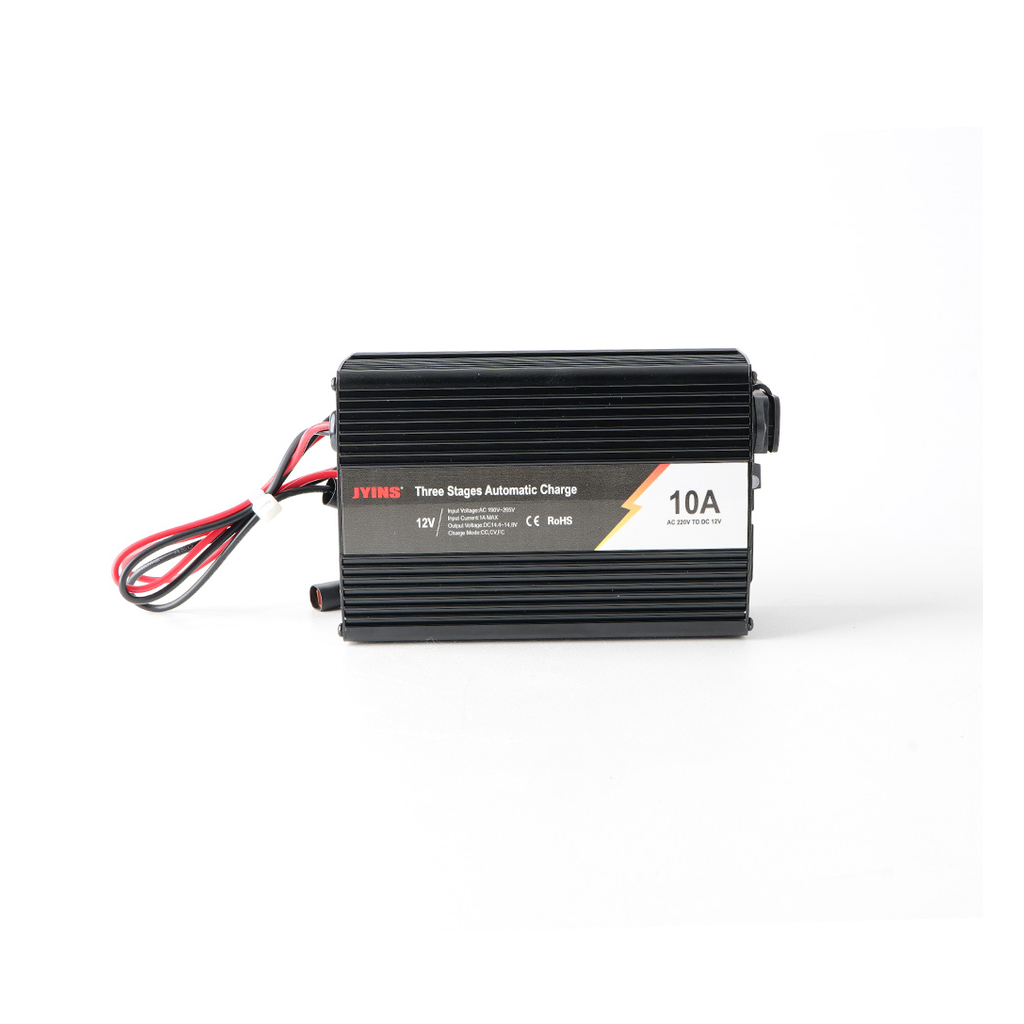
Portable car battery chargers are essential tools for both individual motorists and businesses that rely on vehicles. They provide a convenient solution for jump-starting a car or maintaining battery health, especially in off-grid or emergency situations. For B2B buyers, understanding what to look for in a portable car battery charger is crucial, as they seek reliable, high-quality products that meet specific operational needs. This article will guide you through key considerations for choosing portable car battery chargers, ensuring that you make informed purchasing decisions. 

Our Products

Evaluating Quality in Portable Car Battery Chargers for Distributors

Evaluating Quality in Portable Car Battery Chargers for Distributors

Distributors play a vital role in ensuring the quality of portable car battery chargers. Start by examining the product specifications provided by manufacturers, focusing on performance metrics such as charging speed, battery capacity, and compatibility with different battery types (lead-acid, lithium-ion). 

Quality control processes are another crucial consideration. Confirm that the manufacturer conducts rigorous testing throughout production, including functional tests and safety assessments, to mitigate defects. A reputable manufacturer will often provide documentation or certification confirming that the products meet industry standards. 

Additionally, inquire about the supply chain and sourcing of materials. High-quality components lead to better performance and longevity. Distributors should also consider the manufacturer's ability to provide consistent product variations to meet diverse market needs, as well as their capacity for customization based on specific client requirements. 

Lastly, establishing a solid communication channel with the manufacturer can enhance the quality assurance process. Regular updates on product development and feedback on market trends can ensure that distributors are equipped to meet customer demands effectively. 
Cost Factors to Consider When Purchasing Portable Car Battery Chargers

Cost Factors to Consider When Purchasing Portable Car Battery Chargers

Cost is a significant factor for buyers looking to purchase portable quick car battery charger. Several elements influence pricing, starting with the materials used in manufacturing. Chargers made from premium materials may initially cost more but often provide better durability and performance, leading to long-term savings. 

Another consideration is the technology integrated into the chargers. Advanced features like smart charging capabilities, fast charging options, and built-in safety mechanisms may increase the initial purchase price but can reduce maintenance costs and enhance user satisfaction over time. 

Volume discounts can also affect pricing. When ordering in bulk, buyers should negotiate terms with manufacturers to secure better rates. Understanding the minimum order quantities (MOQ) and lead times is essential, as these can impact overall costs and inventory management. 

Moreover, consider the potential hidden costs, such as shipping fees, customs duties, and tariffs, particularly for international orders. By factoring in these elements, buyers can make more informed financial decisions and avoid unexpected expenses. 

Common Problems with Portable Battery Chargers and Their Solutions

Common Problems with Portable Battery Chargers and Their Solutions

Portable battery chargers can encounter various issues that may affect performance. One common problem is overheating during use, which can damage both the charger and the vehicle’s battery. To mitigate this, ensure that chargers are equipped with thermal protection features and encourage users to follow manufacturer guidelines regarding usage duration. 

Another issue is compatibility with different battery types. Chargers designed primarily for lead-acid batteries may not perform optimally with lithium-ion batteries. It's essential for buyers to verify that the chargers they select are suitable for the specific battery technologies used in their applications. 

Additionally, users may face difficulties with charger connectors not fitting securely into battery terminals. Buyers should look for chargers that feature universal connectors or multiple connector options to ensure compatibility with a wide range of vehicles. 

Finally, consider the importance of user manuals and technical support. Providing clear instructions and access to customer service can help resolve issues quickly and enhance user satisfaction. 

Applications of Portable Car Battery Chargers in Various Industries

Portable car battery chargers have applications across multiple sectors, including automotive, agriculture, and emergency services. In the automotive industry, these chargers are invaluable for mechanics and service providers who need to maintain vehicle batteries efficiently, especially in remote locations without easy access to power. 

In agriculture, portable chargers can be utilized for various farming equipment that relies on battery power, ensuring that machinery remains operational during critical periods. This can be particularly beneficial for farmers working in off-grid environments. 

Emergency services also benefit from portable automatic battery charger for car. They provide a reliable solution for jump-starting vehicles in rescue operations or during natural disasters when traditional power sources may be unavailable. The ability to charge batteries on-site can significantly enhance response times and operational efficiency. 

Moreover, industries that rely on fleet management can utilize portable chargers to maintain battery health across their vehicles, reducing downtime and improving overall productivity. By understanding the versatile applications of portable car battery chargers, buyers can better assess their needs and select the right products for their specific industry requirements. 

What to Look for in a Portable Car Battery Charger for Wholesale

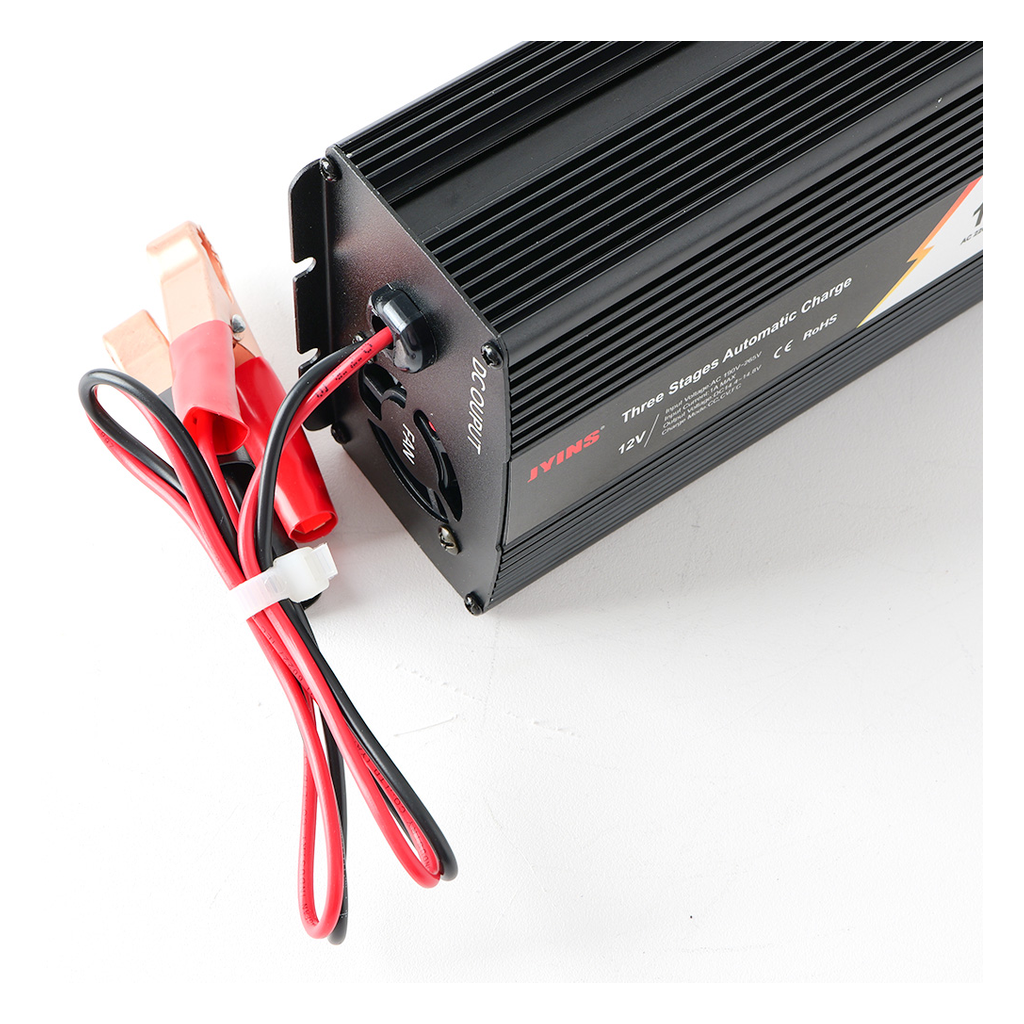
When sourcing portable car battery charger for wholesale, buyers should consider several critical factors. First, ensure the charger has the appropriate voltage and amperage ratings compatible with the vehicles you intend to service. Common ratings include 12V for standard vehicles and higher outputs for larger trucks or machinery. 

Next, evaluate the construction materials. High-quality chargers often feature durable plastic or metal enclosures that can withstand the rigors of transport and use. Look for weather-resistant designs if the chargers will be used outdoors or in harsh environments. 

Another key aspect is the charger's safety features. Overload protection, short circuit protection, and temperature control mechanisms are essential to prevent accidents and damage to both the charger and the vehicle. Additionally, consider chargers with smart technology that can automatically adjust the charging rate based on battery condition, enhancing battery lifespan. 

Finally, assess the manufacturer's reputation and compliance with international standards, such as ISO9000, which guarantees adherence to quality assurance processes. This is especially relevant for companies like Zhejiang Jyins Electrical Co., LTD, known for producing high-quality off-grid solar products and adhering to strict quality standards. 

Frequently Asked Questions

What is this portable car battery charger used for?

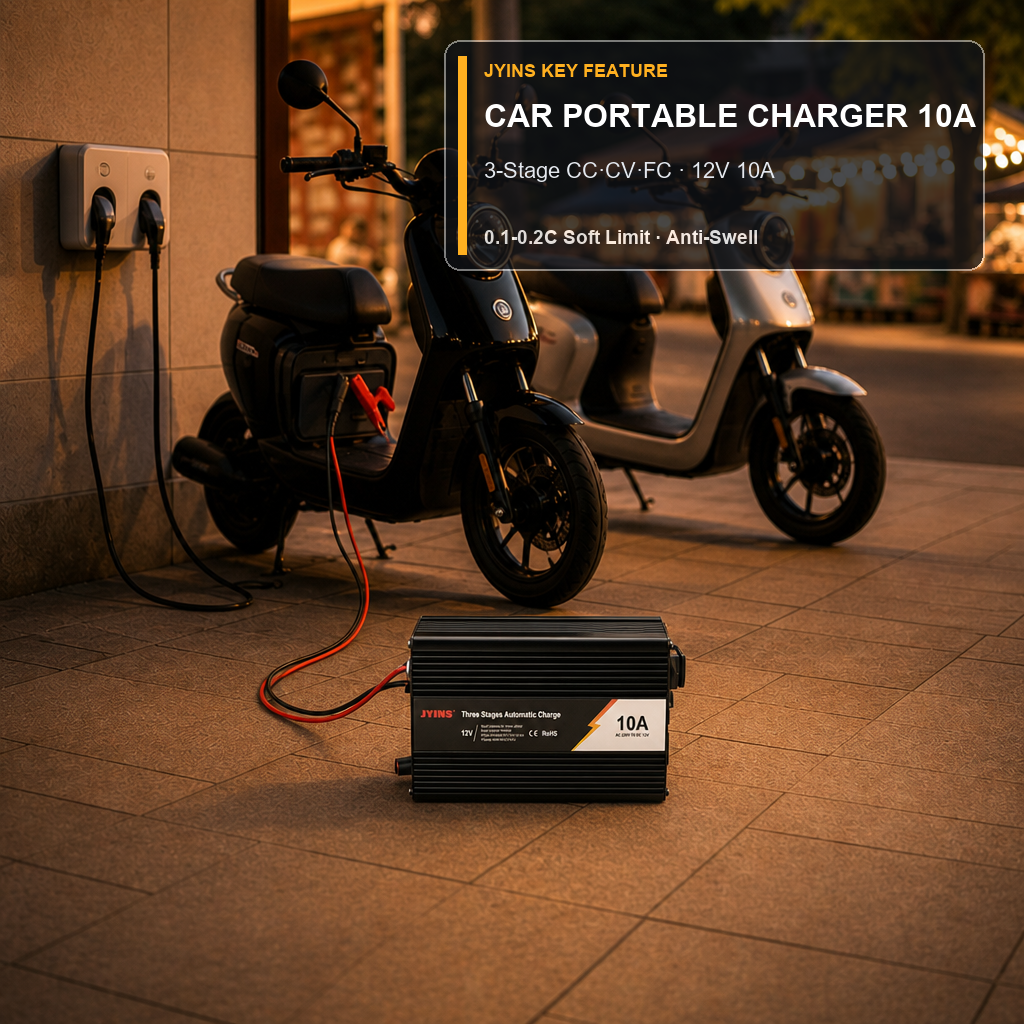
This portable car battery charger is designed to recharge and maintain 12V vehicle batteries, support jump-starts, and provide safe charging for cars, trucks, motorcycles and other small vehicles.
Yes. It supports common lead-acid battery types including wet, AGM and GEL. Always check the charger label for battery type settings before use.
Place charger on stable surface, switch off vehicle, connect red clamp to positive and black to negative, select correct mode, then power on. Follow safety warnings and avoid sparks or reversed polarity.
Built-in protections include reverse polarity, short circuit, overcharge, overheat and spark protection to ensure safe, reliable charging and extend battery life.
We offer factory-backed warranty and technical support from Zhejiang Jyins Electrical Co., LTD. Contact our service team for troubleshooting, warranty claims and replacement guidance.

Our Blog Posts

Marine Power Standards: Why Neutral-to-Ground Bonding and Galvanic Isolation are Non-Negotiable for Marine Wholesalers

15

May

Marine Power Standards: Why Neutral-to-Ground Bonding and Galvanic Isolation are Non-Negotiable for Marine Wholesalers

Introduction: The High Stakes of Marine Power Management For marine wholesalers and distributors, the maritime industry presents a unique set of challenges that go far beyond standard electrical distribution. When supplying power solutions for luxury...
View More
Future-Proofing Solar Arrays: How MPPT Charge Controllers Maximize Energy Yield in Variable Industrial Climates

15

May

Future-Proofing Solar Arrays: How MPPT Charge Controllers Maximize Energy Yield in Variable Industrial Climates

Introduction: The Evolution of Industrial Solar Management In the rapidly maturing landscape of industrial solar energy, the focus has shifted from simple 'green transition' to 'yield optimization.' For solar installers and B2B energy procurement man...
View More
Selecting Inverters for Seismic Zones: Evaluating mechanical anchorage and internal PCB shock-resistance.

24

Jun

Selecting Inverters for Seismic Zones: Evaluating mechanical anchorage and internal PCB shock-resistance.

Structural Challenges of Solar Installations in Seismic Zones Commercial solar and energy storage installations located in active seismic zones face severe mechanical challenges during earthquakes. When ground movement occurs, buildings and ground-mo...
View More
How to design a 'Micro-UPS' system for industrial PLC control panels using DC-AC inverters?

25

Jun

How to design a 'Micro-UPS' system for industrial PLC control panels using DC-AC inverters?

Q: How to design a 'Micro-UPS' system for industrial PLC control panels using DC-AC inverters? Introduction: The Vulnerability of Industrial Automation In modern manufacturing plants, petrochemical facilities, and municipal water treatment works, Pro...
View More

Get a Free Quote

Our representative will contact you soon.
Email
Mobile
Name
Company Name
Products of Interest
Message
0/1000
Portable Car Battery Chargers for Wholesale Buyers

Get a Free Quote

Our representative will contact you soon.
Email
Mobile
Name
Company Name
Products of Interest
Message
0/1000