EN
EN


Introduction: The Evolution of Industrial Solar Management
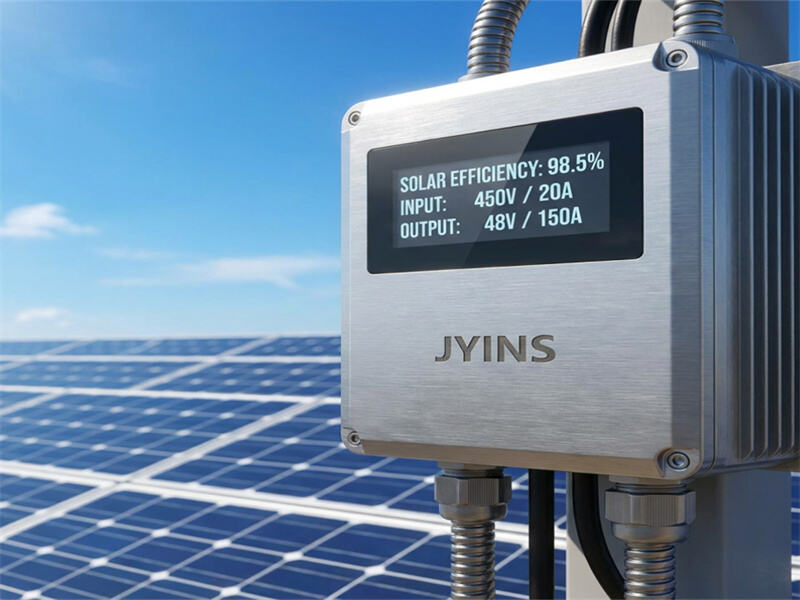
In the rapidly maturing landscape of industrial solar energy, the focus has shifted from simple 'green transition' to 'yield optimization.' For solar installers and B2B energy procurement managers, the hardware choices made today determine the financial viability of a solar array for the next two decades. Among these choices, the solar charge controller stands as the critical gatekeeper between energy harvesting and energy storage.
As global weather patterns become increasingly unpredictable, industrial climates are no longer 'fixed variables.' From the overcast regions of Northern Europe to the scorching, dust-heavy environments of the Middle East, solar arrays must adapt in real-time. This article explores why Maximum Power Point Tracking (MPPT) technology has become the non-negotiable standard for future-proofing industrial solar arrays, and how brands like JYINS (Hisolar) are leading this technical shift.
The Physics of Efficiency: How MPPT Outperforms PWM
To understand the future of energy yield, we must first address the legacy technology: Pulse Width Modulation (PWM). While PWM controllers served their purpose in smaller, simpler systems, they operate on a fundamental limitation. A PWM controller is essentially a switch that connects the solar array to the battery. To work efficiently, the array voltage must be matched closely to the battery voltage. Any excess voltage from the panels is essentially discarded, leading to significant energy loss.
In contrast, MPPT (Maximum Power Point Tracking) technology functions more like a sophisticated, multi-stage DC-to-DC converter. It constantly monitors the V-I curve (Voltage vs. Current) of the solar panels. By adjusting the input voltage and current to find the 'Maximum Power Point' (Pmax), an MPPT controller can harvest the full potential of the panels.
For a professional installer, the numbers are compelling. An MPPT controller can increase energy yield by 20% to 30% compared to a PWM unit in identical conditions. In a large-scale industrial setting where every kilowatt-hour counts toward the Return on Investment (ROI), this efficiency gap translates into thousands of dollars in annual savings.
Climate Resilience: Performance in Low Light and Extreme Heat
Industrial sites are rarely situated in perfect solar conditions. They are often subject to partial shading, dust accumulation, and extreme temperature fluctuations—all of which affect the output voltage of solar panels.
1. Variable Cloud Cover and Low Light: On overcast days, the voltage of a solar panel drops. A PWM controller may struggle to charge the battery at all if the panel voltage falls near the battery voltage. An MPPT controller, however, can step down the voltage (if high) or optimize the lower voltage to maintain a consistent charge, ensuring that even minimal sunlight contributes to the system's storage.
2. Extreme Heat and Voltage Sag: It is a common misconception that more heat equals more power. In reality, as solar panels heat up, their output voltage decreases. In industrial 'heat islands,' this voltage sag can cripple a PWM-based system. MPPT controllers compensate for this by tracking the shift in the power point, maintaining high efficiency even when the panels are operating at 60°C or higher.
The Strategic Value for Solar Installers
For B2B buyers and installers, the shift to MPPT is not just about efficiency; it's about system design flexibility. Because MPPT controllers can handle higher input voltages (often up to 150V or 250V depending on the model), installers can wire solar panels in long series strings.
Benefits of Series Wiring:
- Reduced Cable Costs: Higher voltage means lower current for the same power. This allows for thinner, less expensive copper wiring over long distances.
- Labor Efficiency: Series strings are faster to install than complex parallel configurations required by PWM systems.
- Future Scalability: Adding more panels to an MPPT-managed system is significantly simpler, as the controller can automatically adjust to the new power parameters.
JYINS MPPT Solutions: Precision Engineering for Global Markets
At JYINS (Zhejiang JYINS Electrical Co., LTD), we recognize that industrial reliability is the cornerstone of B2B trust. Our MPPT charge controllers, marketed under the Hisolar brand, are engineered to meet the rigorous demands of variable climates.
Key features that define our industrial-grade MPPT units include:
- 99.5% Tracking Efficiency: Advanced algorithms that ensure the maximum power point is located in milliseconds.
- Wide MPPT Voltage Range: Allowing for diverse panel configurations and maximizing yield from dawn to dusk.
- Robust Thermal Management: High-quality heat sinks and internal airflow designs that prevent thermal throttling in harsh environments.
- Smart Communication Ports: Support for RS485 and Bluetooth monitoring, essential for industrial managers overseeing decentralized arrays.
Conclusion: The Strategic Value of Advanced Power Management
Future-proofing a solar array is an exercise in risk mitigation. By choosing MPPT technology, industrial managers are protecting their infrastructure against climate variability and ensuring the highest possible energy density per square meter of panel space.
While the initial capital expenditure (CAPEX) for an MPPT controller may be higher than a PWM alternative, the operational expenditure (OPEX) savings and increased yield ensure that the device pays for itself within the first few years of operation. For professional installers, recommending a JYINS MPPT solution is a commitment to long-term reliability and client satisfaction. In the world of industrial energy, the smartest path forward is the one that tracks the sun with the most precision.
Table of Contents
- Introduction: The Evolution of Industrial Solar Management
- The Physics of Efficiency: How MPPT Outperforms PWM
- Climate Resilience: Performance in Low Light and Extreme Heat
- The Strategic Value for Solar Installers
- JYINS MPPT Solutions: Precision Engineering for Global Markets
- Conclusion: The Strategic Value of Advanced Power Management