Key Specifications for 12V Automotive Battery Chargers

Get a Free Quote

Our representative will contact you soon.
Email
Mobile
Name
Company Name
Products of Interest
Message
0/1000

battery charger 12v automotive

Understanding automotive battery chargers is  essential for businesses that  rely on vehicle performance and maintenance.  Specifically,  a  battery charger 12v automotive plays a  crucial role in  keeping vehicles  operational by ensuring  their batteries  are fully  charged  and ready  for use. B2B buyers, including  purchasing managers and engineers,  often have concerns  about the technical  specifications, quality, and installation  of these battery chargers. This article aims  to clarify these aspects, helping  you make informed purchasing decisions.

Where to Source Reliable 12V Automotive Battery Chargers for Resale

Sourcing quality 12V automotive battery chargers involves careful  consideration of suppliers. Here are some vital steps:


Research  Manufacturers: Identify manufacturers who specialize in automotive electrical products. Look for  companies like Zhejiang Jyins Electrical Co.,  LTD, known for adhering to ISO9000  standards, ensuring product quality.

Evaluate Production Capabilities: Assess the production capabilities of potential suppliers.  Companies with  advanced manufacturing technologies and stringent quality control processes  are  more likely to deliver reliable products.

Request Samples: Before placing  large orders, request samples to evaluate performance and compatibility with your specific  battery types. This step is critical in ensuring that the charger meets your operational requirements.

Review Warranty and Support: A good warranty and reliable customer  support can be indicators of a manufacturer’s confidence in their product. This is especially important for long-term investments like battery  chargers.

Check Export Markets: Suppliers with experience in international  markets  may be more reliable, as they have navigated various  regulatory environments and quality  expectations.

By following these  steps, you can better ensure that you are sourcing quality products that will serve your  business needs effectively.
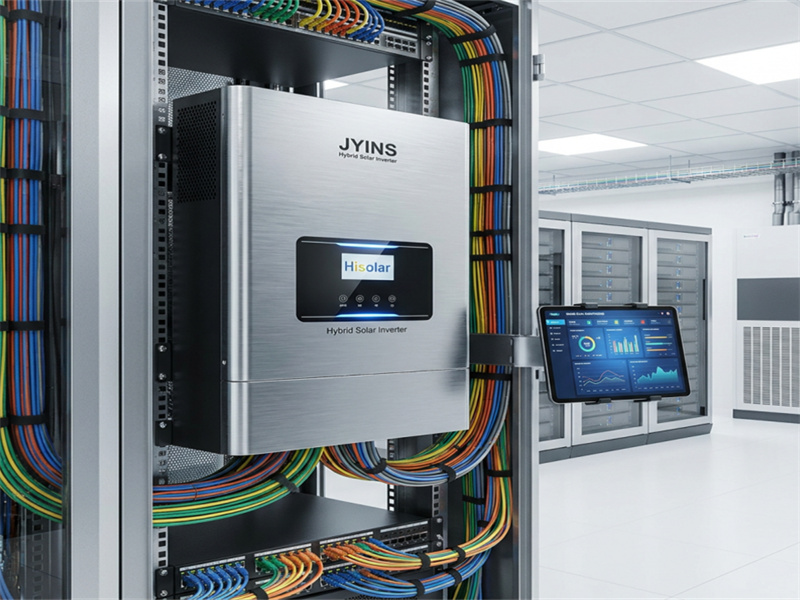
Common Installation Challenges with 12V Automotive Battery Chargers

Evaluating  the quality of 12V automotive battery chargers involves several practical  steps:

Inspect Technical Specifications: Review the charger’s technical specifications against your requirements.  Ensure that  the  charging current,  voltage regulation, and safety features align with industry standards.

Conduct Performance Testing: Once you have a  sample, conduct performance tests under real-world conditions. Monitor  charging times, heat  generation, and any fluctuations in performance to determine reliability.

Review User Feedback: Customer reviews and feedback can provide insight into long-term performance and potential issues. Look for testimonials specifically related to the charger’s  durability and efficiency.

Quality Control Processes: Inquire about  the manufacturer’s quality control processes. A robust quality assurance system, such as ISO9000, indicates a  commitment to maintaining  high production  standards.

Assess Packaging&nbsp; and&nbsp; Shipping:&nbsp; Quality packaging protects&nbsp; the&nbsp; charger during shipping. Ensure that the supplier has a reliable logistics process to prevent damage during transport.<a href="/10kwh-stacked-battery-energy-storage-system--lifepo4-home-solar-battery-512v-ip65"> 10kWh Stacked Battery Energy Storage System   is an excellent example of quality packaging.


By thoroughly evaluating these factors, you can confidently assess the quality of prospective battery chargers.

Evaluating the Quality of 12V Automotive Battery Chargers for Bulk Orders

Proper installation&nbsp; of 12V automotive battery&nbsp; chargers is crucial&nbsp; for ensuring safety&nbsp; and optimal performance. Here are guidelines to follow:

Read the&nbsp; Manual:&nbsp; Always&nbsp; start by reading the&nbsp; manufacturer's installation&nbsp; manual,&nbsp; which provides specific&nbsp; instructions tailored to the&nbsp; model you are using.

Prepare the Installation Site: Ensure that the installation area is dry, well-ventilated, and free from flammable materials. This reduces the risk of accidents during operation.

Use Correct Connections: Follow the polarity guidelines&nbsp; when connecting the charger to the battery.&nbsp; Incorrect connections can lead to short circuits and damage.

Secure Mounting: If&nbsp; the charger is intended for permanent installation, ensure it is&nbsp; mounted securely to prevent movement during operation.

Regular Maintenance Checks: After installation, regularly check connections and charger operation. Look for signs of wear or overheating, and&nbsp; perform necessary maintenance to ensure longevity.

By adhering to&nbsp; these installation guidelines, you can enhance the safety and efficiency&nbsp; of&nbsp; your battery charging operations.

Understanding the Applications of 12V Automotive Battery Chargers

12V automotive battery chargers have diverse applications across various&nbsp; industries:

Automotive Repair Shops: These&nbsp; chargers are essential for&nbsp; mechanics who need to ensure that vehicles are operational after repairs. Having reliable chargers on hand can expedite service times.

Fleet Management: Companies managing fleets of vehicles benefit from 12V chargers to maintain battery health, ensuring that vehicles are always ready for use.

Agricultural Equipment: Many&nbsp; agricultural vehicles and&nbsp; equipment use 12V&nbsp; batteries. Chargers&nbsp; help maintain these&nbsp; batteries, especially during off-seasons&nbsp; when they are not&nbsp; in regular use.

Marine Applications: Boats&nbsp; and other marine vehicles often utilize 12V systems.&nbsp; Chargers designed for marine environments can enhance battery life and performance.

Emergency Services: First responders rely on fully operational vehicles. Having dedicated chargers ensures that emergency vehicles are always ready for action, highlighting the critical nature of battery maintenance.

By understanding these applications, businesses can better&nbsp; incorporate 12V automotive&nbsp; battery chargers into&nbsp; their operational workflows, enhancing efficiency and readiness. <a href="/product-hisolar-wholesale-jymu-3000w-uninterruptible-power-system-modified-sine-wave-jymu---3000"> Hisolar Wholesale JYMU 3000W Uninterruptible Power System   is an example of a product that fits these needs.

In summary, selecting&nbsp; and sourcing a quality battery charger requires a&nbsp; thorough&nbsp; understanding of specifications, sourcing practices, quality evaluation, installation guidelines, and potential applications. By&nbsp; following the advice outlined , you can make&nbsp; informed decisions that will benefit your operations and maintenance protocols.

Key Specifications of 12V Automotive Battery Chargers for Wholesale Buyers

When evaluating a&nbsp; 12V automotive&nbsp; battery charger, several key specifications should be prioritized:

Charging Current: This is usually measured in amperes (A). A charger with higher amperage&nbsp; will&nbsp; charge the battery faster. However, it’s essential to match this with the battery’s capacity to avoid overheating or damage.

Voltage Regulation: Proper voltage regulation&nbsp; is crucial to prevent overcharging.&nbsp; Look for chargers&nbsp; that offer automatic shut-off features or smart charging technology&nbsp; to&nbsp; maintain optimal battery health.


Compatibility: Ensure the charger is compatible with the specific&nbsp; types of batteries used in your vehicles, whether they be lead-acid, AGM, or lithium-ion.<a href="/solar-inverter"> Solar Inverters   can also be a great complement to your battery charging solutions.

Safety Features: Look for built-in&nbsp; safety&nbsp; features&nbsp; such as reverse polarity&nbsp; protection,&nbsp; short circuit protection, and thermal&nbsp; cut-off to enhance operational safety.

Portability: Depending on your application, the size and weight&nbsp; of the charger may be a&nbsp; factor. Portable options are beneficial for on-site charging needs.<a href="/product-hisolar-pep-s1500-portable-power-station-1856wh-battery-fast-charging-1500w-multiple-inputs-for-outdoor-work-for-solar-panel-car"> Hisolar PEP-S1500 Portable Power Station   is an excellent option for outdoor work.

Certifications: Check for compliance with international standards such as ISO9000, which ensures quality assurance and safety protocols are in place.

Understanding these specifications&nbsp; will help you select the right charger that meets both operational needs and safety standards.

Our Blog Posts

Hybrid Inverter Integration for Telecom: Managing RS485 Communication and Remote Power Reliability

15

May

Hybrid Inverter Integration for Telecom: Managing RS485 Communication and Remote Power Reliability

Hybrid Inverter Integration for Telecom: Managing RS485 Communication and Remote Power Reliability In the rapidly evolving landscape of global telecommunications, power reliability is the bedrock of connectivity. For telecom engineers and network ope...
View More
Sourcing Inverters for the USA Market: Understanding UL 1741 SA/SB Smart Inverter requirements.

24

Jun

Sourcing Inverters for the USA Market: Understanding UL 1741 SA/SB Smart Inverter requirements.

The Shift to Smart Inverters in the United States The solar energy landscape in the United States is highly lucrative, but it is also governed by some of the most stringent and rapidly evolving technical standards in the world. As the capacity of gri...
View More
Sourcing Inverters for Remote Maritime Buoys: Solving Reliability, Telemetry, and Multi-Source Energy Harvesting

24

Jun

Sourcing Inverters for Remote Maritime Buoys: Solving Reliability, Telemetry, and Multi-Source Energy Harvesting

Introduction: The Brutal Demands of Open-Ocean Power Systems Remote maritime buoys play a vital role in global oceanography, weather forecasting, maritime navigation, scientific research, and offshore oil and gas operations. Floating hundreds of mile...
View More
The engineering of 'Bidirectional' V2L (Vehicle to Load) inverters for commercial construction fleets.

25

Jun

The engineering of 'Bidirectional' V2L (Vehicle to Load) inverters for commercial construction fleets.

Q: The engineering of 'Bidirectional' V2L (Vehicle to Load) inverters for commercial construction fleets. Introduction: Redefining Mobile Power on Construction Sites Commercial construction sites are notoriously demanding environments in terms of pow...
View More

Get a Free Quote

Our representative will contact you soon.
Email
Mobile
Name
Company Name
Products of Interest
Message
0/1000
Key Specifications for 12V Automotive Battery Chargers

Get a Free Quote

Our representative will contact you soon.
Email
Mobile
Name
Company Name
Products of Interest
Message
0/1000