EN
EN


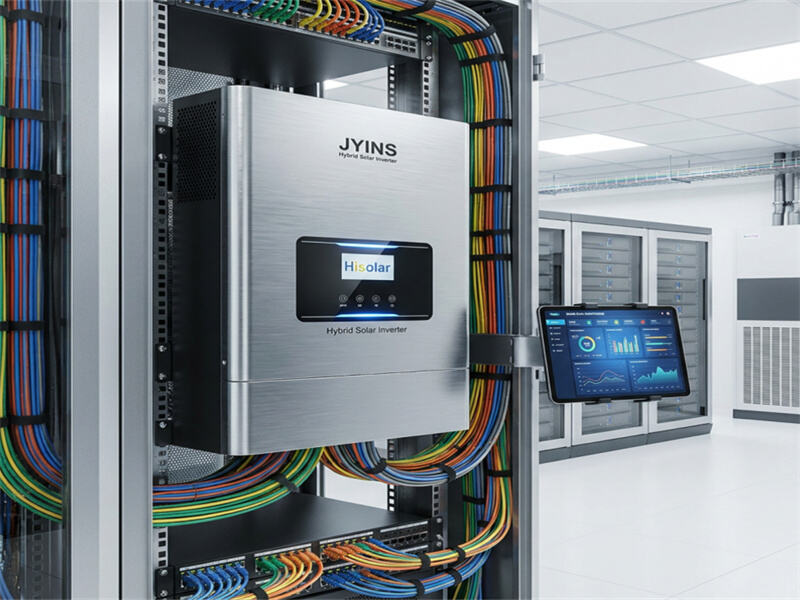
Hybrid Inverter Integration for Telecom: Managing RS485 Communication and Remote Power Reliability
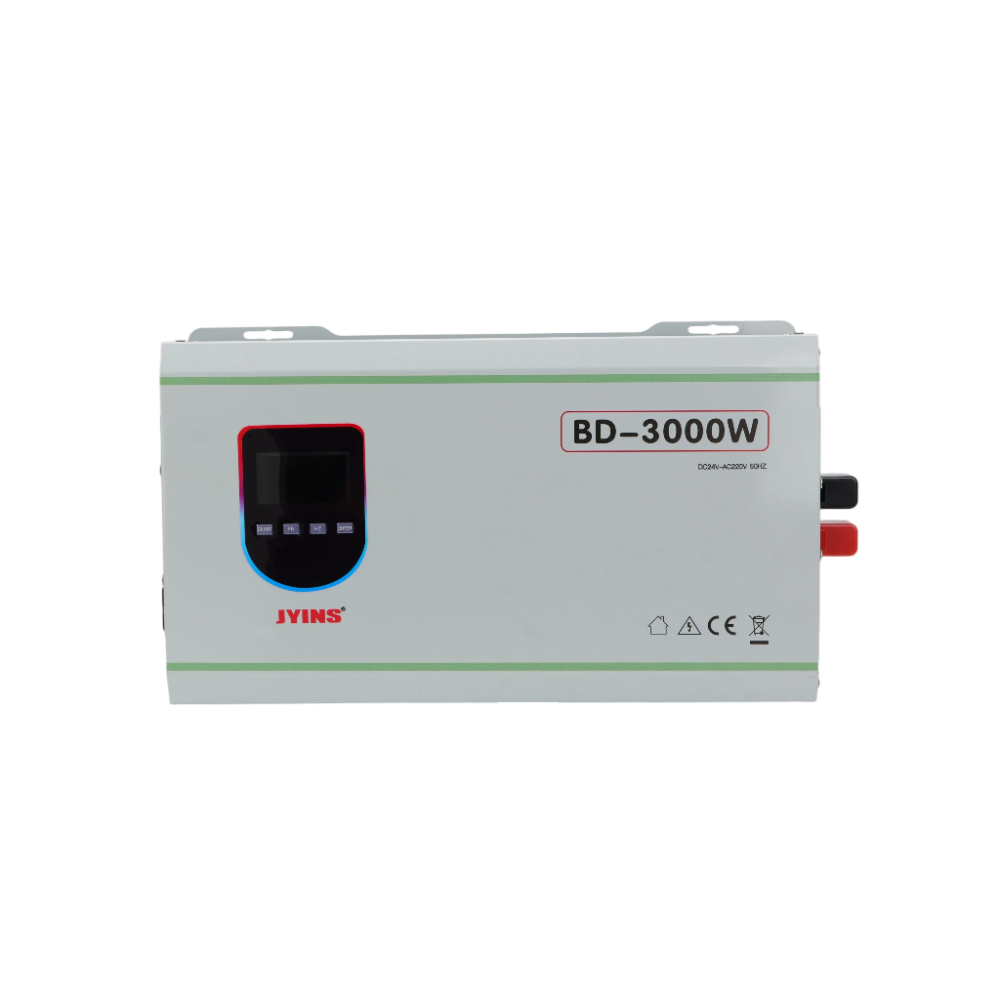
In the rapidly evolving landscape of global telecommunications, power reliability is the bedrock of connectivity. For telecom engineers and network operators, the challenge isn’t just providing power; it’s ensuring that power is consistent, efficient, and remotely manageable in some of the most challenging environments on earth. As the industry shifts toward greener solutions, the integration of hybrid inverters has become a strategic necessity. Among these, the JYINS Hisolar series stands out, specifically for its robust integration of the RS485 communication protocol—a critical feature for maintaining remote power reliability.
The Telecom Power Dilemma: Reliability vs. Remote Accessibility
Telecom base stations, particularly in rural or off-grid areas, face a dual challenge. They require 24/7 uptime to satisfy demanding Service Level Agreements (SLAs), yet they are often located in remote sites where grid power is either unstable or nonexistent. Traditionally, these sites relied heavily on diesel generators, which are costly to maintain and environmentally unfriendly.
Hybrid inverters solve this by blending multiple energy sources—solar, battery storage, and the grid or generators. However, a hybrid system is only as good as its management interface. This is where RS485 communication becomes the unsung hero of the telecom infrastructure.
Why RS485 is Critical for Telecom Hybrid Systems
RS485 (Recommended Standard 485) is an industrial communication standard that allows for the robust exchange of data over long distances and in electrically noisy environments. In a JYINS hybrid inverter setup, the RS485 interface serves as the primary data highway between the inverter, the Battery Management System (BMS), and the centralized monitoring system.
1. Long-Distance Data Transmission
In large telecom facilities, the power equipment might be separated by significant distances. Unlike RS232, which is limited to short runs, RS485 can transmit data up to 1,200 meters. This allows engineers to house monitoring terminals in climate-controlled environments away from the high-voltage inverter racks.
2. Multi-Device Networking (Daisy Chaining)
Telecom sites often utilize multiple inverters and battery banks to meet load demands. RS485 supports multi-point networking, allowing up to 32 (or more with repeaters) devices to communicate on a single two-wire bus. This simplifies wiring architecture and reduces the point-of-failure risks associated with complex cabling.
3. Noise Immunity
Telecom sites are high-EMI (Electromagnetic Interference) environments due to the presence of RF transmitters. RS485 uses differential signaling, which makes it highly resistant to common-mode noise. This ensures that the data reaching the remote monitoring station is accurate and untainted, which is vital for automated decision-making.
Maximizing Remote Power Reliability with JYINS Hisolar
At JYINS Electrical, we have optimized our Hisolar hybrid inverters to deliver not just power, but intelligence. Remote power reliability is achieved through three key technical pillars: Predictive Maintenance, Intelligent Load Shedding, and Real-Time Fault Diagnostics.
Real-Time Data Acquisition
Through the RS485 protocol, our inverters provide a constant stream of data, including DC input voltage from solar arrays, battery state-of-charge (SoC), and AC output load. For a telecom engineer, this means the ability to see a battery bank’s health from a central office hundreds of miles away. If a battery cell begins to deviate from standard voltage levels, the system triggers an alert before a failure occurs.
Synchronizing with the BMS
One of the most complex aspects of hybrid integration is the communication between the inverter and the Lithium-ion battery bank. JYINS inverters use RS485/CAN communication to talk directly to the BMS. This handshake ensures that the charging parameters are always optimized for the specific battery chemistry and ambient temperature, extending the lifespan of the most expensive component in the system.
Implementation Case: Remote Base Station in Sub-Saharan Africa
Consider a telecom site in a remote region where the nearest maintenance crew is a six-hour drive away. By deploying a 5kW JYINS Hisolar Hybrid Inverter with RS485 integration, the operator can monitor the entire system via a cloud-based dashboard. During a period of low solar irradiance, the RS485 data triggers the inverter to switch to its 'Eco-Mode,' prioritizing critical communication equipment over non-essential cooling or peripheral lighting. This intelligent management, facilitated by reliable communication, ensures that the mobile signal remains active even when energy is scarce.
Installation Best Practices for Telecom Engineers
To ensure the highest level of reliability when integrating JYINS inverters into a telecom network, engineers should follow these technical guidelines:
Shielded Twisted Pair (STP): Always use high-quality STP cables for RS485 lines to further minimize the impact of RF interference from antennas.
Proper Termination: Ensure that 120-ohm termination resistors are placed at both ends of the RS485 bus to prevent signal reflection.
Grounding: A common ground reference for all RS485 transceivers is essential to prevent ground loops that can damage communication ports.
Conclusion: The Future of Telecom Power is Connected
The integration of hybrid inverters into telecom networks is no longer just about saving fuel; it’s about building a resilient, intelligent grid that can survive and thrive in remote locations. By leveraging the power of RS485 communication, JYINS Electrical provides telecom engineers with the tools they need to ensure total power reliability. As we look toward 5G and beyond, the demand for stable, remotely manageable power will only grow, and the synergy between power electronics and communication protocols will be the key to success.
For more information on the Hisolar series and our RS485 integration capabilities, visit www.jyinsgroup.com.