EN
EN
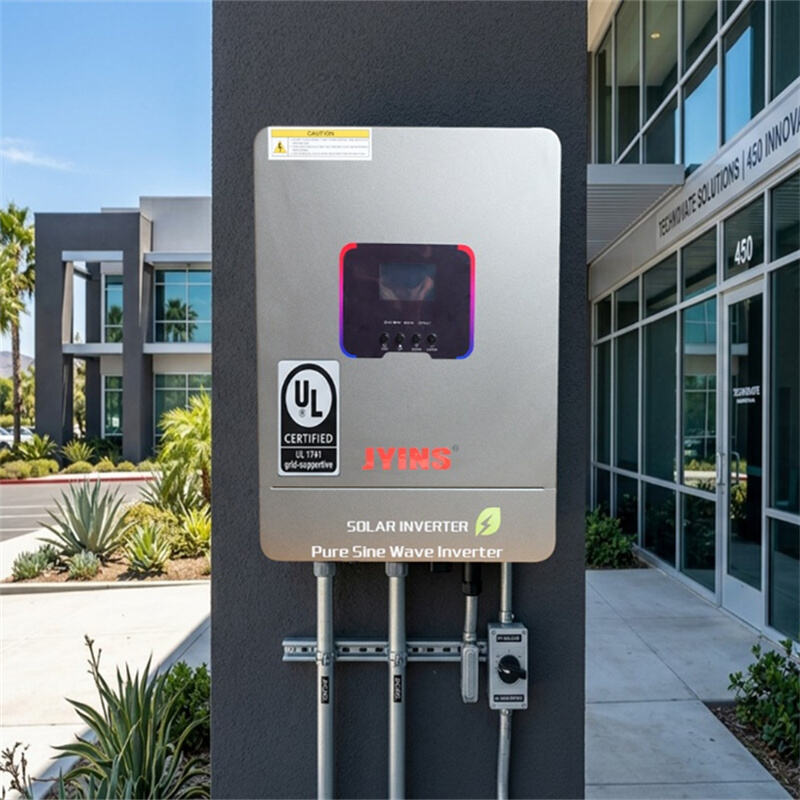
The Shift to Smart Inverters in the United States
The solar energy landscape in the United States is highly lucrative, but it is also governed by some of the most stringent and rapidly evolving technical standards in the world. As the capacity of grid-connected photovoltaics (PV) and energy storage continues to multiply across the nation, traditional "dump" inverters, which simply feed all available solar energy into the grid and disconnect at the slightest grid disturbance, are no longer acceptable. These older systems can exacerbate grid instability, potentially turning minor voltage dips into widespread blackouts. To protect the electrical infrastructure, US utilities and regulatory bodies have transitioned to mandatory "Smart Inverters." For B2B procurement directors, electrical wholesalers, and EPC contractors sourcing equipment for the USA market, understanding UL 1741 SA and SB requirements is essential for ensuring project compliance and avoiding costly shipping or installation delays.
This technical guide breaks down the core differences between UL 1741 SA and SB, details the smart functions required for modern US grid interconnection, and explains how JYINS inverters meet these rigorous safety and performance standards.
Deconstructing the UL 1741 Standard and its Supplements
Under the National Electrical Code (NEC) in the United States, all grid-interactive solar inverters must be certified to UL 1741, titled Standard for Inverters, Converters, Controllers and Interconnection System Equipment for Use With Distributed Energy Resources. This standard has evolved through two critical supplements: SA and SB.
UL 1741 SA (Supplement A):
- Introduced around 2016, UL 1741 SA was developed to define the testing procedures for grid-support (smart) inverter functions.
- It was heavily driven by California's Rule 21 and Hawaii's HECO Source Requirement Documents, which were the first state codes to mandate grid-support capabilities.
- Inverters certified to UL 1741 SA are tested for basic grid-support functions, such as low/high voltage ride-through, low/high frequency ride-through, ramp rates, and dynamic reactive power control (Volt-VAr).
UL 1741 SB (Supplement B):
- Published in 2020 and widely mandated starting in 2023, UL 1741 SB represents the latest and most advanced iteration of smart inverter testing.
- It defines the testing protocols required to prove compliance with IEEE 1547-2018, the national standard for interconnecting distributed resources with electric power systems.
- UL 1741 SB is now the default requirement for almost all major US utilities, replacing the older SA supplement. If you are sourcing inverters for new projects in the USA today, they must carry the UL 1741 SB certification.
Core Smart Inverter Functions Under UL 1741 SB
To achieve UL 1741 SB certification, an inverter must support a suite of advanced grid-support functions designed to actively stabilize the utility network:
- Voltage Ride-Through (VRT) and Frequency Ride-Through (FRT): Instead of tripping offline immediately during a transient grid fault, the inverter must remain connected and ride through specified voltage and frequency anomalies. This keeps the solar generation online, helping the grid recover.
- Volt-VAr Control: The inverter dynamically adjusts its reactive power output in response to local grid voltage levels, absorbing reactive power when the voltage is high and injecting it when the voltage is low to help keep the voltage within safe limits.
- Volt-Watt Control: If Volt-VAr control is insufficient and voltage continues to rise, the inverter must progressively reduce its active power output (Watts) to prevent the voltage from exceeding the utility's upper safety limit.
- Frequency-Watt Control: If the grid frequency rises above 60 Hz (indicating over-generation on the wider grid), the inverter must rapidly decrease its active power output. Conversely, if frequency drops, hybrid inverters can increase output from battery storage to stabilize the network.
- Standardized Communications: A key requirement of IEEE 1547-2018 / UL 1741 SB is that the inverter must feature a standardized communication protocol, specifically SunSpec Modbus (over RS-485 or Ethernet) or DNP3. This allows the utility to remotely monitor and adjust the inverter's settings as grid conditions change.
- Phase-Angle Jump Ride-Through: Smart inverters must remain connected when the grid phase suddenly shifts, preventing cascading disconnects during transmission switching events.
JYINS smart inverters are engineered with dual-core control processors that easily handle these complex, real-time grid-support algorithms while maintaining peak power conversion efficiency.
Sourcing and Compliance Checklist for USA Importers
When sourcing solar inverters for US distribution, B2B procurement managers must perform rigorous due diligence to ensure that their chosen equipment is fully compliant and eligible for installation:
- Nationally Recognized Testing Laboratory (NRTL) Mark: Ensure the inverter carries a valid certification mark from an approved NRTL, such as UL, Intertek (ETL), or CSA. This mark must clearly specify compliance with UL 1741 SB.
- CEC Approved List: In California and many other states, inverters must be listed on the California Energy Commission (CEC) list of eligible inverters to be approved for grid interconnection. This list specifies the inverter's tested efficiency and its smart inverter capabilities.
- Rapid Shutdown Compliance: For residential and commercial rooftop solar installations, NEC 2017/2020/2023 Article 690.12 mandates rapid shutdown capability to protect emergency first responders. JYINS inverters integrate seamless communication with industry-standard rapid shutdown receivers (such as SunSpec-compliant transmitters), ensuring complete system-level safety.
- Communication Compatibility: Verify that the inverter's SunSpec Modbus interface is fully documented and open, allowing easy integration with third-party commercial monitoring platforms, SCADA systems, and utility gateways.
JYINS is committed to delivering high-performance, compliant, and cost-effective power electronics to the US market. Our smart inverter lines are designed in strict compliance with UL 1741 SB and IEEE 1547-2018 standards, ensuring a smooth utility approval process and long-term operating reliability for your US solar investments.
Navigating the complex landscape of North American grid standards can be challenging, but choosing a certified partner simplifies the compliance path. As US utilities accelerate their transition toward highly decentralized, low-inertia smart grids, having a trusted inverter manufacturer with robust engineering capabilities is a powerful asset for any commercial project developer. JYINS offers the complete package of certified products, field-tested reliability, and comprehensive engineering support to guarantee the long-term success of your B2B solar arrays. Our dedicated engineering teams are available to assist with regional grid profiles, utility interconnect applications, and on-site commissioning support across North America.