EN
EN


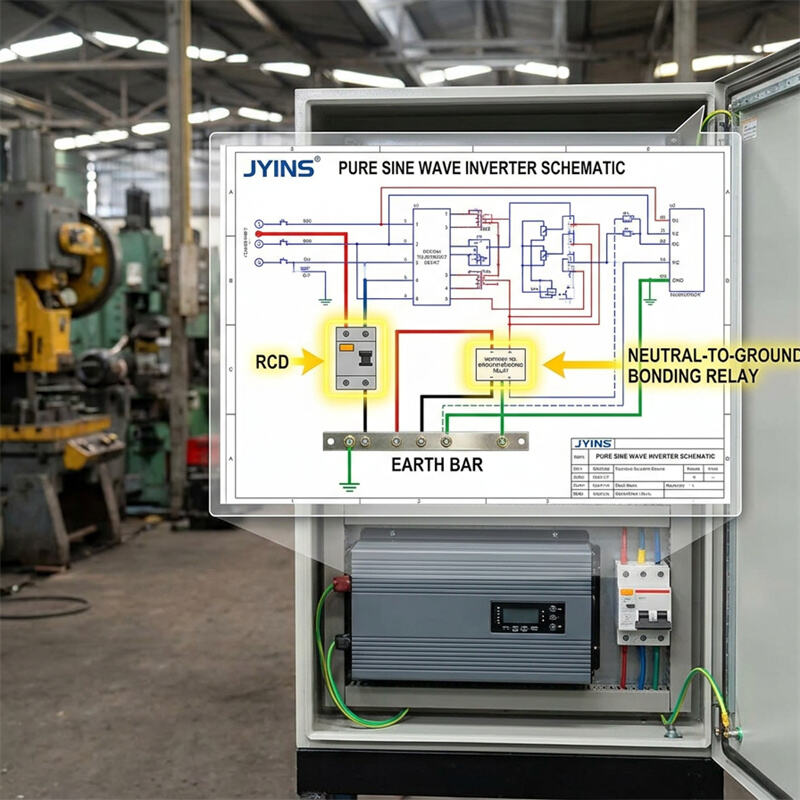
Introduction to Off-Grid Electrical Grounding
In standard grid-connected buildings, electrical grounding and safety protection are managed by the utility provider and strict local building codes. Safety devices like Residual Current Devices (RCDs) or Ground Fault Circuit Interrupters (GFCIs) work reliably because the utility grid has a solid, established connection between the neutral conductor and the earth.
However, when engineers set up an off-grid workshop, mobile service vehicle, or remote power station, the system must establish its own grounding reference. In these environments, technicians frequently encounter a highly perplexing issue: the RCDs in the distribution panel trip randomly, or they trip the absolute instant any appliance is turned on, even when there is no actual wiring fault or insulation defect. This issue is almost always tied to the configuration of the Neutral-to-Ground (N-G) bond.
This article delivers a technical analysis of why N-G bonding is the hidden cause of RCD tripping and how to configure grounding systems for safe, reliable off-grid operations.
Question: Why does Neutral-to-Ground Bonding cause residual current devices (RCD) to trip in off-grid workshop installations, and what is the proper configuration?
RCD tripping in off-grid workshops occurs because without a proper Neutral-to-Ground (N-G) bond at the power source, the inverter's AC output operates as a floating neutral system. When a load is connected, this floating system prevents the RCD from establishing a zero-current reference frame, causing current imbalances or leakage paths that trip the device. Alternatively, double-bonding (bonding neutral to ground at both the inverter and the distribution panel) creates a parallel current return path that splits neutral current, forcing current through the earth wire and instantly tripping the RCD. To resolve this, engineers must implement a single, dynamic N-G bonding point utilizing the automatic dry-contact relays in JYINS inverters.
The Physics of RCD Operation
To understand the tripping issue, we must first review how an RCD works. An RCD is an extremely sensitive differential current sensor. It monitors the AC current flowing through the Live (L) conductor and returning through the Neutral (N) conductor.
In a healthy single-phase circuit, the current flowing out through the Live wire must exactly equal the current returning through the Neutral wire. The RCD utilizes a toroidal current transformer to compare these two currents.
If a fault occurs (such as a damaged wire touching a metal tool case), a portion of the current will leak through the metal case and the green earth (ground) wire to the earth, bypassing the neutral wire. The RCD detects this difference between Live and Neutral currents. If the difference (the residual leakage current) exceeds a safety threshold—typically 30 milliamperes (mA)—the RCD's internal magnetic coil trips its mechanical contacts, cutting power in less than 30 milliseconds to prevent electrocution.
The Floating Neutral Dilemma
Most standalone power inverters are shipped from the factory with a 'floating neutral' output. This means that the internal AC output circuit is completely isolated from the metal chassis of the inverter and the earth terminal. If you measure the voltage between Live and Neutral, you will see a correct 230V AC. However, if you measure the voltage between Neutral and Ground, you will see a random floating voltage (often around 115V AC).
In a floating system, there is no physical connection between Neutral and Ground. If an insulation fault occurs in a connected tool, current cannot flow back to the inverter's neutral terminal via the ground path because the circuit is open. Because no leakage current can flow through the ground wire, there is no current difference between the Live and Neutral conductors passing through the RCD. As a result, the RCD will fail to trip during an active ground fault, creating a lethal safety hazard where the tool's metal casing remains energized.
Conversely, if an off-grid system has a floating neutral and experiences slight capacitive coupling (common in long cable runs or heavy induction motors), the RCD can experience rapid, unpredictable current phase-shifts. The current transformer in the RCD senses these phase shifts as an imbalance and trips randomly. This is the first form of N-G-related nuisance tripping.
The Double-Bonding Trap
To solve the floating neutral problem, electricians often install a solid copper jumper wire between the Neutral bar and the Ground bar in the workshop's main distribution panel. This is called a Neutral-to-Ground (N-G) bond, which mirrors standard utility-grid setups.
However, a serious conflict arises when the off-grid inverter also has its own internal N-G bond active, or when the workshop is configured to switch between inverter power and an external generator or shore-power connection. This creates a double-bonding scenario.
In a double-bonded system, there are two physical points where Neutral is connected to Ground: one at the inverter/source and one at the distribution panel. When an appliance is switched on, the returning current flows down the Neutral wire to the distribution panel's neutral bar. At this bar, the current sees two parallel paths back to the inverter's neutral terminal:
- Path A: The dedicated AC Neutral wire.
- Path B: The Ground wire and metallic conduits.
Because current divides in proportion to the resistance of the parallel paths, a substantial portion of the nominal running current (which can be several Amperes) will flow through the Ground wire instead of the Neutral wire.
Because the current returning through the Neutral wire is now significantly lower than the current going out through the Live wire, the RCD in the distribution panel instantly detects a massive current imbalance (well exceeding the 30 mA threshold) and trips the moment the load is turned on. This is the second form of N-G-related tripping.
Practical Grounding Solutions for Off-Grid Systems
To ensure both electrical safety and reliable RCD operation, engineers must adhere to the single-point bonding rule: There must be exactly one Neutral-to-Ground bond active in the system at any given time, and it must be located at the active power source.
To achieve this in dynamic B2B off-grid applications, systems integrators should use the following strategies:
- 1. Deploy Dynamic Neutral-Ground Relays
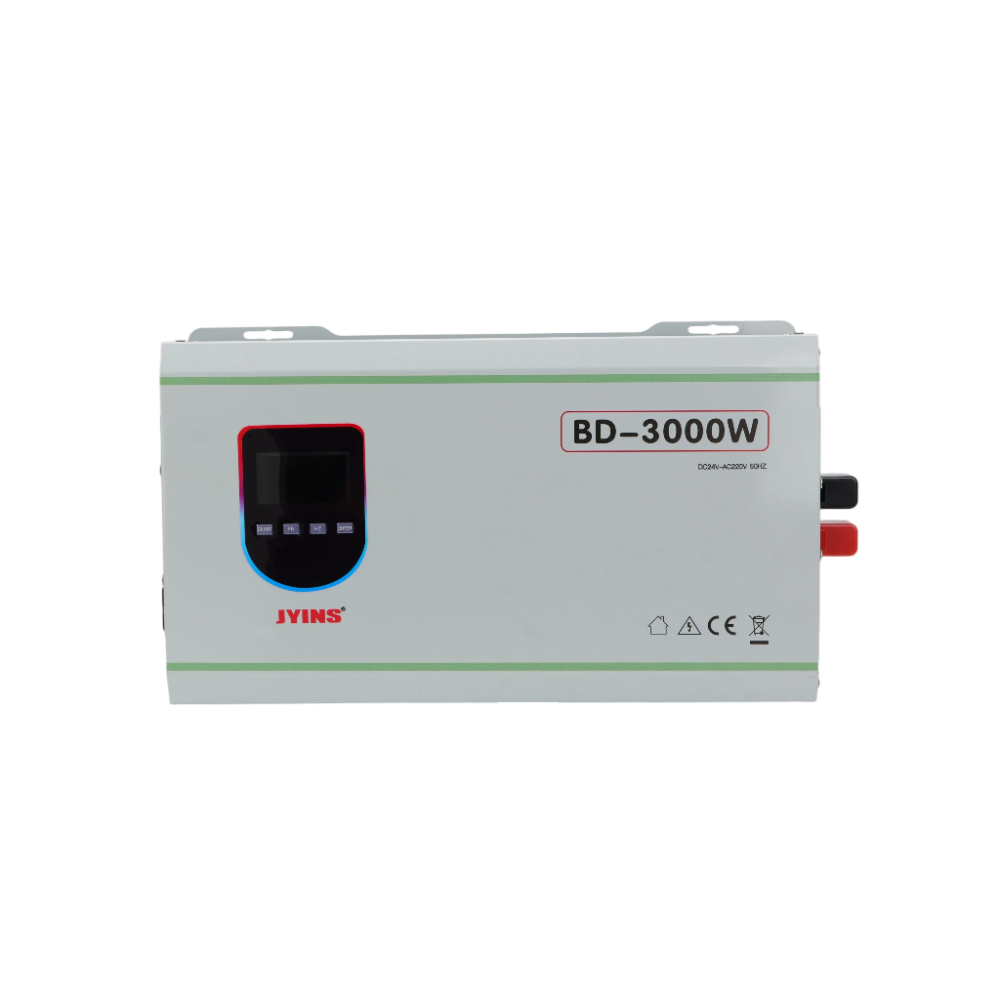
High-performance off-grid inverters, such as the JYINS programmable series, are designed with an integrated, automatic Neutral-to-Ground relay.
- When the inverter is operating in standalone battery mode, the internal relay automatically closes, establishing a solid N-G bond inside the inverter. This ensures that the RCD in the workshop panel has a solid earth reference and will trip reliably during a true ground fault.
- When the system switches to bypass mode (e.g., when a backup diesel generator starts or grid power is connected), the inverter's internal relay instantly opens its N-G bond. This is because the generator or utility grid already has its own N-G bond. By opening its internal relay, the JYINS inverter prevents a double-bonding conflict, ensuring the RCD never trips during the bypass transition.
- 2. Implement Correct System Grounding Topology
Ensure that all metal equipment chassis, the solar PV mounting racks, the battery enclosure, and the inverter's ground terminals are wired back to a single, high-conductivity earth busbar. This bar must be connected to a physically driven earth grounding rod (electrode) with a measured ground resistance of less than 25 ohms (ideally under 10 ohms).
- 3. Verify RCD Placement
Always install the RCD downstream of the single N-G bond point. If an RCD is wired upstream of the bonding point, it will trip continuously because the bonding current will bypass the RCD's sensing transformer.
Conclusion
Neutral-to-Ground (N-G) bonding is a fundamental electrical requirement for safety, but its improper configuration is the primary hidden cause of mysterious RCD tripping in off-grid workshops. A floating neutral system disables RCD protection, while double-bonding splits neutral current through the grounding wires, causing instant nuisance trips. By applying the single-point bonding rule and deploying advanced JYINS inverters with integrated, automatic N-G bonding relays, systems integrators can guarantee 100% compliant safety protection and completely eliminate nuisance RCD tripping in any off-grid or mobile industrial environment.
Table of Contents
- Introduction to Off-Grid Electrical Grounding
- Question: Why does Neutral-to-Ground Bonding cause residual current devices (RCD) to trip in off-grid workshop installations, and what is the proper configuration?
- The Physics of RCD Operation
- The Floating Neutral Dilemma
- The Double-Bonding Trap
- Practical Grounding Solutions for Off-Grid Systems
- Conclusion