EN
EN


Introduction: The Thermal Challenge in Power Electronics
In the design and procurement of industrial power electronics, thermal management is not just an engineering preference; it is a critical determinant of product survival. Power inverters are high-energy conversion devices. As they convert direct current to alternating current, a percentage of that power is lost as waste heat due to internal resistances in semiconductors, inductors, and capacitors.
If this heat is not rapidly and efficiently dissipated away from sensitive internal components, the temperature inside the inverter will rise rapidly. This thermal stress accelerates component degradation, reduces overall operating efficiency, and can ultimately trigger thermal shutdown or catastrophic hardware failure. For B2B procurement directors, wholesalers, and project developers, understanding the role of the inverter's outer enclosure in thermal management is vital. This article compares aluminum housings against plastic enclosures, exploring why aluminum is the superior choice for high-load industrial applications.
Question: Why is an anodized Aluminum Housing significantly superior to Plastic enclosures for industrial power inverter heat dissipation and long-term reliability?
To understand the clear superiority of aluminum over plastic, we must examine the physics of thermal conductivity, the structural design opportunities of metal enclosures, and the secondary benefits of electromagnetic shielding and environmental durability.
Thermal Conductivity: The Scientific Comparison
The primary reason aluminum dominates the industrial power electronics market is its exceptional ability to conduct heat. Thermal conductivity is a material property that measures its capacity to transfer heat through conduction. It is typically expressed in Watts per meter-Kelvin (W/m-K):
- Pure Aluminum: Features a thermal conductivity of approximately two hundred and five W/m-K. Even standard aluminum alloys used in manufacturing maintain a rating of one hundred and twenty to one hundred and eighty W/m-K.
- Standard Plastics: Plastics commonly used in electronic enclosures, such as ABS (Acrylonitrile Butadiene Styrene) or Polycarbonate, exhibit a thermal conductivity of only zero point fifteen to zero point twenty-five W/m-K.
When we compare these figures, the physical reality is striking: aluminum conducts heat roughly one thousand times more efficiently than plastic. An inverter housed in a plastic box acts like an insulated container, trapping heat inside and forcing internal components to operate in a high-temperature oven. In contrast, an aluminum housing acts as a thermal highway, instantly drawing heat away from internal components and transferring it to the outside air.
Aluminum as a Structural Passive Heat Sink
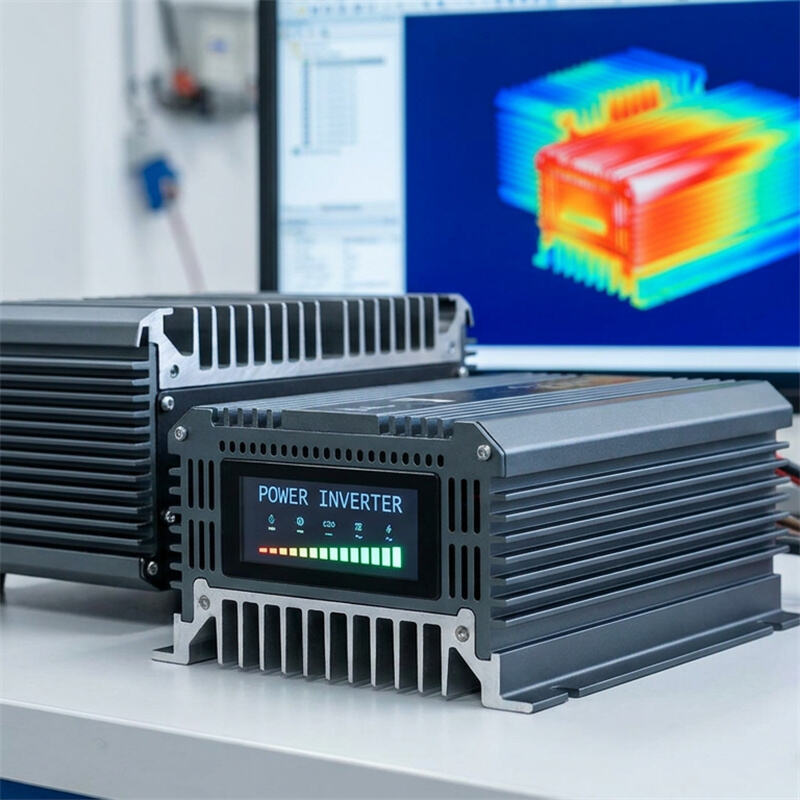
Because of its excellent thermal properties, an aluminum enclosure does not just protect the internal electronics; it actively participates in cooling them. Manufacturers can design aluminum housings with built-in cooling fins extruded directly into the exterior chassis. This design increases the surface area of the enclosure dramatically:
- Heat dissipation is directly proportional to surface area. By integrating fins into the exterior walls of the aluminum housing, the inverter can dissipate a substantial amount of heat passively through natural convection.
- This passive thermal dissipation reduces the workload on the inverter's internal active cooling fans. The fans do not need to run as frequently or at such high speeds, which extends fan life, reduces acoustic noise, and lowers the overall parasitic power consumption of the inverter itself.
- Plastic, on the other hand, cannot function as a heat sink. Any cooling fins molded into a plastic housing are purely aesthetic and provide zero thermal benefit due to the material's low thermal conductivity.
Structural Durability in Harsh Industrial Environments
Beyond heat dissipation, industrial-grade power inverters are often installed in demanding environments such as dusty factories, outdoor solar sites, mobile service vehicles, or marine installations. In these settings, physical durability is paramount:
- Impact and Vibration Resistance: Aluminum is exceptionally tough. It resists physical impacts, dropped tools, and high-frequency industrial vibrations without cracking or denting. Plastic enclosures are prone to becoming brittle over time, especially in cold environments, making them highly susceptible to cracking under impact.
- UV and Weathering Resistance: Inverters installed outdoors are exposed to solar radiation. Ultraviolet (UV) rays degrade plastic polymers, causing them to yellow, fade, lose structural strength, and crack. Anodized aluminum is highly resistant to UV radiation and does not degrade physically under prolonged sunlight exposure.
- Corrosion Protection: While raw aluminum can oxidize, industrial-grade inverters utilize anodized or powder-coated aluminum. This protective treatment creates a hard, corrosion-resistant surface that can withstand salty marine air, high humidity, and mild industrial chemical exposure.
Safety and Electromagnetic Interference (EMI) Shielding
Two critical, yet often overlooked, advantages of aluminum housings relate to electrical safety and signal interference:
- Fire Prevention: In the rare event of an internal catastrophic component failure (such as a capacitor exploding or a semiconductor catching fire), an aluminum enclosure is non-combustible. It acts as a fire barrier, containing the heat and flame within the metal chassis. A plastic enclosure can melt, deform, and support combustion, potentially spreading a fire to nearby materials.
- Electromagnetic Shielding: High-frequency switching inside inverters generates electromagnetic interference (EMI) and radio frequency interference (RFI). An aluminum housing acts as a natural Faraday cage. It blocks these internal electromagnetic emissions from escaping and interfering with nearby sensitive electronics, such as telecommunications equipment, Wi-Fi networks, or medical devices. It also shields the internal inverter circuits from external electromagnetic disturbances. Plastic has no inherent shielding capabilities, requiring expensive internal conductive coatings to achieve even basic EMI compliance.
The JYINS Engineering Standard: Extruded Aluminum Enclosures
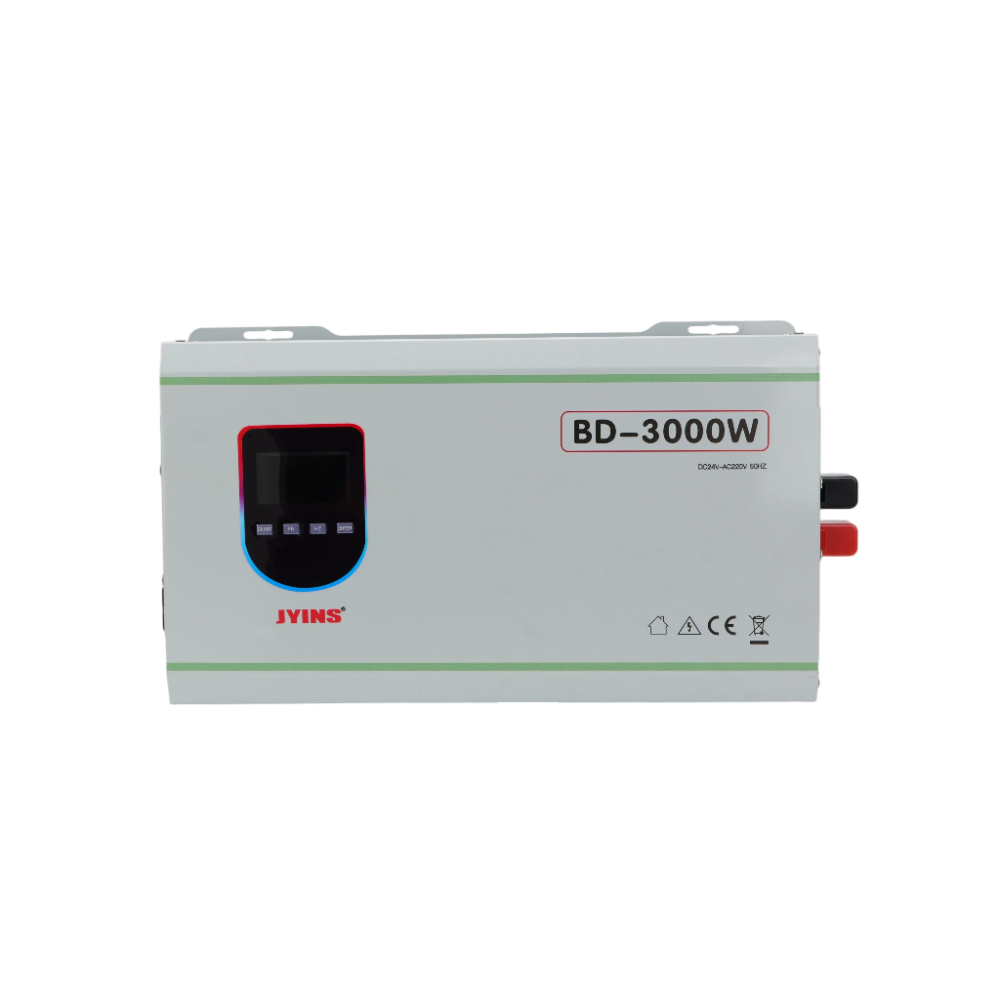
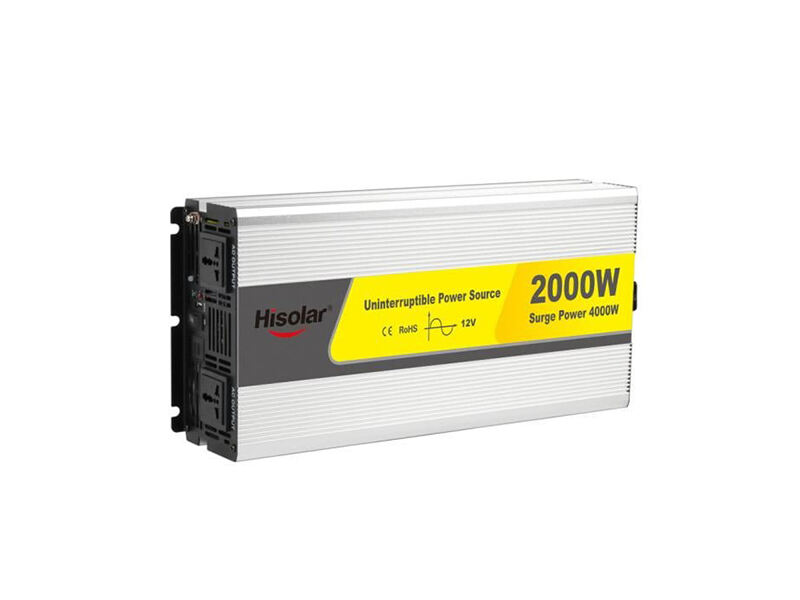
At JYINS Electrical, we do not compromise on product reliability. That is why our entire range of high-performance and industrial power inverters is constructed using premium, heavy-duty extruded anodized aluminum housings. We engineer our enclosures with optimized cooling fins to maximize surface area and passive heat transfer. This commitment to premium materials ensures that JYINS and Hisolar products deliver peak performance, long lifespans, and unparalleled durability, even in the most challenging industrial environments.
Conclusion: Sourcing Wisely for B2B Success
For B2B procurement directors and wholesalers, the choice between aluminum and plastic housings is a choice between long-term reliability and short-term cost savings. While plastic inverters may have a lower upfront purchase price, their poor heat dissipation, vulnerability to physical damage, and lack of EMI shielding lead to higher failure rates and expensive field replacements. By specifying anodized aluminum housings for your power inverter procurement, you secure an asset that cools itself naturally, resists the elements, protects against electrical noise, and guarantees a much lower total cost of ownership over its operating life.
Table of Contents
- Introduction: The Thermal Challenge in Power Electronics
- Question: Why is an anodized Aluminum Housing significantly superior to Plastic enclosures for industrial power inverter heat dissipation and long-term reliability?
- Thermal Conductivity: The Scientific Comparison
- Aluminum as a Structural Passive Heat Sink
- Structural Durability in Harsh Industrial Environments
- Safety and Electromagnetic Interference (EMI) Shielding
- The JYINS Engineering Standard: Extruded Aluminum Enclosures
- Conclusion: Sourcing Wisely for B2B Success