EN
EN


The Uncompromising Demands of Medical and Marine Electrical Environments
In the diverse world of B2B power conversion, different industries present highly specialized requirements for electrical safety and reliability. Among these, the medical and marine sectors are the most demanding. In hospital intensive care units (ICUs) and operating theatres, diagnostic and life-support equipment must operate with absolute precision and zero electrical leakage. In marine vessels, power conversion systems must cope with highly corrosive saltwater, heavy vibrations, and complex grounding systems. In both of these environments, a standard, non-isolated power inverter can represent a severe safety risk. For systems engineers and safety officers, galvanic isolation remains the non-negotiable safety standard for power conversion equipment in these critical applications.
The Physics of Galvanic Isolation: Breaking the Electrical Loop
To understand the value of galvanic isolation, we must examine the underlying physics of electrical circuits. Galvanic isolation is the design principle of physically and electrically separating two or more parts of an electrical system to prevent direct current (DC) flow between them. Energy is transferred from the input (primary side) to the output (secondary side) using magnetic or optical fields, rather than a direct metallic conductor.
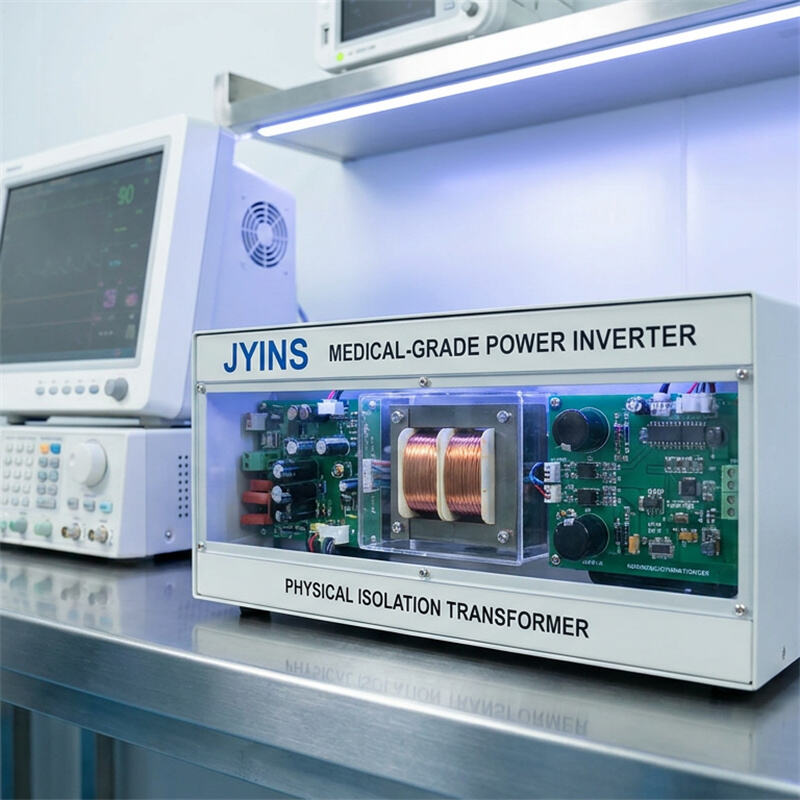
In an isolated power inverter, this separation is achieved primarily through a high-quality isolation transformer. The primary winding (connected to the input power source, such as a battery bank) and the secondary winding (connected to the AC load, such as medical diagnostics or ship navigation systems) are wound around a common magnetic core but remain physically insulated from each other.
By breaking the direct electrical connection, galvanic isolation prevents currents from flowing between the input and output ground systems. This physical separation is key to eliminating electrical hazards and noise propagation.
Medical Power Conversion: Preventing Microshocks and Protecting Patient Safety
In medical environments, galvanic isolation is a strict regulatory requirement (governed by standards such as IEC 60601-1). Patient safety is the primary concern, particularly regarding electrical microshocks.
- The Danger of Microshocks: A healthy human body has a high natural skin resistance that protects internal organs from electric shocks. However, in medical settings, patients are often connected directly to diagnostic equipment via gel-coated sensors, electrodes, or invasive catheters. Under these conditions, the body's natural resistance is bypassed. A tiny leakage current of just 10 microamperes (which would be completely imperceptible to a person touching the skin) flowing directly through a patient's heart can cause ventricular fibrillation and cardiac arrest.
- Eliminating Leakage Currents: Non-isolated inverters inherently have capacitive leakage currents that can flow through the grounding system. An isolated inverter, by contrast, prevents any electrical connection between the AC output lines and the system ground. Even if an internal component inside the inverter fails, there is no physical path for high-voltage DC or AC to leak into the patient-connected equipment, ensuring total patient and operator safety.
Additionally, medical facilities require isolated power systems (IPS) to maintain operational continuity. In an isolated system, a single ground fault does not trip the circuit breaker, allowing life-critical equipment (such as ventilators and heart-lung machines) to continue operating while an alarm alerts technicians to resolve the fault.
Marine Power Conversion: Combating Electrolysis Corrosion and Saline Humidity
Marine vessels represent another environment where non-isolated power conversion can cause severe damage. On a ship or boat, the metal hull is in constant contact with highly conductive seawater, creating a complex grounding system.
- Preventing Galvanic Corrosion (Electrolysis): When multiple electrical devices are grounded to a metal hull, stray DC currents from non-isolated power sources can flow through the hull and into the water. This process, known as electrolysis or galvanic corrosion, rapidly eats away at the ship's metallic hulls, propeller shafts, rudders, and underwater fittings. In severe cases, electrolysis can destroy metal structures in a matter of weeks. An isolated inverter prevents DC current leakage from reaching the vessel's hull grounding system, eliminating the root cause of electrical corrosion.
- Safety in Wet Environments: Marine vessels are subject to heavy sea spray, condensation, and high humidity, which can degrade cable insulation and create low-resistance paths to the metal structure. In a non-isolated system, touching a faulty AC line while standing on a wet, grounded deck can result in a severe electrical shock. An isolated inverter ensures that the AC output is floating relative to the hull, dramatically reducing the risk of shock in wet conditions.
Electrical Noise Elimination and Signal Integrity in Sensitive Diagnostics
Beyond basic safety, galvanic isolation plays a critical role in maintaining signal integrity and electrical performance in both sectors:
- Medical Diagnostics: Devices like ECGs, EEGs, and ultrasound machines measure microscopic electrical signals generated by the human body. High-frequency electrical noise from inverters or the power grid can distort these signals, leading to fuzzy monitor displays or incorrect diagnoses. Galvanic isolation acts as a barrier, blocking high-frequency noise and common-mode transients from propagating from the input power source to the sensitive medical instruments.
- Marine Navigation: Modern vessels rely on high-precision GPS, sonar, radar, and satellite communication systems. The high-frequency switching circuits of modern inverters can generate substantial electromagnetic interference (EMI). Isolated inverters keep the high-power DC battery systems separate from the AC control systems, preventing EMI from scrambling critical navigation and communication data.
JYINS Isolated Power Systems: Engineering Safety Across Lands and Seas
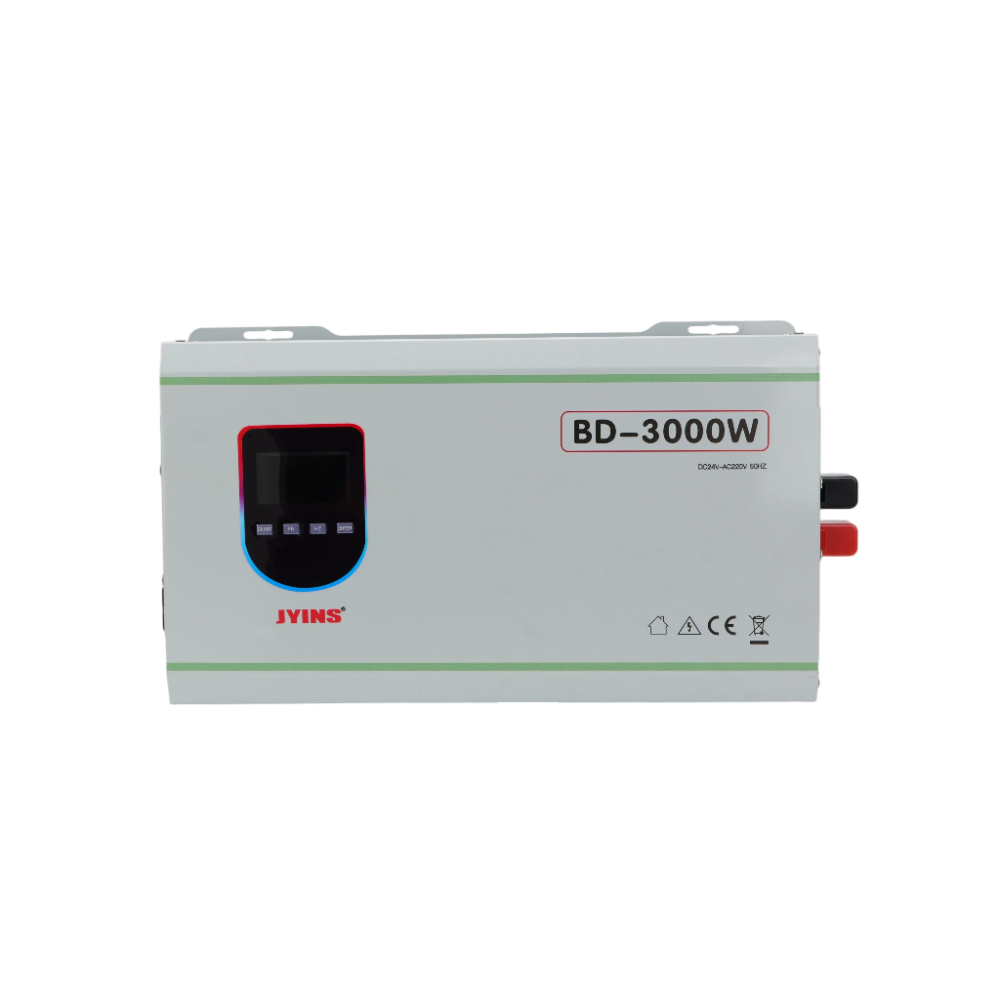
JYINS is a leading manufacturer of high-reliability isolated power conversion technology. Our medical-grade and marine-grade pure sine wave inverters are designed and built to the highest safety and performance standards.
We utilize premium isolation transformers with double-layer insulated windings and high-dielectric barriers, ensuring that our units exceed the strict isolation testing requirements (such as 4000V AC dielectric strength) of the medical and marine sectors.
By integrating JYINS isolated power solutions into your mobile clinic, hospital lab, commercial vessel, or offshore platform, you are choosing a system built on uncompromising safety, superior noise immunity, and long-term durability. Our engineering team works closely with B2B systems integrators to customize power solutions that match their specific requirements, ensuring a safe, stable, and highly secure power integration.
Table of Contents
- The Uncompromising Demands of Medical and Marine Electrical Environments
- The Physics of Galvanic Isolation: Breaking the Electrical Loop
- Medical Power Conversion: Preventing Microshocks and Protecting Patient Safety
- Marine Power Conversion: Combating Electrolysis Corrosion and Saline Humidity
- Electrical Noise Elimination and Signal Integrity in Sensitive Diagnostics
- JYINS Isolated Power Systems: Engineering Safety Across Lands and Seas