EN
EN


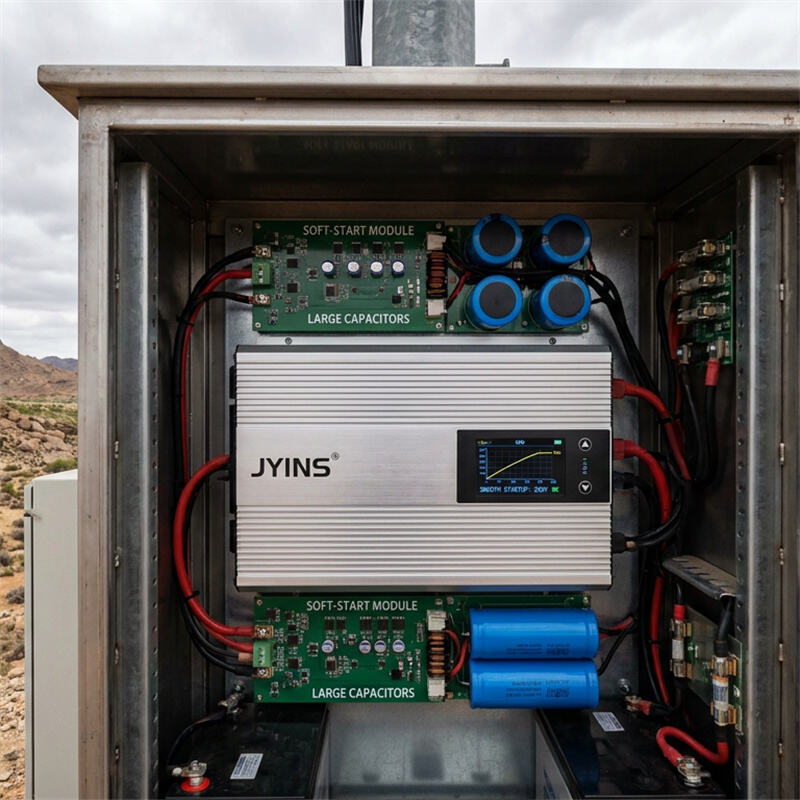
The Capacitive Load Dilemma in Remote Telecom Infrastructure
Off-grid telecommunication shelters are the backbone of global connectivity, housing transmission equipment, microwave links, and cellular transceivers in remote, unattended locations. To ensure continuous operation, these facilities rely on a combination of solar panels, battery banks, and high-efficiency power inverters. However, the modern telecom equipment installed inside these shelters presents a challenging electrical load profile. Most telecom transmitters and server systems utilize high-performance switch-mode power supplies (SMPS) that incorporate massive internal input filter capacitors. From the perspective of the power inverter, switching on a bank of these capacitive loads is almost identical to a dead short circuit. Managing the extreme inrush currents generated by these capacitive loads is an essential task for systems engineers and facility safety officers.
The Mechanics of Inrush Current and Capacitor Charging Dynamics
To understand why capacitive loads are so challenging, we must look at the charging behavior of capacitors. When a capacitor is uncharged, its electrical resistance is theoretically zero. The instant AC power is applied to the input of a switch-mode power supply, the internal filter capacitors draw an enormous surge of current to charge up to their operating voltage. This is known as inrush current.
- Peak and Duration: The peak of an inrush current can easily be 20 to 100 times the normal steady-state running current of the device. While this surge lasts for only a few milliseconds (typically 5 to 50 milliseconds), its effects are highly disruptive.
- Voltage Sag: This massive surge drains energy from the power source, causing a temporary voltage drop (voltage sag) on the main AC busbar. This sag can cause other sensitive equipment connected to the same busbar to reset or malfunction.
- Contact Arcing: The extreme current can cause contacts inside relays and circuit breakers to arc, leading to contact pitting, welding, and premature failure of switching components.
If the power inverter is not equipped with intelligent startup logic, it will interpret this massive inrush current as a short circuit and shut down immediately to protect its internal power switches (IGBTs), preventing the telecom shelter from starting up.
Designing Soft-Start Circuits: Active Resistors, NTCs, and PWM Control
To safely power up high-capacity telecom equipment, power conversion systems must implement soft-start logic. This is achieved through three primary design methods, each with unique performance characteristics:
- Negative Temperature Coefficient (NTC) Thermistors: An NTC thermistor is placed in series with the AC output. When cold, the NTC has high resistance, limiting the inrush current. As the current flows, the NTC heats up, causing its resistance to drop to a very low level, allowing normal current flow. While simple and cheap, NTCs require time to cool down before they can protect the system again. If a short power outage occurs and power is restored immediately, the hot NTC cannot limit the inrush, exposing the system to damage. This makes NTCs unsuitable for high-reliability telecom sites.
- Active Series Resistors with Relay Bypass: In this design, a power resistor is placed in series with the load during startup to limit the current. Once the inverter's control logic detects that the output voltage has stabilized (indicating the capacitors are mostly charged), a bypass relay closes, shorting out the resistor and allowing direct, low-resistance power flow. This is a robust B2B solution, but the physical relays are mechanical parts subject to wear.
- Pulse-Width Modulation (PWM) Soft-Start: This is the most advanced, solid-state approach. Instead of physical resistors, the inverter's microprocessor-controlled firmware dynamically ramps up the output AC voltage over a defined startup period (typically 1 to 3 seconds). By slowly increasing the voltage from zero to the rated AC level, the charging current of the downstream capacitors is kept strictly under control, completely eliminating the inrush current spike.
Preventing Low-Voltage Dropouts and System Tripping at Startup
For systems engineers designing remote telecom power systems, implementing PWM-based soft-start logic is the most effective way to prevent system startup failures. By slowly ramping up the voltage, the inverter ensures that:
- Steady Inflow: The battery bank is not subjected to a massive, sudden current drain, which can cause the battery voltage to drop below the inverter's low-voltage cutout threshold, triggering an immediate shutdown.
- No False Trips: The inverter's internal overcurrent protection algorithms are not fooled by harmless capacitor charging currents, preventing nuisance lockouts and ensuring a smooth, reliable boot sequence.
- Lower Stress: Downstream cables, connectors, and protection fuses experience significantly lower electrical and mechanical stress, extending the lifetime of the entire telecom facility's infrastructure.
Protecting Battery Management Systems (BMS) in Off-Grid Sites
Modern telecom shelters are increasingly transitioning from traditional lead-acid batteries to high-density Lithium Iron Phosphate (LiFePO4) battery systems. These lithium batteries incorporate intelligent Battery Management Systems (BMS) to protect the cells from overcurrent and short circuits.
However, a lithium BMS is highly sensitive. If an inverter without soft-start logic is connected to the battery bank, the initial charging of the inverter's own massive input capacitors can trigger the lithium BMS overcurrent protection. This causes the battery to shut down, trapping the system in a restart loop.
By choosing an inverter with built-in soft-start logic on both the DC input and AC output stages, engineers can ensure that the initial charging currents never exceed the strict safety thresholds of the lithium BMS, protecting the battery assets and ensuring a seamless, worry-free system startup.
JYINS Telecom-Grade Inverters with Intelligent Soft-Start Management
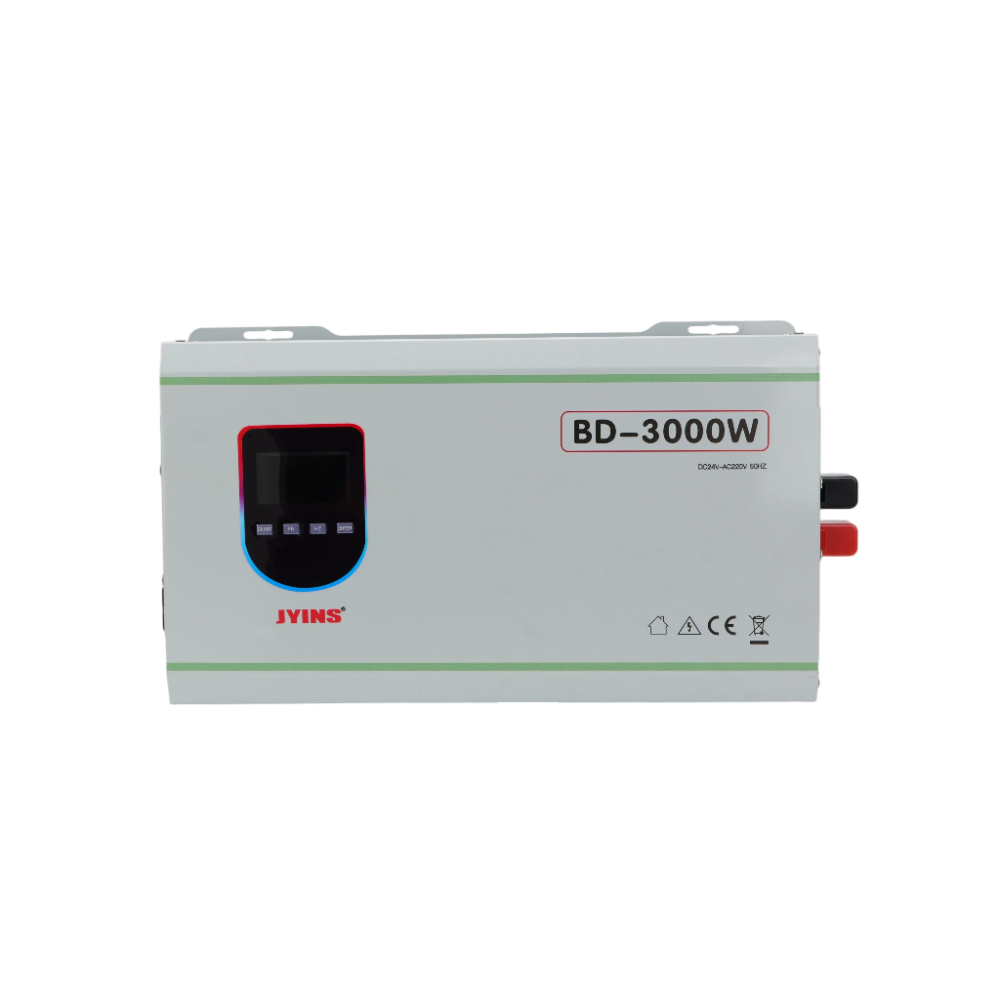
JYINS is a leading manufacturer of high-reliability power conversion equipment, and our telecom-grade pure sine wave inverters are engineered specifically to handle the most demanding capacitive loads.
Our inverters feature proprietary digital soft-start algorithms controlled by high-speed microprocessors. When powered on, the JYINS controller ramps the AC output voltage from 0V to 230V over a smooth 2.5-second curve. This controlled ramp allows the massive filter capacitors inside downstream telecom power supplies to charge up slowly and safely.
Our hardware also includes active series resistance circuits with heavy-duty solid-state bypass switches, providing secondary hardware-level inrush protection. This dual-layer approach ensures that JYINS inverters can safely start up even under maximum rated capacitive loads without tripping or causing voltage sags on the DC battery bank.
By integrating JYINS inverters with intelligent soft-start technology into your remote telecom shelters, you are choosing a system built on uncompromising electrical safety, high reliability, and long-term durability. Our B2B engineering team is available to assist you in designing and optimizing your off-grid power systems, ensuring your connectivity remains strong and uninterrupted.
Table of Contents
- The Capacitive Load Dilemma in Remote Telecom Infrastructure
- The Mechanics of Inrush Current and Capacitor Charging Dynamics
- Designing Soft-Start Circuits: Active Resistors, NTCs, and PWM Control
- Preventing Low-Voltage Dropouts and System Tripping at Startup
- Protecting Battery Management Systems (BMS) in Off-Grid Sites
- JYINS Telecom-Grade Inverters with Intelligent Soft-Start Management