EN
EN


Introduction: The Rapid Scalification of Battery Energy Storage
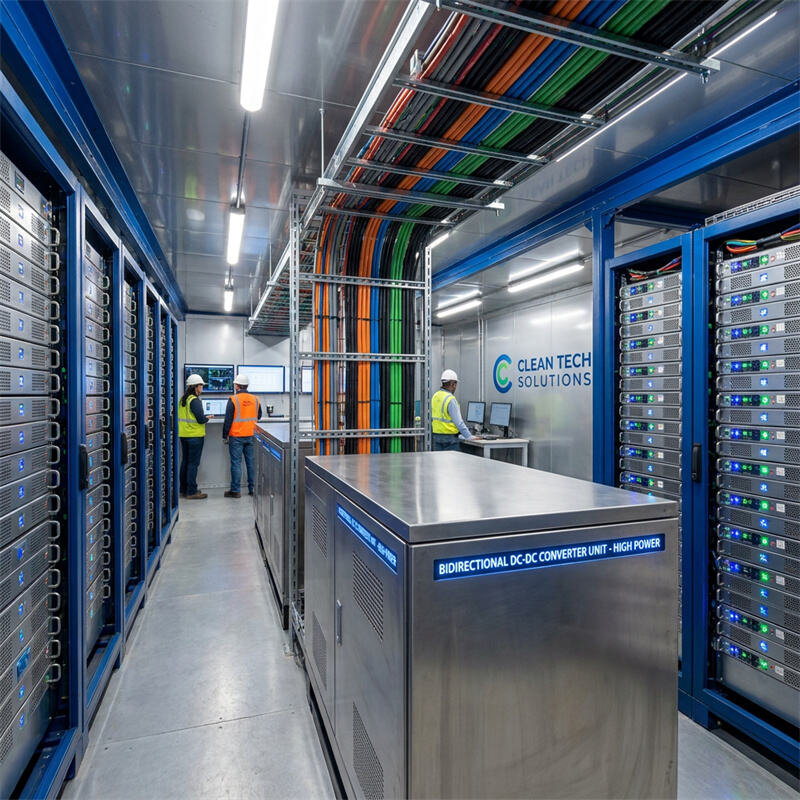
As the global electrical grid transitions toward decentralized renewable energy sources like solar and wind, the need for high-capacity Battery Energy Storage Systems (BESS) has skyrocketed. These systems are no longer just optional accessories for off-grid operations; they are critical grid assets used for frequency regulation, solar peak shifting, ramp-rate control, and emergency backup power. A modern BESS is a massive investment, ranging from hundreds of kilowatt-hours to multi-megawatt grid-tied installations.
At the core of any BESS is the power electronics hardware that manages the flow of electricity between the electrochemical cells and the utility grid or local AC bus. While traditional storage designs relied on unidirectional converters or complex relay switching circuits, next-generation BESS architectures have established bidirectional DC-DC converters as a non-negotiable requirement. For procurement managers, industrial project developers, and system architects, understanding the engineering advantages of these bidirectional converters is key to selecting the right storage hardware.
Q: Why are bidirectional DC-DC converters considered the future of Battery Energy Storage Systems (BESS) compared to traditional unidirectional topologies?
Answer:
Bidirectional DC-DC converters are the future of BESS because they enable continuous, dual-way power flow through a single, integrated semiconductor topology, eliminating the need for bulky mechanical relays or separate charge and discharge circuits. They bridge the massive voltage gaps between low-voltage battery packs and high-voltage DC or AC buses (e.g., from 400V up to 1500V DC) with conversion efficiencies exceeding 98 percent.
Furthermore, bidirectional converters allow for advanced system features. These include dynamic battery charging and discharging with sub-millisecond reaction times, passive and active battery pack cell balancing, precise state-of-charge regulation, and isolation of faulty battery strings without disrupting the entire storage array. By upgrading to bidirectional converter modules, BESS developers can reduce overall equipment footprint by up to 40 percent, lower thermal loads, and decrease the total lifecycle cost of the energy storage facility.
Technical Advantage 1: Seamless Power Flow and Sub-Millisecond Response Times
In traditional battery systems, charging the battery from a solar array and discharging it to the grid required separate, independent unidirectional converter circuits. Switching between these modes required opening and closing physical contactors or relays.
- Eliminating Mechanical Latency: Physical relays introduce a delay of 10 to 50 milliseconds during switching. In modern grid-stabilization applications, such as primary frequency response, this latency is unacceptable. Bidirectional DC-DC converters utilize a symmetrical bridge of semiconductor switches (such as silicon carbide MOSFETs) that can reverse the direction of current flow instantaneously. This is achieved by adjusting the gating signals of the switches, allowing power direction reversal in less than one millisecond.
- Dynamic Grid Stabilization: The ability to shift from charging to discharging in a fraction of a millisecond allows a BESS to absorb transient over-voltages on the grid and instantly inject power to prevent voltage sags. This high-speed performance is crucial for microgrid resilience and grid-scale stability.
Technical Advantage 2: Wide Voltage Range Matching and System Standardization
Modern battery technology is highly modular. Individual lithium-ion battery cells are combined into packs, modules, and strings. The overall voltage of a battery string changes constantly depending on its State of Charge, ranging from deeply discharged to fully charged.
- Bridging the DC Bus Gap: A central inverter or DC-AC grid tie operates most efficiently at a high, stable DC bus voltage (often 800V to 1500V DC). In contrast, battery strings might operate at a nominal 400V DC. The bidirectional DC-DC converter acts as an active voltage buffer. When discharging, it boosts the variable 400V battery voltage up to a stable 800V DC bus. When charging, it bucks the 800V DC bus voltage down to the appropriate level required by the battery chemical cells, adjusting the voltage dynamically to follow the CC-CV (Constant Current - Constant Voltage) charging profile.
- High Conversion Efficiency: By utilizing modern resonant topologies, such as the Dual Active Bridge or LLC resonant converter, bidirectional converters can achieve zero-voltage switching (ZVS) or zero-current switching (ZCS). This soft-switching engineering dramatically reduces switching losses, allowing the converter to maintain an operating efficiency of 98.5 percent across a wide voltage range.
Technical Advantage 3: Active String-Level Balancing and Fault Isolation
In large-scale BESS installations, multiple battery strings are connected in parallel to a common DC bus. If one string has a lower voltage or a faulty cell, it can draw circulating currents from adjacent strings, leading to overheating, accelerated cell degradation, or thermal runaway.
- String-Level Converters: Next-generation BESS designs deploy a dedicated bidirectional DC-DC converter for every single battery string, rather than connecting all strings directly to a central converter. This distributed architecture allows the system to manage each battery string independently. The converter dynamically regulates the charging current for each string based on its unique State of Health (SOH) and internal resistance, preventing circulating currents entirely.
- Electronic Isolation: If a cell fault or thermal anomaly is detected in a specific string, the dedicated bidirectional converter can immediately shut down its switching pulses, electronically isolating that string from the high-voltage DC bus. The rest of the BESS can continue operating at full capacity, allowing for hot-swappable maintenance and maximizing system availability.
JYINS Electrical: Engineering Premium Bidirectional Power Conversion
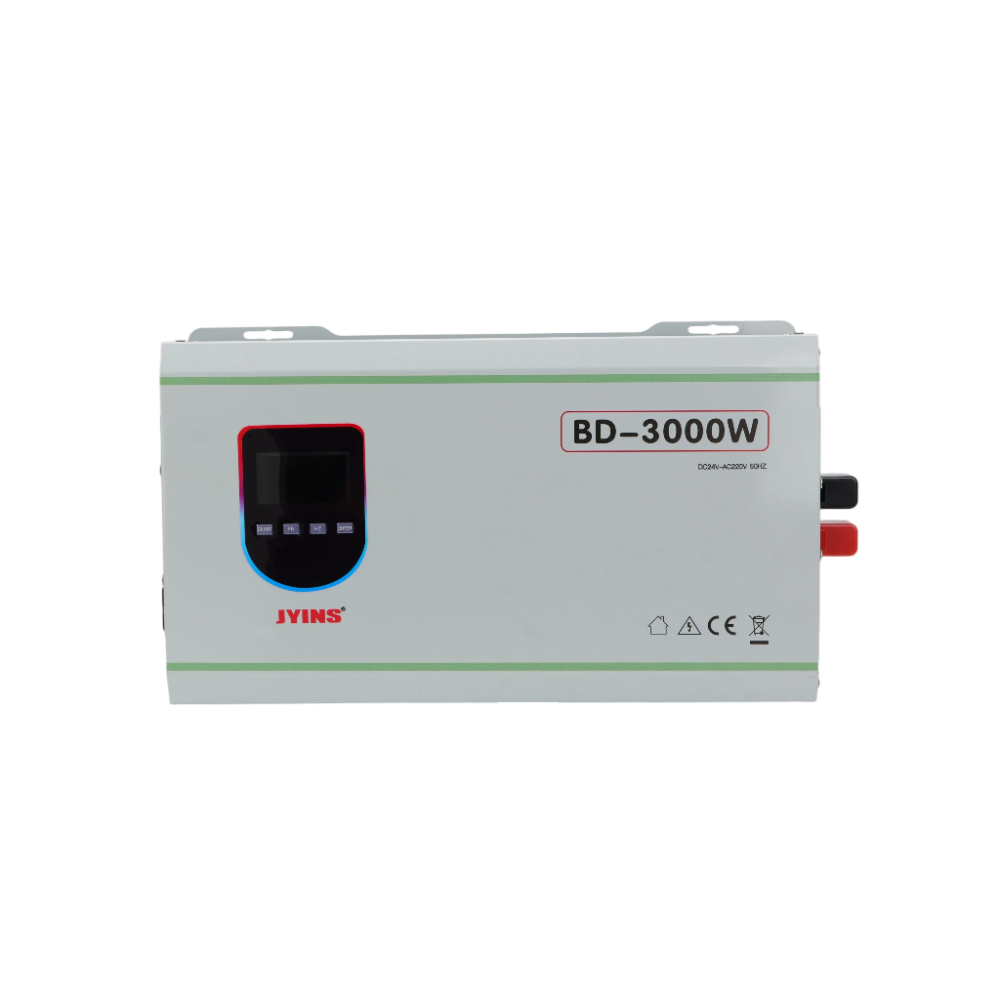
At JYINS Electrical, we have built our reputation on designing and manufacturing robust, high-performance power conversion electronics. Our engineering teams have developed specialized bidirectional DC-DC converter modules and smart hybrid inverters that meet the strict requirements of modern BESS developers:
- Advanced Silicon Carbide (SiC) Integration: Our bidirectional designs incorporate premium SiC power semiconductors, enabling high-frequency switching, exceptional thermal tolerance, and peak efficiencies of up to 98.8 percent.
- Intelligent DSP Controllers: JYINS converters utilize fast digital signal processors to execute complex closed-loop control algorithms, ensuring stable voltage regulation and seamless, ultra-fast power flow reversal.
- Comprehensive Protection Suites: Our hardware is equipped with built-in over-voltage, over-current, short-circuit, and over-temperature protections, ensuring safe operation in high-power C&I and microgrid settings.
- Seamless BMS Integration: JYINS equipment features integrated CAN bus and Modbus communication interfaces, enabling real-time coordinate control with the battery management system.
Best Practices for BESS Sourcing and System Architecture
When designing or sourcing hardware for a commercial or industrial BESS project, developers should focus on three critical engineering practices:
- Choose Distributed DC-DC Architectures: Standardizing on string-level bidirectional DC-DC converters provides superior safety, eliminates circulating currents, and allows for easier system scaling compared to single central-inverter topologies.
- Verify High-Frequency Soft-Switching: Ensure that power supplies and converters utilize DAB or LLC resonant configurations with soft-switching capability to minimize thermal load and extend product lifespan.
- Select Open Communication Protocols: Opt for converter hardware that utilizes open-standards CAN or Modbus protocols to ensure compatibility with diverse Battery Management Systems (BMS) and high-level Energy Management Systems (EMS).
In conclusion, bidirectional DC-DC converters represent a fundamental technology shift that is driving the efficiency, safety, and responsiveness of modern BESS. By eliminating mechanical switching delays and enabling active string-level control, these power electronics are the clear foundation for next-generation, grid-scale energy storage.
Table of Contents
- Introduction: The Rapid Scalification of Battery Energy Storage
- Q: Why are bidirectional DC-DC converters considered the future of Battery Energy Storage Systems (BESS) compared to traditional unidirectional topologies?
- Answer:
- Technical Advantage 1: Seamless Power Flow and Sub-Millisecond Response Times
- Technical Advantage 2: Wide Voltage Range Matching and System Standardization
- Technical Advantage 3: Active String-Level Balancing and Fault Isolation
- JYINS Electrical: Engineering Premium Bidirectional Power Conversion
- Best Practices for BESS Sourcing and System Architecture