EN
EN


Q: Why are 'High-Frequency' Inverters the preferred choice for portable emergency response trailers?
Introduction: The Demands of Mobile Emergency Power
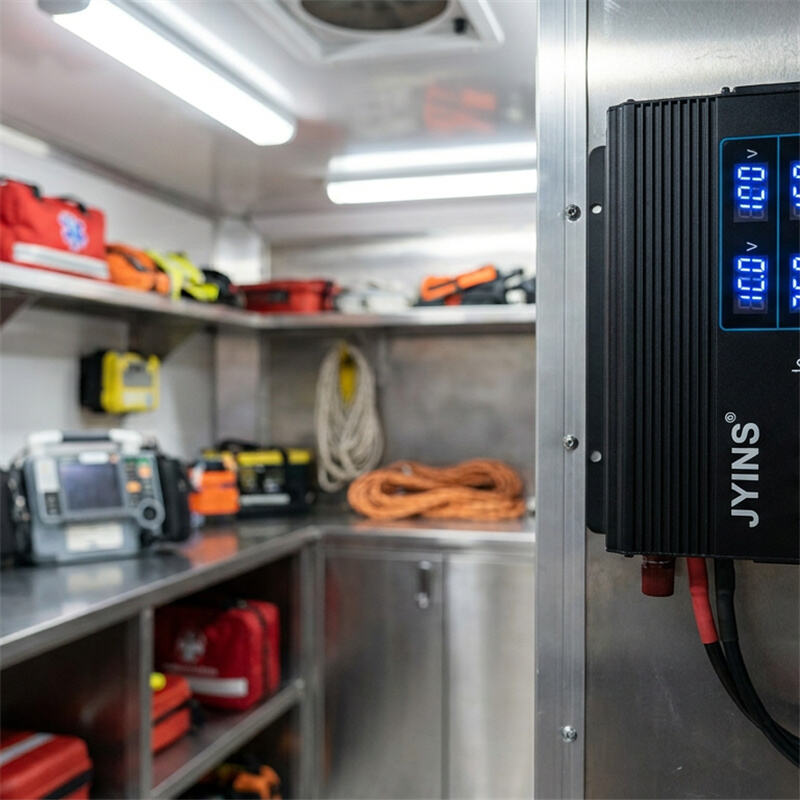
When natural disasters, grid failures, or search and rescue operations strike, portable emergency response trailers are dispatched to the front lines. These mobile command units, field hospitals, and communication trailers must set up immediately in rugged, off-grid environments. They provide power for critical medical equipment, radio dispatch consoles, satellite links, high-intensity LED floodlights, and various electronic tools.
In these high-stakes scenarios, the selection of the power conversion system is a primary engineering concern. The mobile power source must be highly reliable, energy-efficient, and easy to deploy. Historically, designers had to choose between low-frequency inverters, which rely on massive copper and iron transformers, and high-frequency inverters, which utilize advanced electronic switching circuits.
Today, high-frequency pure sine wave inverters have become the undisputed standard and preferred choice for emergency response trailers. This article details the engineering reasons behind this preference, exploring how high-frequency inverter technology enhances the mobility, efficiency, and reliability of emergency fleets, and why JYINS high-frequency inverters are selected by top emergency response vehicle builders worldwide.
Technical Definitions: HF vs. LF Inverter Design
To understand why high-frequency inverters are preferred, we must briefly look at how they differ from low-frequency units:
- Low-Frequency Inverters: These systems convert DC power to AC using a simple switching design, and then step up the voltage using a massive, heavy iron-core transformer operating at the grid's utility frequency of 50Hz or 60Hz. Because of this heavy transformer, low-frequency inverters are incredibly bulky and heavy, but they excel at handling extreme starting surges for heavy inductive loads like motors or compressors.
- High-Frequency Inverters: These systems utilize a multi-stage power conversion process. They first use high-frequency switching circuits to step up the low-voltage DC power to high-voltage DC power. This step-up process uses a tiny, lightweight high-frequency transformer operating at tens of kilohertz. The high-voltage DC is then converted into a clean AC output. This electronic approach eliminates the need for massive iron-core components.
Why High-Frequency Inverters are Preferred for Emergency Trailers
For B2B fleet managers and disaster response coordinators, high-frequency inverters offer several critical operational advantages:
1. Substantial Weight Savings: Enhancing Trailer Performance
In mobile applications, weight is a critical factor. Every kilogram of weight added to an emergency response trailer increases the strain on the towing vehicle's engine, suspension, and brakes. It also limits the amount of other critical survival gear, food, water, and medical supplies that the trailer can safely carry.
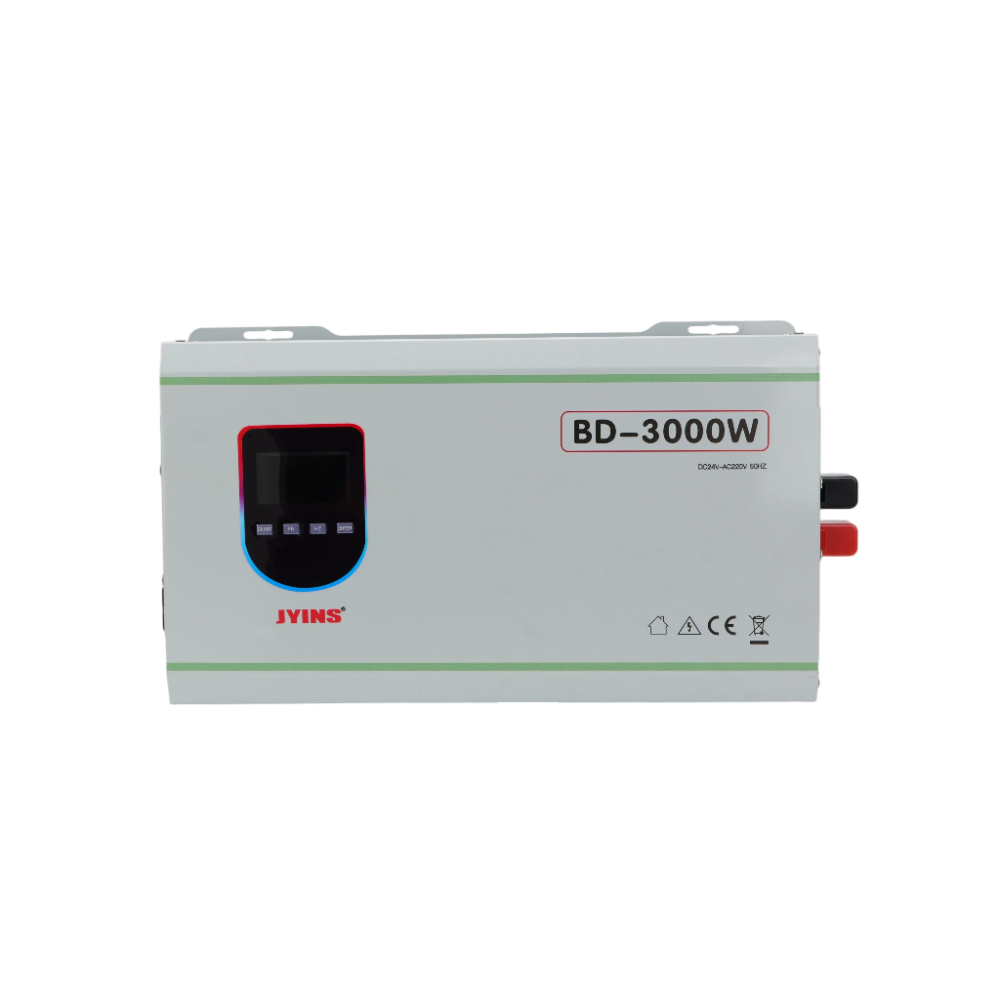
High-frequency inverters typically weigh 70 to 80 percent less than low-frequency inverters of equivalent power capacity. For example, a 3000W low-frequency inverter can easily weigh over 25 to 30 kilograms due to its heavy copper windings and iron core. In contrast, a 3000W high-frequency pure sine wave inverter, like the JYINS JYP Series, weighs only around 5 to 7 kilograms.
This significant weight reduction allows trailer builders to design lighter, more agile trailers that can be towed by standard utility vehicles over muddy, flooded, or debris-strewn terrain where a heavy trailer would bog down.
2. Compact Footprint and Space Optimization
The interior space of a portable emergency trailer is highly limited. Every square centimeter must be carefully allocated. Communications racks, medical supply cabinets, and workspace countertops compete for space.
Because they eliminate the bulky low-frequency transformer, high-frequency inverters have a much smaller physical footprint. They are compact enough to be easily mounted flat against walls, inside shallow electronics compartments, or directly beneath command desks. This flexibility in mounting allows system designers to maximize workspace efficiency inside the trailer, providing a more comfortable and functional environment for emergency personnel.
3. Exceptional Efficiency for Electronic and LED Loads
Emergency response trailers are primarily used to power electronic devices: computers, monitors, communications equipment, LED lighting, and medical diagnostic sensors. These are highly sensitive, non-inductive electronic loads.
High-frequency inverters are exceptionally efficient when powering electronic equipment. JYINS high-frequency pure sine wave inverters operate at conversion efficiencies exceeding 90 to 92 percent. Under light or moderate loads, they consume significantly less idle current than low-frequency units, which require substantial energy just to keep their large magnetic cores energized. This high efficiency translates directly into longer battery runtimes, ensuring that the trailer's backup battery bank can sustain critical operations for hours longer before requiring generator recharging.
4. Superior Voltage Regulation and Pure Sine Wave Cleanliness
Disaster response communications and medical equipment require exceptionally clean, stable power. Voltage spikes, sags, or electrical noise can cause computers to reboot, ruin telemetry data, or damage sensitive life-support systems.
JYINS high-frequency pure sine wave inverters feature sophisticated microprocessing units that continuously monitor and adjust the output waveform. They deliver a pure, ultra-stable sine wave with a Total Harmonic Distortion of less than 3 percent. This clean power output matches or exceeds grid power quality, protecting sensitive electronic loads from premature failure and ensuring that radio transceivers operate without unwanted harmonic interference.
5. Advanced Soft-Start Technology
While low-frequency inverters are traditionally praised for their high surge capacity, modern high-frequency inverters engineered by JYINS address the startup current of moderate inductive loads (like small tools or ventilation fans) through advanced soft-start technology. This software-driven control gradually ramps up the output voltage during startup, effectively managing inrush currents and preventing the inverter from shutting down due to overload. This smart control provides a reliable bridge between lightweight electronic design and operational versatility.
Summary: Choosing JYINS for Mission-Critical Fleet Deployment
In emergency response operations, there is no room for compromise. The equipment you select must be ready to perform instantly under the most stressful conditions on earth.
For portable emergency response trailers, high-frequency pure sine wave inverters represent the ideal balance of mobility, efficiency, and power quality. By selecting a JYINS high-frequency inverter, B2B procurement managers and fleet engineers ensure their trailers are lightweight, highly efficient, and equipped with clean, reliable power to protect and run sensitive command electronics. When lives are on the line, choose the power density and reliability of JYINS.
Table of Contents
- Introduction: The Demands of Mobile Emergency Power
- Technical Definitions: HF vs. LF Inverter Design
- Why High-Frequency Inverters are Preferred for Emergency Trailers
- 1. Substantial Weight Savings: Enhancing Trailer Performance
- 2. Compact Footprint and Space Optimization
- 3. Exceptional Efficiency for Electronic and LED Loads
- 4. Superior Voltage Regulation and Pure Sine Wave Cleanliness
- 5. Advanced Soft-Start Technology
- Summary: Choosing JYINS for Mission-Critical Fleet Deployment