EN
EN


The Imperative of Anti-Islanding in European Smart Grids
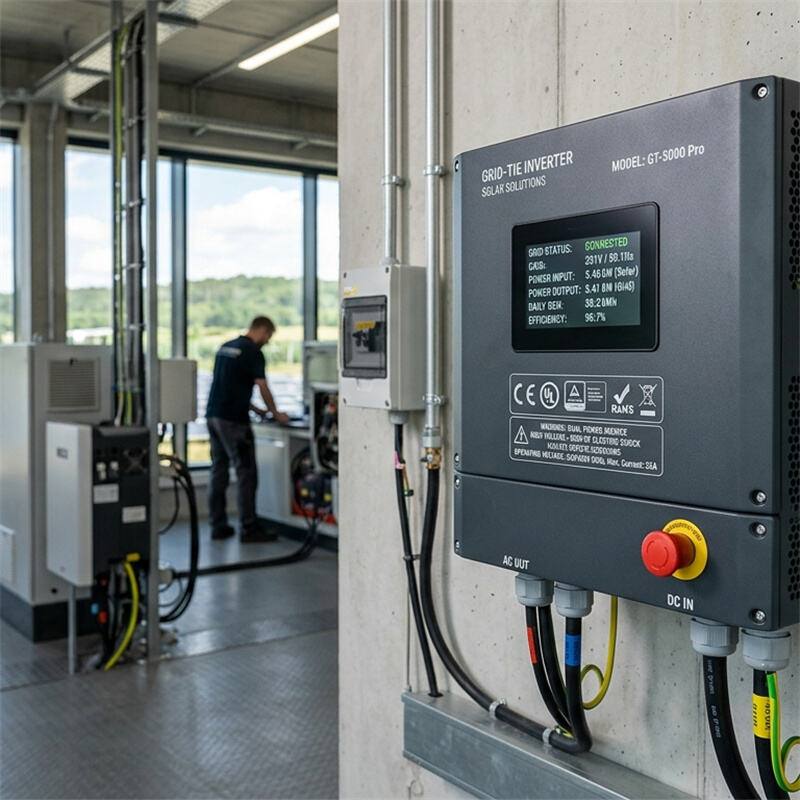
The European Union is leading the global transition toward distributed energy resources (DERs), integrating massive capacities of solar photovoltaics and battery storage systems into the low and medium-voltage grids. As the penetration of these decentralized generators increases, ensuring grid safety and stability becomes highly complex. One of the most critical safety mechanisms required for grid-connected inverters is island detection (anti-islanding). An electrical island occurs when a portion of the distribution grid becomes physically disconnected from the utility source but continues to be powered by local DERs. This presents severe risks, including electrocution hazards for utility maintenance crews, damage to consumer appliances due to unregulated voltage and frequency, and out-of-phase automatic reclosure of utility circuit breakers, which can cause catastrophic damage to the inverters. For B2B procurement directors, utility operators, and EPCs across the EU, vetting the island detection safety logic of inverters is a critical compliance step.
This guide explains how anti-islanding logic is tested and validated under European standards, with a specific focus on the EN 50549 family and IEC 62116, and how JYINS inverters achieve compliance while avoiding nuisance grid trippings.
Passive vs. Active Island Detection Techniques
To ensure reliable detection under all grid conditions, modern inverters utilize a combination of passive and active island detection methods within their control firmware.
Passive Methods:
- Under/Over Voltage Protection (UVP/OVP): Monitors the grid voltage. If the local load does not match the inverter's power output during an islanding event, the voltage will quickly exceed safe limits, causing the inverter to trip.
- Under/Over Frequency Protection (UFP/OFP): Monitors grid frequency. A mismatch between local load and inverter generation causes the frequency to drift, triggering a trip.
- Rate of Change of Frequency (RoCoF): Measures how fast the grid frequency is shifting. In a localized island, the frequency changes much faster than in a massive synchronized utility grid. A high RoCoF indicates a loss of grid connection, prompting a shutdown.
- Phase Jump Detection: Monitors the phase angle of the grid voltage. A sudden shift in phase angle suggests a grid disconnection.
Active Methods (Mandatory for Compliance):
Passive methods have a dead-zone where the local load exactly matches the solar output, preventing any significant voltage or frequency shift. Active methods resolve this by introducing small, continuous perturbations into the inverter's output:
- Active Frequency Drift (AFD): The inverter constantly tries to push the grid frequency slightly away from nominal. As long as the grid is strong, it corrects this push. If the grid is disconnected, the frequency drifts rapidly, triggering a trip.
- Reactive Power Fluctuation: The inverter injects small pulses of reactive power and monitors the voltage response. A large voltage response indicates a weak, islanded grid.
JYINS inverters combine these passive and active techniques, employing advanced digital signal algorithms to monitor grid health continuously. This multi-layered detection guarantees that an island is identified and isolated in less than 2 seconds, satisfying the strict requirements of European safety codes.
Deciphering European Standards: EN 50549 and IEC 62116
When vetting inverters for European projects, procurement teams must ensure that the equipment is certified to the relevant regional and international standards. The two primary references for anti-islanding in the EU are:
- EN 50549-1 and EN 50549-2: These harmonized European standards define the requirements for generating plants intended to be connected in parallel with distribution networks. Part 1 covers connection to low-voltage networks (up to C&I systems), while Part 2 covers medium-voltage connections. Both parts mandate automatic disconnection of the generator in the event of an island, requiring compliance with testing procedures defined in IEC 62116.
- IEC 62116: This is the international reference standard for testing anti-islanding evaluation of utility-interconnected photovoltaic inverters. It defines a highly rigorous laboratory test procedure using an RLC resonant load circuit. The inverter must disconnect within 2 seconds under various load balance conditions, including the critical balanced load state where active and reactive powers are perfectly matched, leaving zero room for passive detection alone.
During the vetting process, B2B buyers should request the official test certificates and laboratory reports verifying that the inverter has passed all IEC 62116 test conditions. JYINS inverters are fully certified by accredited third-party test houses (such as TUV and Bureau Veritas), providing complete documentation for utility approvals across all EU member states.
Balancing Safety with Grid Resilience: Avoiding Nuisance Trips
While rapid island detection is vital for safety, it must not be so sensitive that it causes nuisance tripping during normal grid transients. As Europe transitions to a grid with lower physical inertia, short-duration frequency and voltage swings are becoming more common. If millions of residential and commercial inverters trip offline simultaneously due to a minor grid transient, a small frequency dip could escalate into a massive blackout.
To prevent this, EN 50549 mandates that inverters support Frequency Sensitive Mode (FSM) and ride-through capabilities, allowing them to remain connected during brief, non-hazardous grid disturbances. JYINS engineers have resolved this challenge through highly optimized control loops:
- Intelligent Filtering: The inverter control logic distinguishes between local islanding events (which require immediate shutdown) and wider grid voltage/frequency transients (which require the inverter to stay online and support the grid).
- Dual-Core Processors: One core focuses entirely on the high-frequency sampling required for active island detection, while the other manages the power regulation and grid ride-through control, ensuring no delay in processing critical safety decisions.
This sophisticated balance ensures that JYINS inverters provide maximum safety without compromising grid uptime or utility power stability.
Procurement Guidance for EU Importers and EPCs
For European solar wholesalers and project developers, sourcing fully compliant and certified inverters is the foundation of a successful business. Look for a partner that offers clear compliance paths, comprehensive technical data sheets, and local grid support templates.
JYINS provides a complete range of certified grid-tied inverters tailored for the European market. Our commitment to strict quality control, rigorous compliance testing, and advanced active island detection logic makes us the preferred partner for B2B solar professionals. Contact our European support desk to receive copies of our EN 50549 and IEC 62116 test certificates and to discuss how we can support your upcoming C&I projects.