EN
EN


The Challenge of Weak Rural Grids in Southeast Asia
Southeast Asian countries, including Vietnam, Indonesia, the Philippines, Thailand, and Cambodia, have seen a massive expansion of distributed solar power in rural and agricultural regions. These areas utilize solar energy to power agricultural processing facilities, water pumping stations, and local manufacturing. However, the physical infrastructure of rural grids in these regions is often weak, characterized by long, high-impedance distribution lines and insufficient voltage regulation equipment at local substations. As a result, these grids are highly susceptible to voltage sags and surges. For B2B project developers and systems engineers, voltage sags represent a primary cause of solar plant downtime, as standard inverters are designed to trip offline during any grid voltage drop to protect themselves. This guide explores how to resolve these ride-through issues using advanced inverter settings and robust hardware design.
A voltage sag (or brownout) is a temporary reduction in grid voltage, typically lasting from a few cycles to several seconds. It is commonly caused by starting large industrial motors, transformer switching, or lightning strikes on overhead transmission lines. When an inverter trips offline during a voltage sag, it must wait for several minutes before reconnecting to the grid. In areas with frequent sags, this constant tripping leads to substantial energy loss, disrupts critical facility operations, and stresses the inverter's electrical components.
Low Voltage Ride-Through (LVRT) Mechanisms
To prevent constant tripping, modern grid codes and technical standards require inverters to support Low Voltage Ride-Through (LVRT), also known as Fault Ride-Through (FRT). LVRT is the capability of an inverter to remain connected to the grid during short-duration voltage sags without tripping offline. This helps stabilize the grid, as sudden disconnection of large amounts of solar power during a grid fault could trigger a complete grid collapse.
How JYINS LVRT Logic Works:
- Symmetrical and Asymmetrical Sags: The inverter must handle both three-phase symmetrical sags (affecting all three phases equally) and single-phase asymmetrical sags (where only one phase drops due to a localized line fault).
- Active Reactive Current Support: During an LVRT event, the inverter does not just sit idle. It must actively inject reactive current into the grid to help boost the voltage back to normal levels. The amount of reactive current injected is proportional to the depth of the voltage sag, defined by the grid-support factor (K-factor).
- Active Power Curtailment: To protect the internal power electronics from overcurrent during a low voltage condition, the inverter temporarily reduces its active power output while maintaining its connection to the grid.
JYINS industrial-grade inverters feature programmable LVRT curves. Engineers can customize the ride-through duration and voltage thresholds to match the specific grid conditions of the local utility, ensuring that the inverter remains online during transient faults and keeps generating power once the grid recovers.
Optimizing Ride-Through Thresholds and Reconnection Parameters
Resolving voltage sag issues requires careful tuning of the inverter's protection parameters. For weak rural grids in Southeast Asia, using standard European or North American default grid settings is often inadequate. Systems engineers should adjust several critical parameters:
- UVP1 (Undervoltage Protection 1) Threshold: Increase the ride-through duration for moderate sags. For instance, instead of tripping immediately when the voltage drops to 85% of nominal, configure the inverter to ride through the sag for up to 3 to 5 seconds, provided the local utility permits it.
- UVP2 (Undervoltage Protection 2) Threshold: This should be reserved for catastrophic drops (below 50%). If the voltage falls this low, immediate disconnection is required for safety.
- Soft Reconnection: If the inverter does trip, it should not slam back onto the grid at full power. Program a soft-reconnection ramp that slowly increases active power export over 2 to 5 minutes, preventing local voltage fluctuations upon reconnection.
- Grid Impedance Adjustment: Inverters calculate their output matching based on baseline grid impedance. In extremely long rural lines, adjusting the grid impedance matching parameter in the JYINS controller helps the inverter stay synchronized and prevents the Phase-Locked Loop (PLL) from losing lock during sags.
By carefully configuring these software settings in the JYINS inverter management system, installers can drastically reduce nuisance tripping caused by momentary rural grid fluctuations.
Hardware-Level Solutions and Hybrid Integration
In extremely unstable rural grids, software tuning alone may not be sufficient. When voltage sags are frequent, deep, and prolonged, integrating physical hardware support becomes necessary to guarantee business continuity for industrial operations:
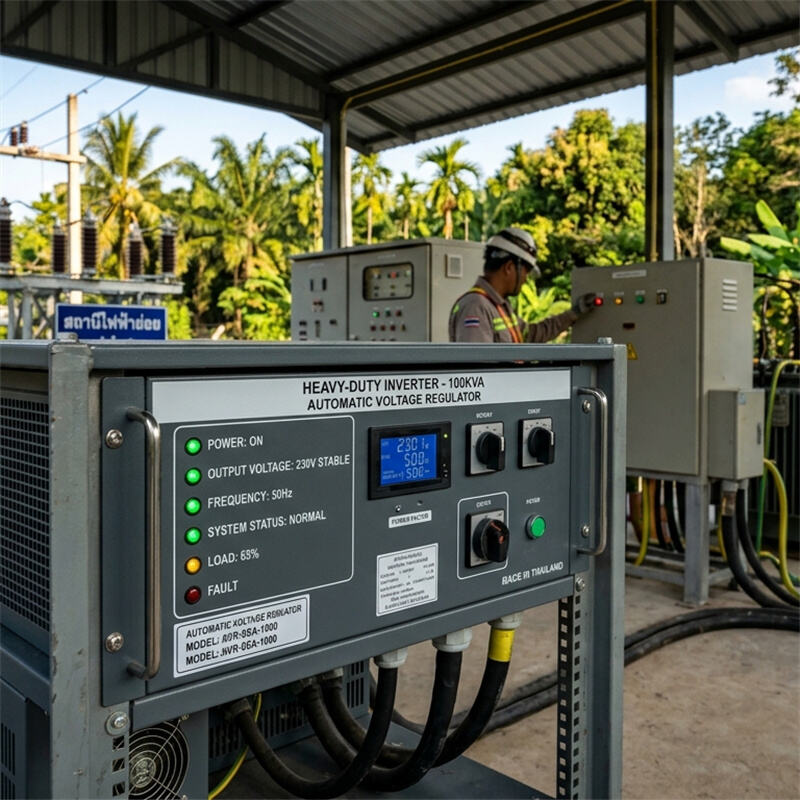
- Active Voltage Regulators (AVR) and Static Var Compensators (SVC): Installing these physical devices at the point of common coupling helps stabilize the local grid voltage before it reaches the inverter, providing a buffer against sags and swells.
- Hybrid Inverter and Battery Storage Systems: For high-surge industrial machinery workshops or remote agricultural processing plants, upgrading to a hybrid inverter system is the most effective solution. When a severe voltage sag occurs, a JYINS hybrid inverter can transition to off-grid backup mode in less than 10 milliseconds. The battery system immediately takes over the load, ensuring uninterrupted operation for local equipment while the inverter remains safe from grid instability.
This hybrid configuration is highly recommended for B2B applications in rural Southeast Asia, where continuous power is critical for preserving raw agricultural products or maintaining automated manufacturing lines.
Sourcing the Right Inverters for Unstable Environments
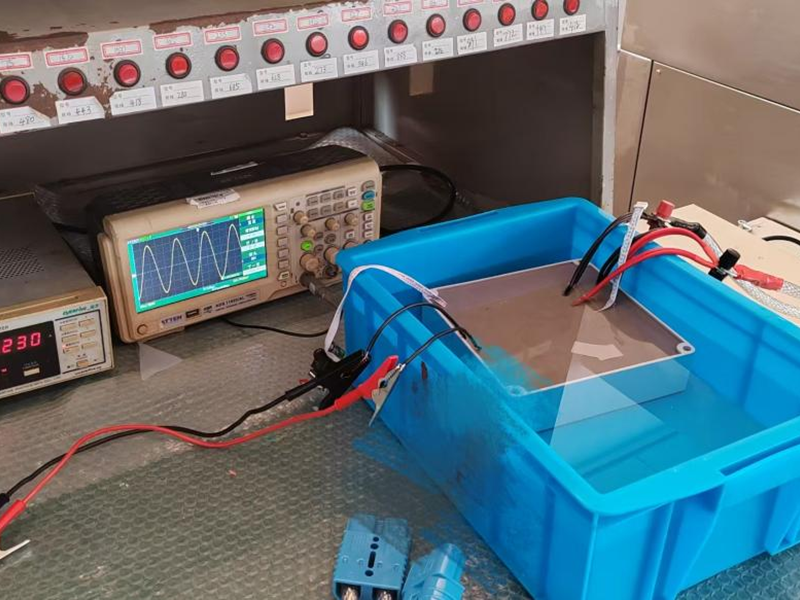
When sourcing inverters for remote projects, B2B procurement directors must prioritize ruggedness and field-proven reliability. JYINS inverters are designed with these harsh, unstable environments in mind. Our systems undergo extensive simulation testing under simulated weak-grid conditions, ensuring that their control loops and grid-synchronization algorithms (Phase-Locked Loops, or PLL) remain locked even under severe phase distortion and voltage fluctuations.
Our technical support team works closely with regional distributors and EPCs across Southeast Asia, providing local grid-profile templates and field support to ensure successful commissioning. By selecting JYINS, you are investing in a durable, high-performance technology that directly addresses the challenges of weak rural infrastructure, guaranteeing reliable power delivery and maximum project uptime.
Ultimately, addressing voltage sag ride-through issues in rural Southeast Asian grids requires a proactive partnership between regional EPCs, local utility distribution system operators, and highly experienced hardware manufacturers. By conducting detailed initial grid impedance assessments and pairing the correct software ride-through configurations with robust, low-maintenance hardware, industrial developers can ensure that their remote renewable investments remain highly profitable, stable, and resilient against any grid instability.