EN
EN


The Engineering of Transformerless Inverter Systems and RCMU
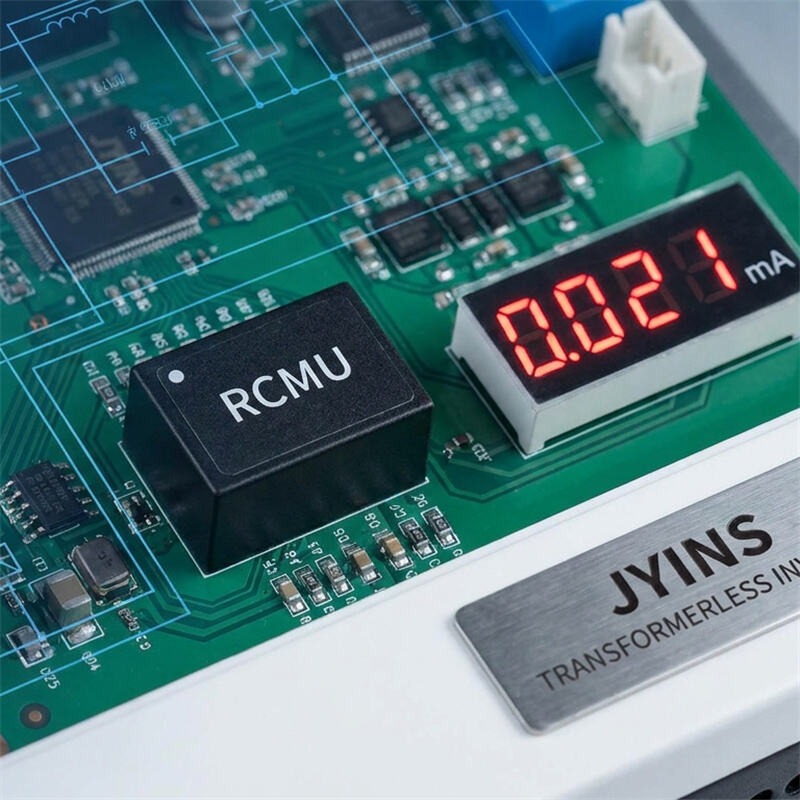
Transformerless hybrid inverters have become the dominant choice for modern B2B solar and energy storage installations. By removing the bulky and heavy copper isolation transformer, manufacturers can deliver inverters that are highly efficient, lighter, and more cost-effective. However, the elimination of the galvanic isolation barrier introduces a significant technical challenge: the DC photovoltaic (PV) array becomes electrically coupled to the AC utility grid. This coupling creates a path for leakage currents to flow from the PV panels, through the physical air and mounting structure, to the ground. To ensure safety, international standards (such as IEC 62109-2) require transformerless inverters to feature a highly sensitive Residual Current Monitoring Unit (RCMU). This device constantly monitors the system's leakage currents and must trip the inverter within milliseconds if a dangerous current is detected. For systems engineers, managing and troubleshooting RCMU nuisance tripping is essential for maintaining both system safety and continuous operation.
Understanding Nuisance Tripping: Parasitic Capacitance and Stray Currents
To troubleshoot leakage current faults, engineers must understand why these currents occur in a healthy system. In a transformerless PV array, a large capacitor is formed between the silicon solar cells (which are conductive), the protective glass cover, the metal module frame, and the grounded racking system. This physical structure is known as parasitic or stray capacitance.
During normal operation, the inverter's high-frequency switching circuits generate alternating voltages. These fluctuating voltages act on the stray capacitance, causing a continuous, high-frequency AC leakage current (residual current) to flow to the ground. This leakage current is naturally higher during specific environmental conditions:
- Rain and Morning Dew: Wet surfaces on the solar modules and cabling significantly increase the stray capacitance, leading to a sudden surge in leakage current. This is why many RCMU trips occur in the early morning as the dew settles on the panels.
- Large Array Size: The larger the physical surface area of the solar array, the higher the total stray capacitance, and the larger the baseline leakage current.
Nuisance tripping occurs when these benign, environment-driven currents exceed the RCMU's safety thresholds, causing the inverter to shut down unnecessarily.
Systematic Diagnostics for Leakage Current Trip Events
When a JYINS hybrid inverter registers an RCMU fault, systems engineers should follow a structured diagnostic protocol to distinguish between a dangerous ground fault and benign nuisance tripping:
- Step 1: Examine the Fault Log and Environmental Data. Check the exact time the fault occurred. If the trip happens consistently at dawn or during rainstorms, and the inverter automatically resumes operation once the sun dries the array, the issue is likely due to high stray capacitance. If the trip occurs randomly during dry conditions, it points to a physical insulation failure.
- Step 2: Measure DC Insulation Resistance (Riso). Disconnect the DC strings from the inverter and use a high-voltage megohmmeter (megger) to measure the insulation resistance between each DC conductor and the physical ground. A healthy string should have a resistance well above the minimum threshold (typically 1 megohm). A lower reading indicates damaged cable insulation, a pinched wire against the racking, or water inside a junction box.
- Step 3: Analyze the Baseline Residual Current. Use the JYINS inverter display or cloud monitoring dashboard to read the live residual current value. Compare this value to the inverter's rated trip threshold (typically 30mA for sudden changes, and up to 300mA for gradual changes). If the baseline residual current is consistently high (e.g., 200mA) even in dry weather, the system has too much parasitic capacitance, or a minor ground fault exists.
Engineering Solutions: Passive Filtering and Inverter Parameter Tuning
If diagnostics confirm that the RCMU trips are due to high parasitic capacitance rather than a physical ground fault, engineers can implement several hardware and software adjustments:
- Software Threshold Adjustment: Modern JYINS inverters allow certified engineers to adjust the RCMU response characteristics within the limits allowed by local electrical codes. For instance, the startup delay or the slow-leakage trip threshold can be slightly modified to accommodate larger PV arrays with high baseline capacitance, preventing early-morning startup trips.
- DC Common-Mode Chokes: Installing external common-mode chokes (ferrite cores) on the DC input strings can significantly reduce the high-frequency switching currents that flow through the stray capacitance. These filters absorb the high-frequency noise while allowing the DC power to flow to the inverter unimpeded.
- AC Isolation Transformers: If the ambient stray capacitance is simply too large to manage through filtering (common in massive, multi-megawatt rooftop installations), installing an isolation transformer on the AC output side of the inverter will break the electrical link to the grid, eliminating the path for AC leakage currents and permanently resolving RCMU tripping.
Grounding and Cabling Best Practices to Eliminate Stray Leakage
Proper installation and design of the PV array is the most effective way to prevent leakage current issues from the start. Systems engineers should adhere to strict physical installation standards:
- High-Quality Cable Management: Never allow DC cables to rest directly on the metal roof or racking. Use UV-resistant cable clips or trays to keep cables suspended and dry, reducing capacitive coupling to the grounded structure.
- Ensure Solid Equipotential Grounding: Ensure that all solar module frames, racking, combiner boxes, and the inverter chassis are securely connected to a single, low-resistance ground system. Poor grounding can lead to unstable electrical potentials, confusing the RCMU's highly sensitive current sensors.
- Select Low-Capacitance PV Modules: When designing new arrays, B2B buyers should evaluate the stray capacitance specifications of the PV modules. Choosing modern modules with lower internal parasitic capacitance will simplify inverter integration and prevent future RCMU issues.
The JYINS Approach: High-Precision RCMU and Resilient Design
JYINS is committed to manufacturing high-performance power conversion technology that balances safety and productivity. Our transformerless hybrid inverters are equipped with custom-designed, high-precision RCMU sensors that can distinguish between high-frequency capacitive leakage currents and dangerous, low-frequency DC ground faults.
Our advanced control firmware uses intelligent signal filtering to ignore momentary, harmless spikes in residual current caused by minor environmental shifts. This ensures that the system maintains continuous, high-efficiency power production, while remaining ready to isolate the circuit within milliseconds if a true electrical hazard occurs. By choosing JYINS, B2B systems integrators gain a partner dedicated to delivering safe, stable, and highly productive energy solutions.
Table of Contents
- The Engineering of Transformerless Inverter Systems and RCMU
- Understanding Nuisance Tripping: Parasitic Capacitance and Stray Currents
- Systematic Diagnostics for Leakage Current Trip Events
- Engineering Solutions: Passive Filtering and Inverter Parameter Tuning
- Grounding and Cabling Best Practices to Eliminate Stray Leakage
- The JYINS Approach: High-Precision RCMU and Resilient Design