EN
EN


The RV Manufacturer’s Engineering Guide: Optimizing Power Conversion Systems for High-Vibration Environments
For Recreational Vehicle (RV) manufacturers, the challenge of electrical system design is fundamentally different from residential or industrial stationary applications. An RV is essentially a rolling earthquake. Over its lifespan, a Class A motorhome or a rugged off-road travel trailer will subject its internal components to thousands of hours of multi-axis vibration, mechanical shock, and thermal cycling.
Nowhere is this challenge more critical than in the power conversion system. The inverter is the bridge between the DC battery bank and the AC comforts of home—microwave ovens, air conditioners, and sensitive entertainment systems. If the inverter fails due to mechanical fatigue, the customer's experience is ruined, and the manufacturer faces costly warranty claims. This guide explores the engineering principles required to optimize power conversion for high-vibration mobile environments, featuring insights from the JYINS (Hisolar) R&D department.
1. The Physics of Failure: How Vibration Destroys Inverters
In a stationary environment, an inverter's primary enemy is heat. In an RV, it is mechanical stress. Vibration acts on an inverter in several destructive ways:
Solder Joint Fatigue: Surface-mount components (SMD) and through-hole joints can develop micro-cracks over time. These cracks lead to intermittent connections and, eventually, total circuit failure.
Component Shearing: Larger, heavier components like electrolytic capacitors and transformers have significant mass. Under constant road vibration, the momentum of these components can shear them right off the PCB if they are not properly anchored.
Connector Fretting: Small movements in wire-to-board connectors can cause 'fretting corrosion'—the wear of contact plating which increases resistance and leads to overheating at the connection point.
2. Design-Level Solutions: The JYINS Engineering Approach
At JYINS Electrical, we have optimized our manufacturing process to meet the specific needs of RV Original Equipment Manufacturers (OEMs). Our engineering solutions focus on three key areas:
A. Mechanical Reinforcement (Potting and Adhesives)
To prevent heavy components from moving, we utilize specialized industrial-grade adhesives. High-mass capacitors are not just soldered; they are 'glued' to the PCB with vibration-dampening compounds. In some extreme-duty models, critical sub-assemblies are potted in resin, providing an absolute barrier against both vibration and moisture ingress.
B. PCB Structural Integrity
The thickness and material of the Printed Circuit Board (PCB) matter. For RV-specific inverters, JYINS utilizes multi-layer boards with increased copper weight and reinforced mounting points. This reduces the 'flex' of the board during heavy shocks (such as hitting a pothole), which is the leading cause of cracked solder joints.
C. High-Quality Solder Alloys
We use specific solder alloys that offer a balance between electrical conductivity and mechanical flexibility. Standard 'brittle' solders are prone to cracking under vibration; our RV-optimized lines use formulations designed to withstand the harmonic resonance of road travel.
3. Thermal Management in Confined Spaces
RV OEMs often install inverters in basements, closets, or under-bed compartments where airflow is restricted. In these high-vibration, high-heat environments, the cooling system must be both efficient and robust.
JYINS inverters utilize ball-bearing fans rather than sleeve-bearing fans. While more expensive, ball-bearing fans are significantly more resistant to the axial stress of vehicle movement and have a much longer MTBF (Mean Time Between Failures) in mobile applications. Furthermore, our intelligent thermal management logic ensures the fans only operate when necessary, extending their lifespan and reducing ambient noise for the end-user.
4. Installation Best Practices for OEMs
Even the best-engineered inverter can fail if installed incorrectly. For RV manufacturers, we recommend the following integration strategies:
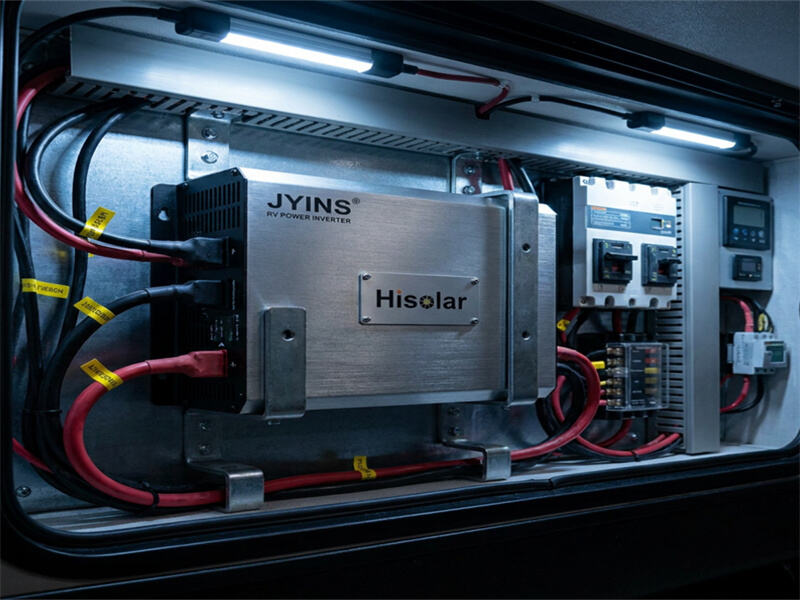
Orientation: Whenever possible, mount the inverter on a vertical bulkhead with the cooling fans blowing upward. This utilizes natural convection to assist the cooling system.
Damping Mounts: Using rubber isolation grommets at the mounting points can reduce the transfer of high-frequency chassis vibration to the inverter's internal components by up to 40%.
Cable Strain Relief: Heavy DC cables (e.g., 00 AWG) can pull on the inverter's terminals during vehicle movement. Proper strain relief within 6 inches of the inverter is essential to prevent terminal damage.
5. Compliance and Reliability Testing
For B2B buyers, certification is the ultimate proof of quality. JYINS products undergo rigorous testing protocols, including:
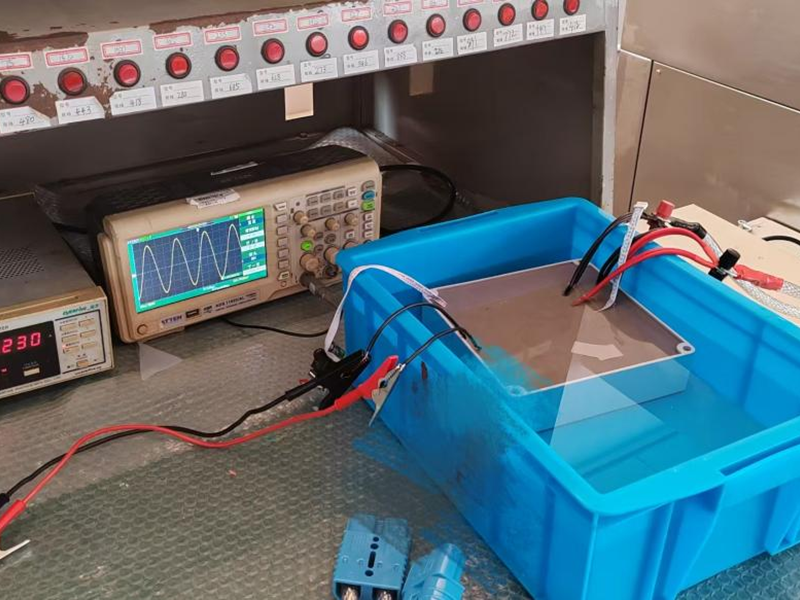
Vibration Testing: Simulated road-trip cycles spanning hundreds of hours.
Thermal Shock: Rapid cycling from -20°C to +60°C to ensure component expansion and contraction doesn't lead to failure.
Regulatory Standards: Ensuring compliance with CE, RoHS, and E-mark (E8) standards, which are critical for the European and global RV markets.
Conclusion: Partnering for Long-Term Quality
The transition toward 'All-Electric' RVs and the rise of lithium-based power systems have made the inverter more central than ever to the RV experience. For manufacturers, selecting a power conversion partner is a strategic decision that affects brand reputation and long-term profitability.
By choosing JYINS (Hisolar), RV OEMs gain access to engineering expertise focused specifically on the unique demands of the mobile environment. Our inverters are not just converted residential units; they are purpose-built for the road. Invest in engineering, and your customers will enjoy the journey without interruption.