EN
EN


Beyond the Price Tag: Calculating the 5-Year ROI of Pure Sine Wave vs. Modified Sine Wave Inverters for Industrial Fleet Management
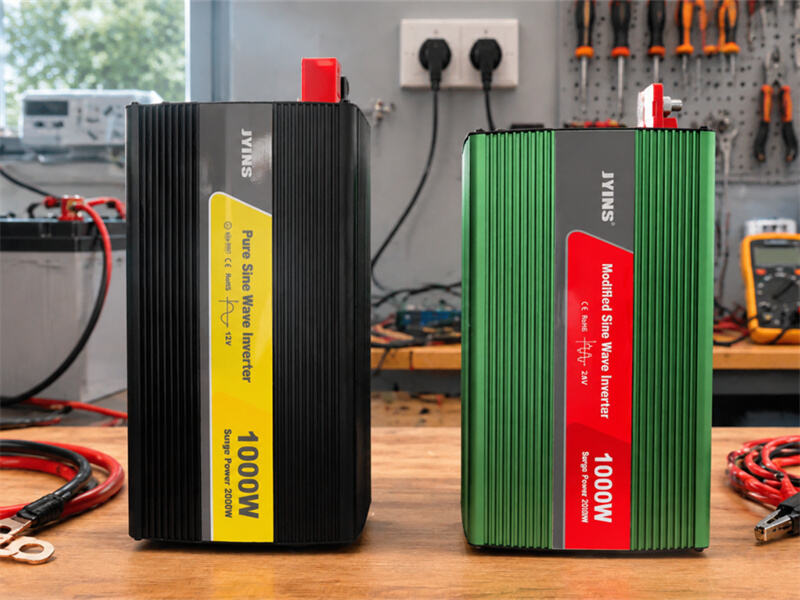
In the world of industrial fleet management, procurement decisions are often driven by a single metric: the initial purchase price. When equipping service vehicles, delivery trucks, or mobile workshops with power inverters, the cost difference between a Modified Sine Wave (MSW) inverter and a Pure Sine Wave (PSW) inverter can seem significant at first glance. However, for the experienced fleet manager, the initial 'price tag' is only the tip of the iceberg. To truly understand the financial impact on operations, one must look at the Total Cost of Ownership (TCO) and the 5-year Return on Investment (ROI).
As a leading manufacturer of high-performance power solutions, JYINS Electrical (Hisolar) has tracked the long-term performance of both technologies in rigorous B2B environments. This guide breaks down the hidden costs of 'cheaper' power and calculates why Pure Sine Wave technology is the superior financial choice for modern fleets.
1. The Technical Foundation: Why Waveforms Matter
To calculate ROI, we must first understand the technical deficiency of Modified Sine Wave inverters. An MSW inverter approximates a sine wave by using a stepped, square-wave pattern. This results in high Total Harmonic Distortion (THD). In contrast, a JYINS Pure Sine Wave inverter (JYP Series) produces a smooth, continuous wave identical to—or often cleaner than—the utility grid power found in a brick-and-mortar facility.
High THD is not just a technical footnote; it is a source of electrical 'noise' and heat. For sensitive electronics like diagnostic tablets, ruggedized laptops, and specialized telemetry equipment used in fleet management, this 'dirty' power causes internal components to work harder and run hotter.
2. The Energy Efficiency Factor: Fuel and Battery Savings
Efficiency is the first pillar of ROI. Standard MSW inverters typically operate at 70% to 80% efficiency. This means that for every 100W of DC power pulled from the vehicle’s battery, 20W to 30W is wasted as heat. JYINS Pure Sine Wave inverters, however, boast efficiency ratings exceeding 90%.
The 5-Year Impact: In a fleet of 50 vehicles, each running an inverter for 4 hours a day, the cumulative energy waste of MSW units places a significantly higher load on the vehicle's alternator. This translates into marginal but measurable increases in fuel consumption and accelerated wear on the alternator and battery bank. Over five years, the fuel savings and reduced battery replacement frequency associated with high-efficiency PSW inverters can often cover the initial price premium of the unit itself.
3. Equipment Longevity: Protecting Your Mobile Assets
The most substantial hidden cost of MSW inverters is the premature failure of the connected equipment. Industrial fleets today carry high-value assets: laser scanners, mobile printers, delicate medical equipment (in ambulances), and sophisticated ECU diagnostic tools.
Inductive Loads: Motors and pumps (found in mobile refrigeration or power tools) run roughly on MSW power. They generate 'waste heat' because they cannot efficiently use the stepped wave. This can reduce the lifespan of a tool by 30-50%.
Sensitive Electronics: High THD can cause 'ghost' errors in software, screen flickering in monitors, and permanent damage to power supply capacitors in laptops.
If an MSW inverter causes a $2,000 diagnostic tool to fail two years early, the ROI of that 'cheap' inverter becomes deeply negative. By providing clean power, JYINS PSW inverters ensure that your fleet’s technology lasts for its full intended service life.
4. Operational Reliability and Downtime Costs
In B2B operations, downtime is the ultimate profit killer. If a technician is in the field and their inverter fails—or worse, it fries their laptop—the service call is lost. You are paying for the technician’s time, the fuel for the truck, and potentially facing penalties for missed SLAs (Service Level Agreements).
JYINS JYP series inverters are engineered for industrial reliability, featuring comprehensive protection circuits: short circuit, overload, over-temperature, and low-voltage alarms. MSW inverters are often built with lower-grade components to meet their budget price point, making them statistically more likely to fail under the constant vibration and temperature fluctuations of a service vehicle.
5. The 5-Year ROI Calculation: A Hypothetical Case Study
Consider a fleet manager choosing between a $150 MSW inverter and a $350 JYINS 1000W Pure Sine Wave inverter for a single truck.
Cost Category
Modified Sine Wave (5 Yrs)
JYINS Pure Sine Wave (5 Yrs)
Initial Purchase
$150
$350
Equipment Repairs/Replacements
$800 (1 laptop PSU, 1 tool repair)
$0
Battery/Alternator Wear
$300 (1 extra battery)
$0 (Standard maintenance)
Lost Productivity (Downtime)
$500 (1 major incident)
$0
Total 5-Year TCO
$1,750
$350
In this scenario, the 'expensive' Pure Sine Wave inverter is actually $1,400 cheaper over the life of the vehicle. When scaled across a fleet of 100 vehicles, the savings reach $140,000—a massive contribution to the company's bottom line.
6. The JYINS Edge for Fleet Professionals
At JYINS Electrical, we don't just build inverters; we build industrial infrastructure. Our JYP series is designed with the B2B buyer in mind, offering:
Low Idle Current: Minimizes battery drain when the vehicle is off but the inverter is left on.
Soft-Start Technology: Protects equipment from initial power surges.
Advanced Cooling: Intelligent fans that only run when needed, reducing noise and increasing the lifespan of the inverter.
Conclusion: A Strategic Investment
For fleet managers, the choice is clear. While Modified Sine Wave inverters may satisfy a quarterly budget constraint, they fail the test of long-term operational excellence. By investing in JYINS Pure Sine Wave technology, you are not just buying a power converter; you are buying insurance for your equipment, efficiency for your batteries, and reliability for your field operations.
Stop looking at the price tag and start looking at the ROI. Choose JYINS for power you can trust.
Table of Contents
- 1. The Technical Foundation: Why Waveforms Matter
- 2. The Energy Efficiency Factor: Fuel and Battery Savings
- 3. Equipment Longevity: Protecting Your Mobile Assets
- 4. Operational Reliability and Downtime Costs
- 5. The 5-Year ROI Calculation: A Hypothetical Case Study
- 6. The JYINS Edge for Fleet Professionals
- Conclusion: A Strategic Investment