EN
EN


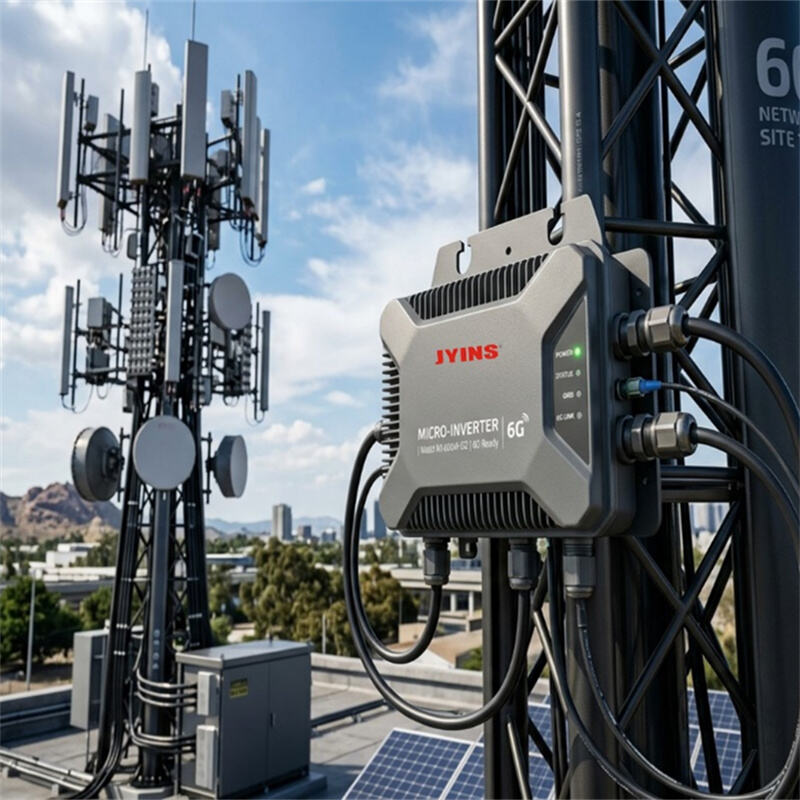
The Impending Arrival of 6G and the Power Challenge
While the deployment of 5G telecommunication networks is still ongoing worldwide, researchers, standardization bodies, and leading technology firms are already laying the technical foundations for the next generation of mobile connectivity: 6G. Expected to begin commercial rollouts around 2030, 6G networks will deliver unprecedented capabilities, including terabit-per-second data speeds, microsecond latencies, integrated sensing and communication, and seamless connectivity for billions of autonomous Internet of Things (IoT) devices. However, achieving these futuristic goals requires a massive shift in physical infrastructure. 6G utilizes extremely high-frequency bands (including millimeter-wave and sub-terahertz frequencies). Because these high-frequency signals have very short wavelengths, they attenuate rapidly over distance and are easily blocked by buildings, foliage, and atmospheric moisture. Consequently, 6G networks will rely on a ultra-dense network of outdoor small cells, micro base stations, and edge computing nodes installed on utility poles, streetlights, building facades, and telecom towers. This hyper-dense network creates a massive energy challenge: the power grid cannot easily or cost-effectively extend physical AC cables to millions of remote micro-sites. Integrating localized, highly distributed solar photovoltaics (PV) and battery storage directly onto these outdoor cells has emerged as the only practical solution for powering 6G infrastructure. For telecommunications hardware engineers, utility operators, and B2B procurement directors, this shift will fundamentally reshape the technical specifications of outdoor micro-inverters. This guide explores the critical technical evolutions driven by the 6G revolution.
Ultra-High Power Density and Miniature Form Factors
In a telecom installation on a street pole or light post, space is at an absolute premium. Municipal city planning codes and structural wind-load limits restrict the size and weight of equipment that can be mounted on poles. Therefore, a traditional, bulky inverter is completely out of the question.
To meet the needs of 6G small cells, future outdoor micro-inverters must achieve ultra-high power density and a highly compact, miniature form factor:
- Wide-Bandgap Semiconductors: Traditional inverters utilize silicon-based IGBTs or MOSFETs, which are limited in their switching frequencies and generate substantial heat. Future micro-inverters must adopt Wide-Bandgap (WBG) materials, specifically Gallium Nitride (GaN) and Silicon Carbide (SiC). GaN power transistors can switch at megahertz frequencies (ten to a hundred times faster than silicon), allowing engineers to shrink the size of the internal inductors, capacitors, and transformers by up to 70%, creating a micro-inverter no larger than a standard smartphone.
- Thermal Management: Operating at such high frequencies inside a tiny, sealed enclosure requires innovative thermal design. Future micro-inverters will rely on advanced potting materials (highly thermally conductive epoxies that fill the entire enclosure) to transfer heat directly to the aluminum outer casing, eliminating the need for internal fans and ensuring long-term thermal reliability under direct sunlight.
JYINS is already investing heavily in GaN and SiC power conversion research, ensuring that our next-generation micro-inverter lines are fully optimized for the tight space and high thermal requirements of telecom OEMs.
Ultra-High Reliability and Maintenance-Free Lifespans
Telecommunications networks are classified as critical infrastructure, demanding uptime levels of 99.999% (the five-nines standard). A failure of a single micro-site can create a localized coverage gap, disrupting communication for autonomous vehicles or emergency services. Because 6G networks will utilize millions of micro-cells, deploying service technicians to replace failed inverters on physical utility poles is economically and operationally impossible. Micro-inverters must be designed to match or exceed the lifespan of the telecom pole itself (typically twenty to twenty-five years) with zero physical maintenance.
To achieve this level of reliability, micro-inverter designs must undergo rigorous material and component-level upgrades:
- Eliminating Electrolytic Capacitors: Liquid electrolytic capacitors are the primary failure point in traditional inverters, as their wet electrolyte slowly dries out over ten to fifteen years, especially in hot outdoor environments. Future micro-inverters must transition entirely to solid-state thin-film or ceramic capacitors, which offer virtually infinite operating lifespans and complete stability under extreme temperatures.
- Advanced Environmental Sealing: Micro-inverters mounted on outdoor poles must withstand torrential rains, snow, dust storms, and coastal salt mist. The outer housing must be rated to IP67 or IP68, featuring hermetically sealed metal casings with glass-to-metal seals for external wire connections, completely eliminating the risk of water or dust ingress.
- Predictive Maintenance Algorithms: Future JYINS micro-inverters will integrate advanced machine-learning diagnostic software inside their microchips. By continuously analyzing micro-fluctuations in voltage, current, and temperature, the inverter can predict component wear and alert the network operator via IoT communication weeks before a physical fault occurs, allowing scheduled maintenance during routine cell-tower upgrades.
Near-Zero Electromagnetic Interference (EMI) and RF Shielding
By definition, a telecommunications base station is a highly sensitive radio receiver and transmitter. Operating a high-frequency power inverter in close proximity (often within centimeters) to 6G high-speed radio antennas presents a severe electromagnetic compatibility (EMC) hazard.
Inverters work by rapidly switching high-voltage DC current on and off, which naturally generates high-frequency electromagnetic noise (EMI). If this noise is not rigorously shielded, it can couple into the telecom antenna lines, causing signal degradation, data packet loss, and a massive drop in 6G network speeds.
To achieve compatibility with 6G infrastructure, micro-inverter technical specifications must enforce near-zero EMI:
- Advanced EMI Filtering: Micro-inverters must integrate heavy-duty, multi-stage electromagnetic interference filters on both the DC input and AC output lines to capture and suppress high-frequency switching noise.
- Active Shielding and Enclosure Design: The inverter's outer housing must act as a physical Faraday cage. The casing must be constructed from thick, cast aluminum alloys with specialized conductive gaskets that block all radiated radio-frequency (RF) emissions, conforming to strict telecom electromagnetic compatibility standards (such as EN 301 489 and FCC Part 15 Class B).
- Soft-Switching Topologies: Utilizing resonant switching topologies (such as LLC resonant converters) allows the inverter to switch transistors at zero voltage (ZVS) or zero current (ZCS). This soft-switching drastically reduces the sharp voltage steps that generate high-frequency EMI in the first place, resulting in an exceptionally quiet electrical profile.
By pioneering these advanced EMC designs, JYINS is positioned to deliver high-performance micro-inverter technology that integrates seamlessly with sensitive wireless networks, providing clean, reliable green power without compromising communication performance.
Direct DC-Coupled Micro-Microgrid Architectures
Traditional solar installations convert DC power from solar panels to AC, which is then distributed and converted back to DC inside the end-user's appliances. For 6G small cells, which operate internally on high-stability Direct Current (such as 48V DC), this multiple-stage conversion (DC to AC to DC) is highly inefficient, losing up to 15% of the valuable solar energy as heat.
Consequently, future 6G outdoor power systems will favor highly efficient, direct DC-coupled architectures. Instead of traditional micro-inverters, the market will demand ultra-compact DC-to-DC converters and smart DC micro-inverters that interface directly with localized lithium-ion battery packs and 6G power buses. This direct DC integration maximizes energy efficiency, simplifies the system layout, and guarantees ultra-stable, uninterrupted power delivery directly to the telecom hardware.
JYINS is dedicated to supporting the telecommunications industry's transition to a green, sustainable 6G future. Our continuous investments in GaN technology, solid-state electronics, and advanced electromagnetic shielding ensure that our future power conversion products will meet and exceed the demanding technical specifications of tomorrow's wireless networks, powering a hyper-connected world with clean, reliable, and intelligent solar energy.