EN
EN


The Rise of Solar-Powered Modular Container Offices
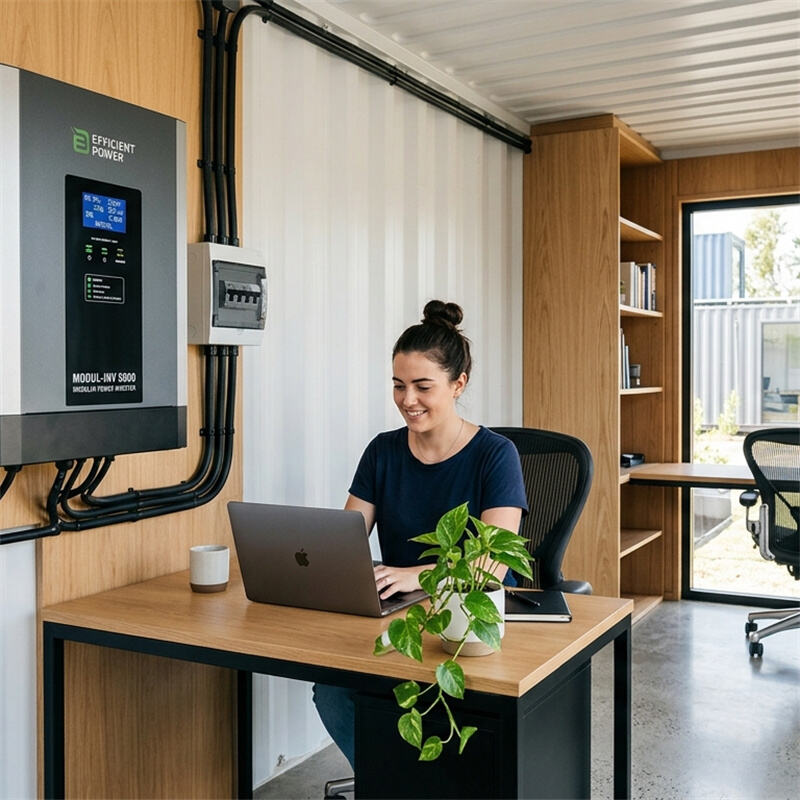
Modular shipping container offices, portable clinics, mobile classrooms, and remote housing units have become essential assets in modern industries, including mining, infrastructure construction, disaster relief, oil and gas exploration, and outdoor events. These modular structures offer unprecedented flexibility, allowing organizations to establish comfortable, secure, and functional workspaces in remote, off-grid locations within days. However, operating these offices requires a reliable source of electricity to power critical office equipment, including laptops, high-definition displays, satellite communication receivers, lighting, and, most importantly, air conditioning systems to maintain a productive indoor climate under harsh outdoor conditions. Traditional diesel generators are noisy, require expensive fuel shipping, and demand frequent, labor-intensive maintenance. Consequently, integrating rooftop solar photovoltaics (PV) and battery storage systems directly onto modular containers has emerged as the preferred clean-energy solution. For B2B project developers, modular office manufacturers, and systems engineers, selecting and installing the right inverter for a containerized system presents unique physical challenges. This technical guide explores the critical factors of space management and thermal integration that must be addressed to ensure a safe, efficient, and durable installation.
Space Management: Selecting Compact All-In-One Hardware
A standard shipping container (20-foot or 40-foot) has an extremely limited internal volume. Every square inch of wall and floor space used for electrical equipment represents space taken away from the desks, seating, and occupants. Therefore, traditional industrial solar setups, which require separate boxes for the solar charge controller, DC-to-AC inverter, AC distribution panel, battery charger, and system transfer switch, are completely impractical for modular offices.
To optimize space management, systems engineers must select highly integrated All-In-One Hybrid Inverters:
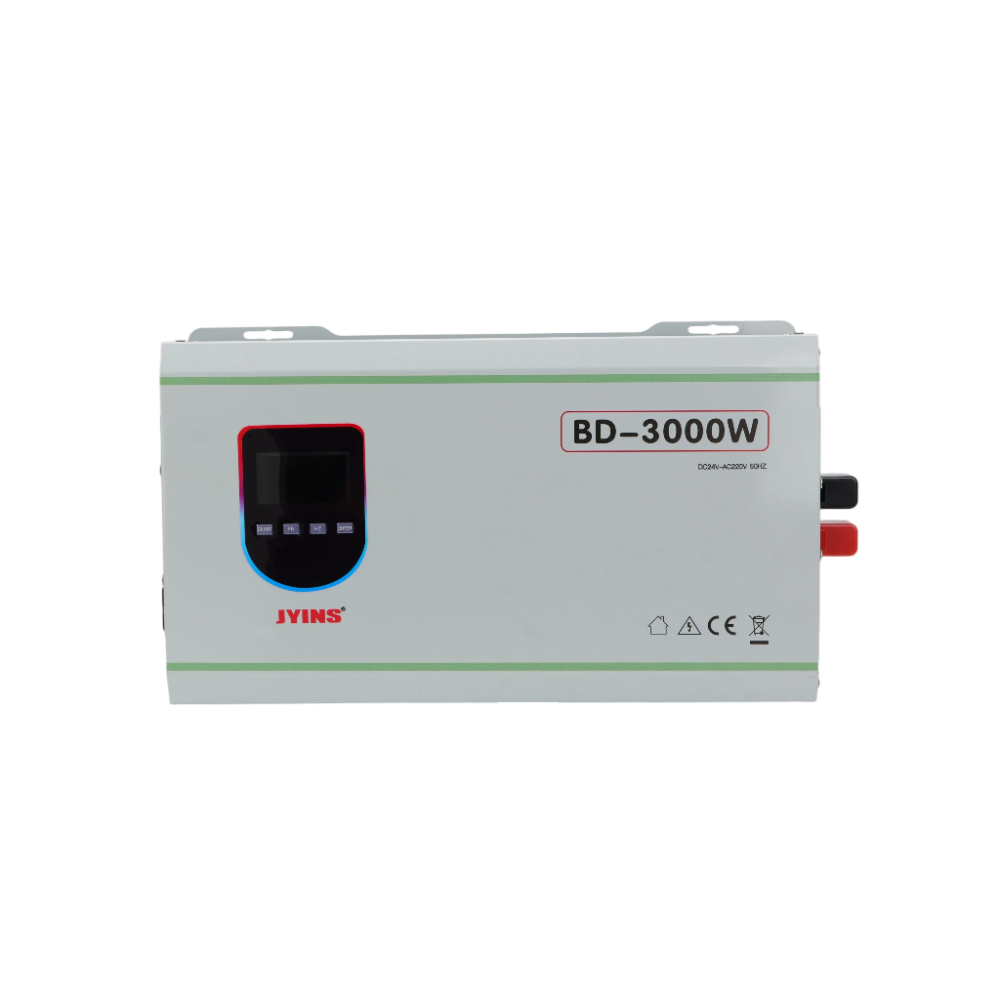
- Single-Box Design: A quality hybrid inverter, such as the JYINS compact all-in-one series, integrates the MPPT solar charge controller, pure sine wave inverter, grid/generator battery charger, and high-speed transfer relay into a single, wall-mounted enclosure. This drastically reduces the physical footprint, requiring only a fraction of the wall space compared to discrete component systems.
- Wall-Mount Optimization: The inverter should feature a slim profile, allowing it to be mounted flush against the container's steel or wood panel walls. Wall mounting keeps the floor completely clear for low-profile battery cabinets (such as compact lithium-ion rack-mount systems) or desks.
- Integrated AC/DC Breakers: Opting for inverters that feature integrated DC input disconnects and AC output circuit breakers simplifies the system schematic, eliminating the need to install separate, bulky distribution boxes alongside the inverter, further streamlining the installation footprint.
- Front-Accessible Terminals: In tight spaces, having to access the sides or back of an inverter for wiring or maintenance is a major obstacle. JYINS inverters are designed with all cable connection terminals, communication ports, and safety fuses located on the bottom and front of the enclosure, ensuring that installation and routine servicing can be completed easily in confined spaces.
Thermal Integration: Managing Heat in Insulated Metal Boxes
While space management is a physical challenge, thermal integration is a critical engineering hurdle. Shipping containers are made of high-conductivity corrugated steel, which absorbs solar heat and raises internal temperatures rapidly, especially in desert or tropical climates. To make these spaces habitable, container offices are lined with high-efficiency insulation panels. However, this insulation also traps any heat generated internally by electrical appliances and power electronics.
Solar inverters are highly efficient, but they are not perfect. A 5 kW inverter operating at 95% efficiency will still generate up to 250 Watts of heat at full load. In a small, insulated, and poorly ventilated electrical alcove, this continuous heat generation will quickly raise the air temperature past the inverter's maximum operating limit, triggering thermal throttling (automatic output power reduction) or a complete thermal shutdown.
To ensure proper thermal integration, systems engineers must implement several design standards:
- Strategic Physical Placement: Never install the inverter in the main, air-conditioned office workspace, as the fan noise can be disruptive. Instead, partition a small, dedicated electrical utility closet at the end of the container. However, this closet must feature dedicated, active ventilation. Install automatic, thermostat-controlled intake and exhaust fans on the container's external steel walls. The intake fan should be low to pull in cooler outdoor air, while the exhaust fan should be high to push hot air out.
- Understanding Airflow Paths: Inverters rely on a defined physical airflow path to cool their internal components. Some draw cool air from the bottom and exhaust it out the top, while others use side-to-side airflow. Designers must ensure that the minimum clearance distances specified in the JYINS manual (typically 20 cm above, below, and to the sides) are strictly maintained. Do not stack files, boxes, or office equipment against the inverter vents.
- External Heatsink Optimization: JYINS inverters are engineered with heavy-duty, multi-finned aluminum heatsinks on the rear of the enclosure, coupled with quiet, high-volume variable-speed fans. The cooling logic adjusts fan speed based on real-time temperature sensors, ensuring maximum airflow when the inverter is working hard under full sun, and near-silent operation during low-power periods.
- Derating Safety Margins: When designing for extreme high-temperature regions (such as mining sites in Western Australia or the Middle East), select an inverter with a higher rated capacity than the peak load. For instance, if the container's maximum office load is 3.5 kW, sourcing a 5 kW JYINS inverter provides a safety margin. This ensures the inverter operates at a lower thermal stress level, preventing thermal derating and extending the operating lifespan of the internal capacitors and power transistors.
Sourcing the Perfect Solar Engine for Modular Office OEMs
For modular container manufacturers and mobile office OEMs, offering a standardized, pre-wired, and fully certified solar power package is a powerful market differentiator. Buyers look for a plug-and-play solution that can be shipped to any site worldwide and turned on immediately with zero technical setup.
JYINS is a trusted OEM/ODM partner for leading modular cabin manufacturers. Our compact, high-efficiency hybrid inverters are engineered to withstand the continuous vibrations of shipping and rough transport over unpaved roads, and our robust thermal design guarantees flawless operation in both freezing arctic exploration camps and scorching desert job sites. By choosing JYINS, you receive high-performance, space-optimized technology, complete technical documentation, and dedicated engineering support, ensuring your modular offices are powered by the most reliable clean energy systems on the market.