EN
EN


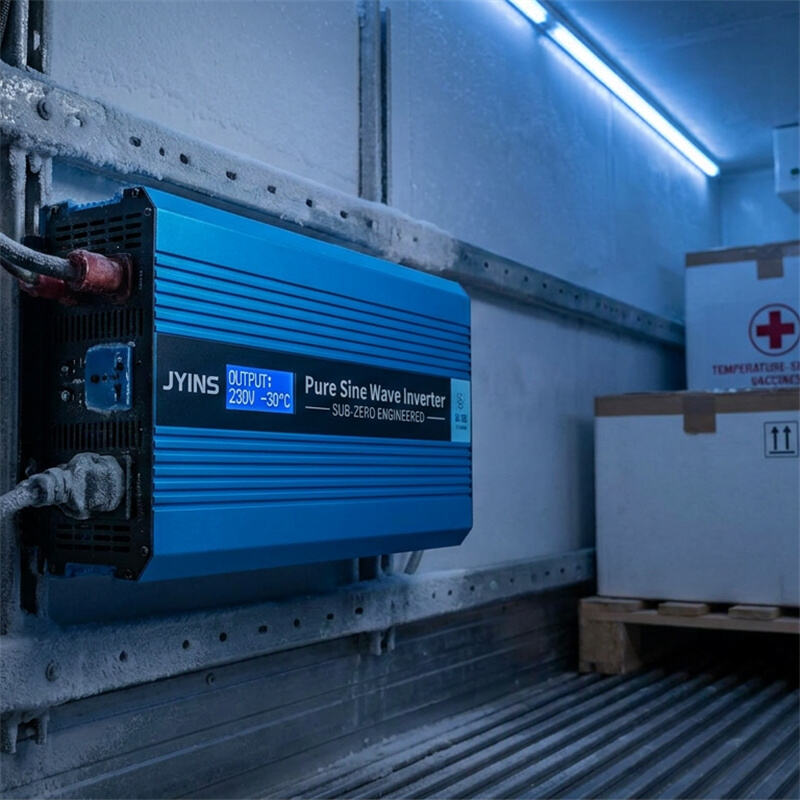
Q: Selecting Power Conversion for Cold Chain Logistics: Ensuring reliability at -20°C.
Introduction: The Critical Nature of Cold Chain Integrity
Cold chain logistics is a highly specialized sector of the transport and supply chain industry. It is responsible for transporting highly temperature-sensitive goods—such as deep-frozen foods, fresh agricultural products, pharmaceutical medicines, and vital medical vaccines—over thousands of kilometers. To preserve the safety, efficacy, and quality of these cargo shipments, the temperature inside the truck’s cargo hold must be kept at a continuous, rock-solid sub-zero level, often as low as minus 20 degrees Celsius or even minus 80 degrees Celsius for medical products.
At the heart of every refrigerated truck, trailer, or container is a cooling unit that requires highly reliable power. In modern logistics, these cooling compressors, automated temperature logging systems, and real-time cellular tracking devices rely on onboard power conversion systems—specifically DC-AC power inverters—to draw power from the truck's high-capacity battery bank and convert it into regulated AC electricity.
In this environment, power failure is a major financial risk. If an inverter fails during transit, the temperature in the cargo hold will rapidly rise, leading to the spoilage of cargo worth hundreds of thousands of dollars, along with potential legal liabilities and missed delivery contracts. Designing and selecting power conversion equipment that can operate continuously at minus 20 degrees Celsius requires a deep understanding of sub-zero electrical engineering.
This article outlines the specific technical challenges of operating power electronics in sub-zero environments, detailing the key design requirements needed to guarantee continuous reliability, and explaining how JYINS Electrical low-temperature power solutions protect critical cold chain operations.
Technical Challenges for Power Electronics at Minus 20 Degrees Celsius
Operating high-power electronic devices like DC-AC inverters inside or directly adjacent to sub-zero refrigerated compartments introduces several severe engineering challenges:
- Component Tolerance Shifts: Many standard electrical components, such as electrolytic capacitors, quartz crystals, and semiconductor chips, experience significant parameter shifts at low temperatures. Electrolytic capacitors can lose up to 50 percent of their capacitance as the internal electrolyte thickens and freezes. This leads to high voltage ripples, system instability, and unexpected inverter shutdowns.
- Condensation and Moisture Damage: This is the most dangerous threat in cold chain operations. When a refrigerated vehicle is opened during loading, or when it moves between cold storage docks and warm outdoor environments, rapid temperature changes create massive amounts of condensation on the cold metal surfaces of the inverter. This liquid water can bridge electrical traces on printed circuit boards, causing immediate short circuits and catastrophic component failure.
- Cooling Fan Mechanical Freezing: Traditional cooling fans use standard grease lubricants. At minus 20 degrees Celsius, this grease becomes highly viscous, turning into a thick, sticky paste. This prevents the fan from spinning, leading to localized hotspot overheating inside the inverter and triggering automatic thermal shutdowns despite the cold ambient air.
- Battery Output Degradation: Chemical batteries (such as lithium or lead-acid) experience a massive drop in discharge efficiency and current capacity at low temperatures. The power conversion system must be capable of operating efficiently with highly fluctuating input voltages as the cold batteries struggle to maintain their terminal voltage under load.
Key Design Requirements for Sub-Zero Power Inverters
To overcome these cold-climate hurdles, fleet managers and refrigeration system engineers must specify inverters designed with the following sub-zero engineering features:
1. True Industrial-Grade Components Rated down to Minus 40
Never deploy consumer-grade or standard commercial inverters in a cold chain vehicle. Standard electronics are only rated for operation between 0 and 40 degrees Celsius.
Cold chain inverters must utilize industrial-grade semiconductor switches, microcontrollers, and low-temperature rated capacitors that are certified to operate reliably down to minus 40 degrees Celsius. This ensures that even in deep-freeze environments, the components maintain their electrical tolerances, preventing unexpected voltage drifts and system crashes. JYINS specialized low-temperature JYP series inverters are built exclusively with these certified, extended-temperature components.
2. Comprehensive Double-Layer Conformal PCB Coating
To combat the inevitable threat of condensation, the inverter's internal printed circuit boards must be protected by a thick, double-layer conformal coating. This medical-grade polyurethane or acrylic coating forms a completely waterproof barrier over every solder joint, copper trace, and chip pin.
This protective layer ensures that even if liquid condensation forms inside the chassis as the truck moves through different climate zones, the water cannot make contact with live electrical circuits. At JYINS, our manufacturing process includes automated spray and vacuum-drying conformal coating lines to guarantee 100 percent coverage on all critical control boards.
3. Specialized Low-Temperature Ball-Bearing Cooling Fans
Standard sleeve-bearing fans must be avoided. Sub-zero inverters must utilize cooling fans equipped with dual high-precision ball bearings lubricated with specialized synthetic low-viscosity greases designed to remain fluid down to minus 50 degrees Celsius. This ensures that the cooling fans spin up immediately and smoothly, providing reliable heat dissipation and long service lives even in deep-freeze environments.
4. Smart Soft-Start and Warm-Up Control Cycles
Advanced sub-zero inverters incorporate smart microprocessing routines. When the inverter is first switched on in an ultra-cold compartment, the microprocessor executes a self-warm-up cycle. It can run internal resistive elements or operate the switching circuits at a low power state temporarily to generate localized heat. This warm-up cycle gently raises the temperature of the internal capacitors and semiconductors to their optimal operating range before applying full AC loads, preventing thermal-shock failure.
Choosing JYINS for Continuous Cold Chain Assurance
JYINS Electrical has partnered with leading global refrigerated transport builders to deliver power conversion solutions that are fully optimized for cold chain logistics. Our sub-zero inverters provide:
- Certified operation down to minus 20 and minus 40 degrees Celsius.
- Advanced multi-layer conformal coating for maximum condensation protection.
- Intelligent battery voltage tracking to optimize energy draw from cold batteries.
- High-efficiency pure sine wave output to ensure refrigerated compressor motors run smoothly and quietly.
Conclusion: Bulletproofing Your Cold Chain with JYINS
In the competitive, high-stakes cold chain logistics sector, there is zero margin for error. A single power conversion failure can lead to catastrophic cargo spoilage, expensive insurance claims, and ruined corporate relationships.
By equipping your refrigerated transport fleet with JYINS low-temperature pure sine wave inverters, B2B fleet managers invest in industry-leading reliability and sub-zero resilience. Our ruggedized inverters provide the clean, uninterrupted power needed to keep your cooling units, temperature loggers, and satellite trackers running continuously, no matter how cold the compartment gets. Partner with JYINS to protect your cool cargo and secure your supply chain integrity.
Table of Contents
- Introduction: The Critical Nature of Cold Chain Integrity
- Technical Challenges for Power Electronics at Minus 20 Degrees Celsius
- Key Design Requirements for Sub-Zero Power Inverters
- 1. True Industrial-Grade Components Rated down to Minus 40
- 2. Comprehensive Double-Layer Conformal PCB Coating
- 3. Specialized Low-Temperature Ball-Bearing Cooling Fans
- 4. Smart Soft-Start and Warm-Up Control Cycles
- Choosing JYINS for Continuous Cold Chain Assurance
- Conclusion: Bulletproofing Your Cold Chain with JYINS