EN
EN


The Australian Grid and the AS4777.2:2020 Standard
Australia is a global leader in rooftop solar adoption, with millions of residential and commercial systems exporting power to the grid. While this green transition is highly beneficial for lowering carbon emissions, the sheer volume of distributed solar has created immense operational challenges for Australian electricity distributors (DNSPs). On sunny days, massive solar export raises local grid voltages to dangerous levels, risking damage to home appliances, tripping local distribution transformers, and destabilizing grid infrastructure. To address this, Standards Australia implemented AS/NZS 4777.2:2020, a rigorous standard for grid connection energy systems via inverters. For B2B procurement managers, EPCs, and solar wholesalers, choosing an inverter that complies with this standard is not just about legality; it is about ensuring that the system can operate smoothly without causing local grid disruptions.
AS4777.2:2020 places heavy emphasis on reactive power control and active power curtailment. Inverters must actively participate in regulating the voltage at their connection points. Let us explore the critical mechanisms of this standard and how to successfully select compliant hardware for your commercial and residential projects.
Deconstructing Volt-VAr and Volt-Watt Control Modes
The cornerstone of AS4777.2:2020 is the requirement for mandatory autonomous power quality response modes. The two primary modes are Volt-VAr (Voltage-Reactive Power) control and Volt-Watt (Voltage-Active Power) control. These modes must be enabled by default and configured according to regional DNSP settings (such as Australia A, B, or C grid profiles).
Volt-VAr Response Curve:
- Under low voltage conditions (e.g., during high load periods), the inverter must inject reactive power (Var) to help boost the local grid voltage.
- At normal voltage levels, the inverter operates at a neutral power factor (unity, or cos phi equals 1.0), exporting only active power (Watts).
- Under high voltage conditions (e.g., midday high solar export), the inverter must absorb reactive power from the grid. This helps lower the voltage at the point of common coupling (PCC).
- By dynamically shifting the power factor, the Volt-VAr curve minimizes voltage fluctuations, allowing more solar systems to remain connected without exceeding safe operational limits.
Volt-Watt Response Curve:
- If the local grid voltage continues to rise despite the Volt-VAr support, the inverter must initiate Volt-Watt control.
- Once the voltage crosses a predefined threshold (typically 253V on a single-phase system), the inverter must progressively reduce (curtail) its active power output.
- If the voltage reaches the absolute maximum threshold (typically 260V), the active power output must be reduced to zero, or the inverter must disconnect entirely.
- This prevents the local line voltage from reaching catastrophic levels, safeguarding home electronics and utility assets.
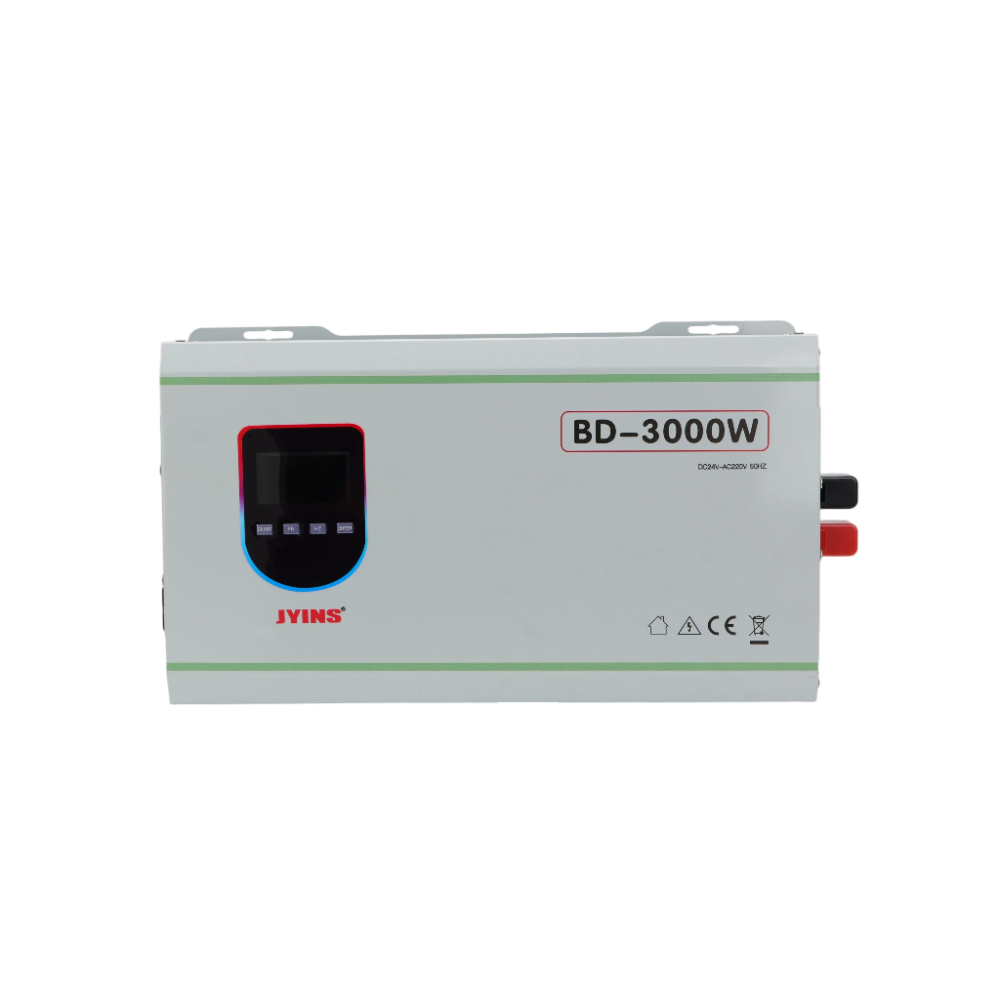
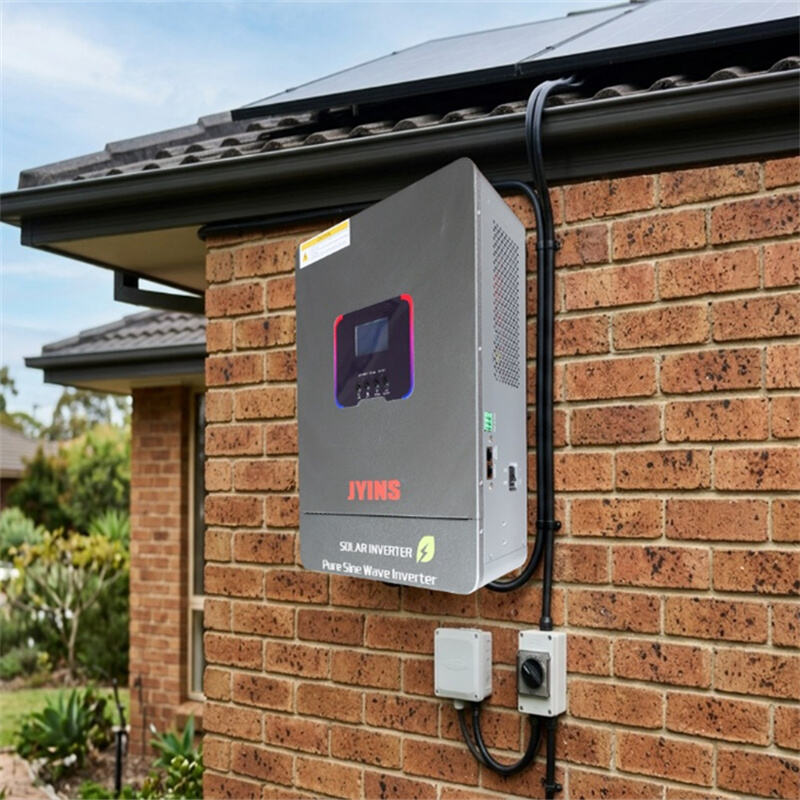
JYINS inverters come pre-loaded with the standard AS4777.2:2020 grid profiles. During installation, commissioning agents can quickly select the appropriate regional settings (such as the default Australian profiles) through the intuitive user interface, ensuring immediate compliance.
Active Power Export Limits and Smart Metering Integration
In addition to voltage response modes, Australian DNSPs are increasingly enforcing strict export limits on residential and commercial solar systems. In many high-penetration areas, utilities restrict solar export to 5 kW per phase, or even enforce zero-export rules.
To meet these demands, AS4777.2:2020 requires inverters to support dynamic export limiting. This requires the inverter to communicate with an external smart meter or current transducer (CT) installed at the building's main service entrance. The inverter continuously compares the solar generation with the building's internal loads:
- If consumption is high, the inverter exports maximum power to cover the load.
- If consumption drops and the export power threatens to exceed the limit, the inverter throttles its solar generation within milliseconds.
JYINS inverters feature a built-in export power limit controller that interfaces seamlessly with standard Modbus smart meters. This integration allows installers to set precise export limits, ensuring that the system complies with local utility rules while maximizing self-consumption of clean solar energy.
Grid Fault Ride-Through and Grid Support Modes
Another critical aspect of the AS4777.2:2020 standard is the requirement for grid fault ride-through. In the past, solar inverters would disconnect immediately during brief voltage dips or frequency transients. While this protected the inverter, the simultaneous disconnection of thousands of solar systems would deprive the grid of vital power, turning minor grid events into major blackouts. Under the 2020 standard, inverters must support:
- Low Voltage Ride-Through (LVRT): The inverter must remain online during short-duration voltage sags, actively injecting reactive current to support grid recovery.
- Frequency-Watt Response: If the grid frequency rises, the inverter must decrease active power output to prevent over-generation. If frequency drops, hybrid inverters can increase active power export from batteries to help stabilize the grid.
These capabilities make modern inverters active supporters of grid health, ensuring that distributed solar installations contribute to, rather than threaten, the stability of the national electricity market.
Key Considerations for B2B Importers and EPCs
When sourcing inverters for the Australian market, B2B procurement directors must verify several key parameters to ensure that their investment is sound and compliant:
- Clean Energy Council (CEC) Listing: In Australia, solar components must be listed on the Clean Energy Council's approved products database to qualify for federal government subsidies (Small-scale Technology Certificates, or STCs). Sourcing AS4777.2:2020 certified JYINS inverters ensures they are listed on the CEC portal, making your projects eligible for these financial incentives.
- Multi-Region Grid Profiles: Different Australian states and DNSPs have unique grid characteristics. Importers must ensure that the chosen inverter supports the correct regional profiles (Australia A for standard urban grids, Australia B for weaker regional networks, and Australia C for specialized environments).
- Grid Fault Ride-Through: Under AS4777.2:2020, inverters must not disconnect immediately during short grid disturbances or voltage sags. This fault ride-through capability ensures that distributed solar installations do not worsen grid events, contributing to overall grid resilience.
JYINS is dedicated to supporting the Australian clean energy transition. Our inverters are fully certified, CEC-listed, and engineered with the advanced power quality features required to thrive in Australia's demanding grid environment. By choosing JYINS, B2B wholesalers and EPCs can confidently deliver reliable, high-yield, and fully compliant solar solutions to the Australian market.