EN
EN


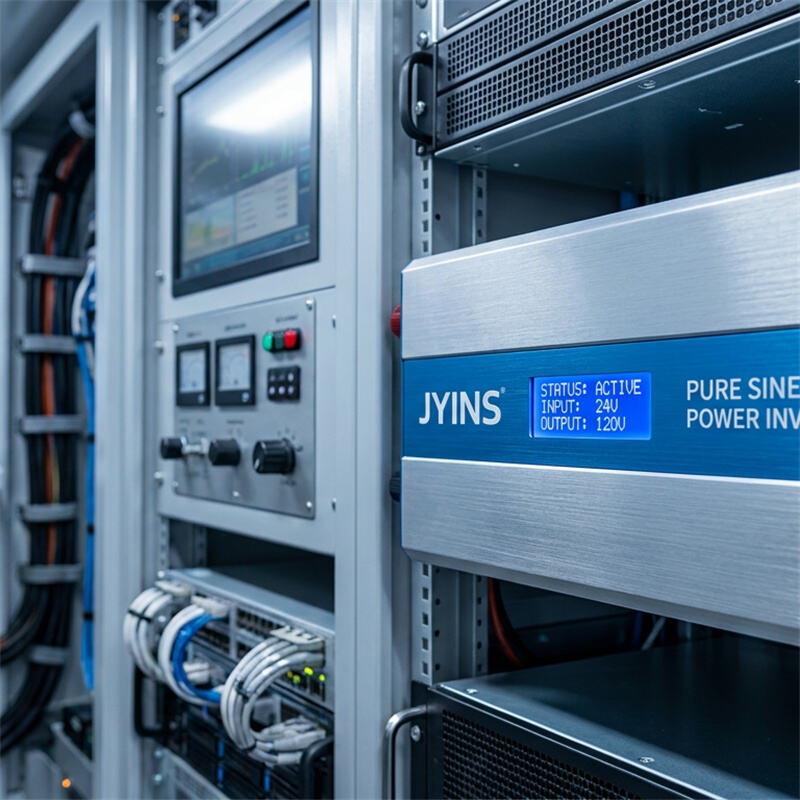
Q: Inverter requirements for Mobile Satellite Communication Units: Minimizing EMI/RFI noise.
Introduction: The Critical Challenge of Powering Mobile SatCom Units
Mobile Satellite Communication Units, including emergency command vehicles, outside broadcast trucks, military telecom terminals, and mobile scientific research hubs, rely heavily on sensitive radio frequency equipment to maintain continuous data links. Unlike standard field service vehicles, these high-tech units house ultra-sensitive low-noise amplifiers, satellite modems, encoders, and transceivers. These components operate by detecting and processing extremely weak signals from orbit.
In these environments, the choice of the DC-AC power inverter is a critical engineering decision. Standard power inverters are notorious for generating significant electromagnetic interference (EMI) and radio frequency interference (RFI). If not properly managed, this electrical noise bleeds into the delicate RF front-end circuits, causing packet loss, signal degradation, and sometimes total communication blackouts.
For B2B project managers, telecommunications engineers, and fleet operators, selecting an inverter requires looking far beyond basic wattage ratings. This technical guide outlines the specific inverter requirements needed to guarantee stable, noise-free mobile satellite operations, highlighting how JYINS Electrical engineered solutions address these demanding needs.
The Technical Cause: Why Power Inverters Generate EMI and RFI
To effectively minimize interference, we must first understand its source. A power inverter converts direct current from a battery bank into alternating current. This process is accomplished through high-frequency switching circuits, typically utilizing metal-oxide-semiconductor field-effect transistors or insulated-gate bipolar transistors. These transistors switch on and off thousands of times per second.
This rapid switching creates steep voltage and current rises, known technically as high dV/dt and dI/dt transitions. These rapid transitions naturally generate high-frequency harmonics that extend into the megahertz and gigahertz spectrums, which are the exact operational bands of satellite communications.
This noise propagates through two primary pathways:
- Conducted Interference: This occurs when high-frequency noise travels back through the DC power cables to the battery bank, or forward through the AC output lines directly into the power supplies of connected communication equipment.
- Radiated Interference: This occurs when the inverter housing, DC/AC cables, or internal circuitry act as antennas, broadcasting electromagnetic waves directly through the air to nearby satellite dishes, antennas, and unshielded RF receivers.
Key Inverter Requirements for Mobile Satellite Units
To ensure that mobile satellite units can operate without interference, B2B procurement managers and system designers must specify inverters that meet the following stringent engineering requirements:
1. Pure Sine Wave Output with Extremely Low THD
Under no circumstances should a Modified Sine Wave inverter be used in a communication vehicle. Modified sine wave units produce a stepped square wave that is loaded with odd-order harmonics, creating a massive amount of conducted and radiated noise.
Satellite units require a pure sine wave inverter, such as the JYINS JYP Series, which delivers a clean, continuous sinusoidal wave. The Total Harmonic Distortion of the output voltage must be strictly limited to less than 3 percent. A low THD ensures that the power supply units of delicate satellite modems and encoders run cooler, operate more efficiently, and do not experience harmonic-induced glitches.
2. Comprehensive Multi-Stage Input and Output Filtering
Standard commercial inverters often feature minimal line filters to save on manufacturing costs. A dedicated SatCom-grade inverter must incorporate robust, multi-stage electromagnetic compatibility filters on both the DC input and AC output stages.
- DC Input Filtering: Heavy-duty Pi-filters and high-capacity low-ESR capacitors are required to block high-frequency switching noise from propagating along the DC bus. This prevents the vehicle's battery cables from acting as large radiating antennas.
- AC Output Filtering: Inductor-capacitor low-pass filters must be integrated to smooth out the switching waveforms, ensuring that only the 50Hz or 60Hz fundamental frequency reaches the equipment, while high-frequency switching residuals are completely attenuated.
3. Robust Faraday Cage Metal Shielding
Plastic-cased or poorly sealed metal inverters allow radiated electromagnetic fields to escape freely. Mobile communication inverters must be housed in a heavy-duty, fully enclosed aluminum or steel chassis that acts as a continuous Faraday cage.
At JYINS, our inverters utilize anodized aluminum enclosures with tight mechanical joints and conductive gaskets. This ensures that any radiated noise generated by the internal high-frequency switching is safely trapped within the enclosure and shunted to the system ground. Grounding studs on the inverter chassis are mandatory and must be connected to the vehicle's central chassis ground using thick, low-impedance copper straps.
4. High-Grade Isolation and Toroidal Transformers
Galvanic isolation between the DC input stage and the AC output stage is a fundamental safety and noise-reduction requirement. High-frequency inverters use small electronic transformers, but they must be designed with shielded windings to minimize parasitic capacitive coupling between the primary and secondary circuits.
For ultra-sensitive applications, some system designers prefer low-frequency inverters with large copper toroidal transformers. Toroidal transformers have an inherent self-shielding geometry, minimizing stray magnetic flux leakages compared to standard square-core transformers. JYINS provides custom power conversion configurations to accommodate both high-frequency lightweight requirements and low-frequency high-isolation demands.
5. Compliance with Strict EMC Standards
When evaluating inverters for B2B fleet deployment, certification is the ultimate proof of engineering quality. Never accept manufacturers' unverified claims. Look for documented compliance with international electromagnetic compatibility standards:
- FCC Part 15 Class B: Ensures the device does not exceed strict limits for conducted and radiated emissions in residential or commercial environments.
- CISPR 22 / EN 55022: The international standard for radio disturbance characteristics of information technology equipment.
- CE EMC Directive: Mandates rigorous testing of emissions and immunity to external electromagnetic fields.
JYINS JYP series inverters are fully certified, proving their ability to operate harmoniously alongside high-sensitivity telecom receivers.
Practical Integration Tips for SatCom Fleet Managers
Even with a high-quality, low-noise inverter like a JYINS pure sine wave unit, proper installation is key to maintaining a quiet RF environment in your mobile command vehicle:
- Keep DC Cables Short and Twisted: DC cables carry high current and can easily radiate low-frequency noise. Keep these runs as short as possible and twist the positive and negative cables together to cancel out stray magnetic fields.
- Separate Power and Signal Paths: Never route AC output or DC input cables parallel to RF coaxial cables, ethernet lines, or sensor wires. Maintain a minimum separation of 30 centimeters, and cross power and signal cables at 90-degree angles if they must intersect.
- Use Shielded Cabling: Enclose the AC output wiring in metal conduit or use shielded power cords, grounding the shield at both ends to ensure any induced currents are safely drained to ground.
- Install Dedicated Grounding: Ensure the inverter's external ground terminal is securely bonded to the vehicle's chassis ground, which in turn should be connected to an earth ground rod when parked and deployed.
Conclusion: Choosing JYINS for Reliable, Noise-Free Operations
In the competitive field of mobile satellite communications, equipment uptime and signal integrity represent your business's reputation. A cheap, noisy power inverter is an unacceptable risk that can compromise hundreds of thousands of dollars of communications infrastructure.
By selecting a JYINS pure sine wave inverter, B2B project managers invest in industrial-grade power conversion engineered for electromagnetic compatibility. With multi-stage filtering, solid Faraday-shielded enclosures, low THD, and certified EMC compliance, JYINS ensures your mobile satellite units maintain clear, uninterrupted links, no matter how remote the deployment. Let JYINS power your connection to the world.
Table of Contents
- Introduction: The Critical Challenge of Powering Mobile SatCom Units
- The Technical Cause: Why Power Inverters Generate EMI and RFI
- Key Inverter Requirements for Mobile Satellite Units
- 1. Pure Sine Wave Output with Extremely Low THD
- 2. Comprehensive Multi-Stage Input and Output Filtering
- 3. Robust Faraday Cage Metal Shielding
- 4. High-Grade Isolation and Toroidal Transformers
- 5. Compliance with Strict EMC Standards
- Practical Integration Tips for SatCom Fleet Managers
- Conclusion: Choosing JYINS for Reliable, Noise-Free Operations