EN
EN


Introduction: Moving from Passive Monitoring to Predictive Energy Management
For commercial and industrial (C&I) business estates, luxury residential developments, and future-tech B2B park developers, energy management has entered a new phase of sophistication. Simple, passive monitoring systems that show historical energy usage are no longer sufficient. To minimize operational costs, maximize solar self-consumption, and participate in dynamic energy markets, local microgrids require real-time predictive control. This proactive approach is powered by smart hybrid inverters that integrate with AI-based Energy Forecasting APIs.
By leveraging weather predictions, historical solar yield data, and machine learning models of facility power consumption, an AI-enabled system can forecast energy supply and demand 24 to 48 hours in advance. This foresight allows system architects to transition from reactive energy balancing to automated, predictive optimization. However, bridging the gap between high-level AI cloud APIs and physical hybrid inverter hardware requires a robust communication and data integration architecture.
Q: How do system architects integrate AI-based energy forecasting APIs with hybrid inverter dashboards to optimize real-time energy management?
Answer:
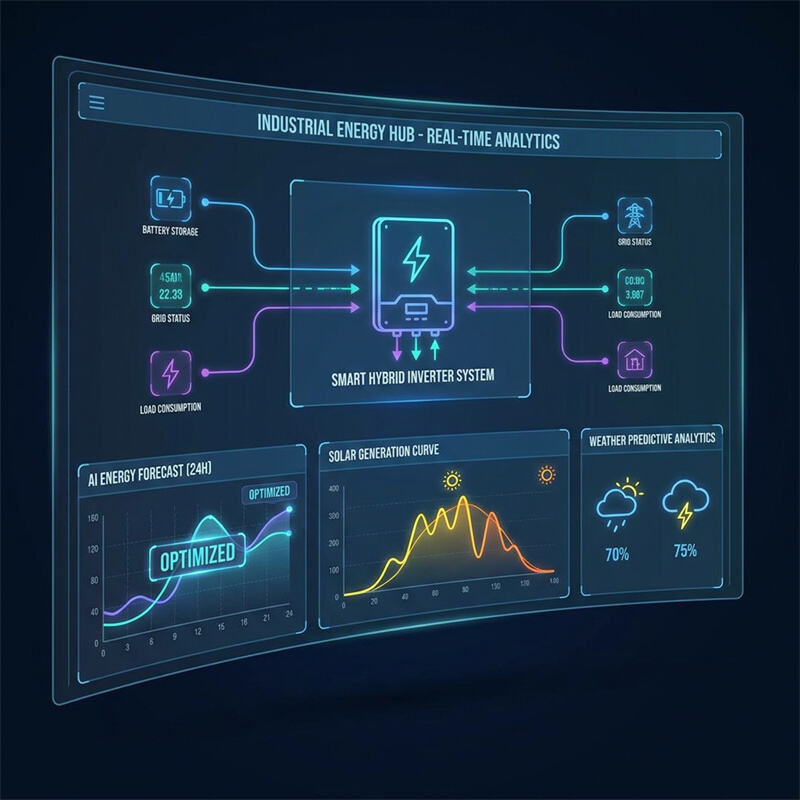
Integrating AI energy forecasting APIs with smart hybrid inverter dashboards requires a structured four-layer architecture. First, the data ingestion layer collects historical solar generation and facility consumption metrics from the inverter. Second, the cloud synchronization gateway securely transmits this edge data to the cloud database. Third, the forecasting engine processes this data alongside localized meteorological APIs to generate generation and load curves. Fourth, the decision-making engine translates these forecasts into real-time operational commands, which are sent back down to the hybrid inverter via Modbus TCP or CAN bus interfaces.
By utilizing this closed-loop control system, the hybrid inverter can dynamically adjust its charging profiles, reserve battery capacity for upcoming peak tariff periods, or pre-charge the energy storage system when solar yield is forecasted to be low. This integration reduces energy procurement costs by up to 30 percent, extends battery lifespan, and guarantees complete system autonomy during unexpected weather disruptions.
The Technical Architecture: Layer by Layer
To build a highly reliable integration, system architects must implement a robust hardware-to-software pipeline. Let us explore the technical specifications of each layer in detail.
- The Edge Data Ingestion Layer: This layer relies on the smart hybrid inverter's physical communication ports. Modern inverters, such as those designed by JYINS Electrical, are equipped with dual RS-485 interfaces, RJ-45 Ethernet ports, or integrated Wi-Fi cards. The inverter acts as a data generator, exporting high-frequency telemetry including battery State of Charge, real-time solar PV generation, load power consumption, inverter temperature, and utility grid voltage. These variables are sampled every 5 to 15 seconds to ensure highly accurate local telemetry.
- The Edge Gateway and Protocol Translation: Industrial and commercial sites often use diverse protocol standards. The local edge gateway, which can be an industrial single-board computer or a dedicated RTU, queries the inverter using Modbus RTU or Modbus TCP registers. It translates these raw binary registers into lightweight MQTT or JSON payloads. Security is established at this layer by wrapping the telemetry data in TLS 1.3 encryption before transmitting it over local network lines.
- The Cloud Aggregation and API Integration Stage: Once the edge gateway uploads the JSON payloads to the central Energy Management System database, the AI forecasting module begins its calculations. The EMS platform calls specialized weather and energy forecasting APIs. These external APIs provide highly localized meteorological variables, such as solar irradiance, ambient temperature, cloud cover, and wind speed. The AI model combines this external meteorological forecast with the site's historical load data, using neural networks to predict solar yield and building consumption for the upcoming 24 hours.
- The Closed-Loop Command Downlink: Forecasting is only valuable if it leads to action. The decision-making module translates the forecast curves into discrete, actionable inverter configuration updates. For instance, if the AI predicts a severe storm tomorrow afternoon combined with a period of high grid tariffs, it issues a command to pre-charge the batteries during the cheap overnight hours. These commands are sent back down the gateway and written directly to the hybrid inverter's control registers, dynamically updating charge/discharge schedules without manual operator intervention.
Core Optimization Algorithms Enabled by Forecasting Integration
When AI forecasting is successfully integrated with hybrid inverters, B2B park developers can unlock advanced energy-saving strategies:
- Dynamic Tariff Arbitration (Peak Shaving): In regions with time-of-use (TOU) pricing, electricity rates vary dramatically throughout the day. By predicting building consumption peaks and local solar production, the system determines the optimal times to charge and discharge the battery. This ensures the facility never draws expensive power from the utility grid during peak pricing windows.
- Optimized Battery State of Charge Management: Keeping a lithium-ion battery at 100 percent charge or deep-discharging it frequently shortens its lifespan. AI forecasting allows the system to maintain the battery at an optimal, mid-range State of Charge, knowing exactly when solar energy will be available to top it up. This prolongs battery life by up to 25 percent.
- Adaptive Weather Resilience: In microgrids designed for high reliability, such as hospital backup systems or telecom bases, the inverter must protect its emergency reserves. If the AI forecasts multiple consecutive days of dense cloud cover or severe storms, the inverter automatically increases its battery backup reserve limit, ensuring critical loads remain powered during grid outages.
The JYINS Commitment: Open Communication and Smart Inverter Design
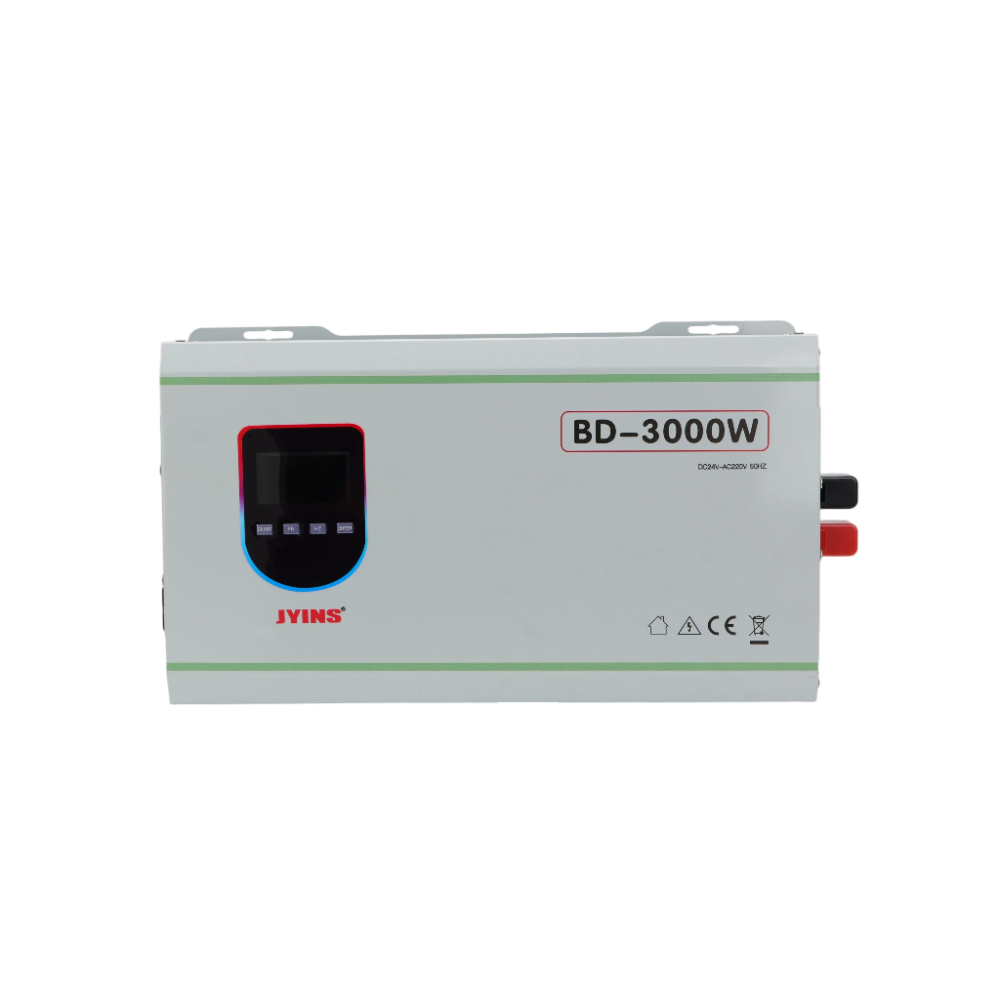
At JYINS Electrical, we recognize that the future of power electronics lies in connectivity, intelligence, and open systems. Our smart hybrid inverters are engineered from the ground up to integrate seamlessly with third-party software and AI-based platforms:
- Documented Modbus Register Maps: We provide clean, comprehensive, and documented Modbus register sheets, allowing system integrators and software engineers to query and modify inverter parameters with ease.
- High-Speed Processing Units: JYINS inverters are equipped with industrial-grade microprocessors capable of executing rapid control commands from local energy management systems without lag.
- Robust Communication Modules: Our hardware features isolated RS-485 and Ethernet interfaces designed to operate in electromagnetically noisy industrial environments, ensuring reliable data transmission.
- Intuitive Local and Remote Dashboards: Our hybrid inverter dashboard provides a clear interface for real-time telemetry display, making it easy for system operators to monitor both AI predictions and actual physical performance.
Recommendations for B2B Project Developers and Integrators
When planning a smart microgrid project, keep these three engineering strategies in mind:
- Prioritize Open Communication Standards: Avoid proprietary inverter systems that lock you into a single software vendor. Choose manufacturers like JYINS who support open Modbus, CAN, and JSON-based communication interfaces.
- Implement Local Edge Fallbacks: Do not rely solely on the cloud. Ensure that if the internet connection is lost, the local edge gateway or the hybrid inverter's built-in scheduler can fall back to standard rule-based profiles until cloud connection is restored.
- Validate Data Quality First: AI models are only as good as the data they receive. Ensure all current transformers and smart meters are calibrated correctly during installation to avoid corrupting the AI's training data.
In conclusion, integrating AI-based energy forecasting with smart hybrid inverter dashboards represents a major step forward for commercial energy management. By combining physical power conversion hardware with modern cloud intelligence, B2B project developers can build high-performance microgrids that lower costs, increase resilience, and deliver exceptional long-term ROI.
Table of Contents
- Introduction: Moving from Passive Monitoring to Predictive Energy Management
- Q: How do system architects integrate AI-based energy forecasting APIs with hybrid inverter dashboards to optimize real-time energy management?
- Answer:
- The Technical Architecture: Layer by Layer
- Core Optimization Algorithms Enabled by Forecasting Integration
- The JYINS Commitment: Open Communication and Smart Inverter Design
- Recommendations for B2B Project Developers and Integrators