EN
EN


The Physics of Condensation in Power Electronics
Power inverters operating in tropical and coastal B2B environments face severe environmental stress, with high humidity and rapid temperature fluctuations being the most critical. Managing moisture inside power electronics is an essential task for systems engineers. Condensation occurs when the temperature of a surface inside the inverter drops below the dew point of the surrounding air. In tropical zones, daytime temperatures can reach extremely high levels, causing the air inside the inverter enclosure to absorb significant amounts of moisture. When the sun goes down or during sudden tropical rainstorms, the ambient temperature drops rapidly, cooling the metal enclosure of the inverter. If the internal component temperatures fall faster than the moisture can escape, water droplets will condense on the surfaces of printed circuit boards (PCBs), capacitors, and magnetic components. This physical process represents a major risk to system longevity and reliability.
The Destructive Consequences of Moisture on High-Voltage PCBs
Liquid water is the enemy of high-voltage electrical circuits. When condensation forms on the internal components of a commercial solar inverter, it can lead to several catastrophic failure modes:
- Short Circuits and Component Damage: Liquid water droplets can bridge the small electrical gaps between high-voltage traces on a PCB. This leads to immediate short circuits, blowing fuses, destroying power switches (such as IGBTs), and rendering the inverter completely non-functional.
- Electrochemical Migration and Dendrite Growth: Under the presence of moisture and DC voltage, metal ions can migrate from one trace to another, forming microscopic metallic filaments called dendrites. Over time, these dendrites grow until they cause a short circuit, even after the moisture has evaporated. This represents a hidden danger that can cause sudden, unexplained inverter failures months after the initial condensation event.
- Accelerated Corrosion: Moisture combined with atmospheric salts (common in coastal tropical zones) creates a highly corrosive environment. This corrosion rapidly degrades solder joints, wire connections, and component terminals, leading to increased electrical resistance, localized overheating, and eventual system failure.
To prevent these issues, B2B operators must implement active and intelligent thermal management strategies.
Passive vs Active Anti-Condensation Strategies in Tropical Environments
Traditionally, manufacturers have relied on passive methods to protect inverters from moisture, such as potting the circuit boards in protective resins or sealing the enclosures to achieve high IP (Ingress Protection) ratings. While beneficial, passive methods have significant limitations in tropical environments:
- Potting and Conformal Coating: While protective coatings provide a barrier against moisture, they can trap heat inside the components, reducing the thermal efficiency of the inverter. Additionally, these coatings can crack over time due to thermal expansion and contraction, allowing moisture to seep in.
- Sealed Enclosures (IP65/IP66): A sealed enclosure prevents liquid water from entering from the outside, but it cannot prevent atmospheric humidity from diffusing through seals and gaskets over time. Once moisture enters a sealed enclosure, it becomes trapped, increasing the likelihood of condensation during temperature drops.
Active strategies, on the other hand, use dynamic systems to control the internal environment of the inverter, actively preventing the conditions that allow condensation to form in the first place.
JYINS Intelligent Thermal Control: Smart Airflow and Internal Heating
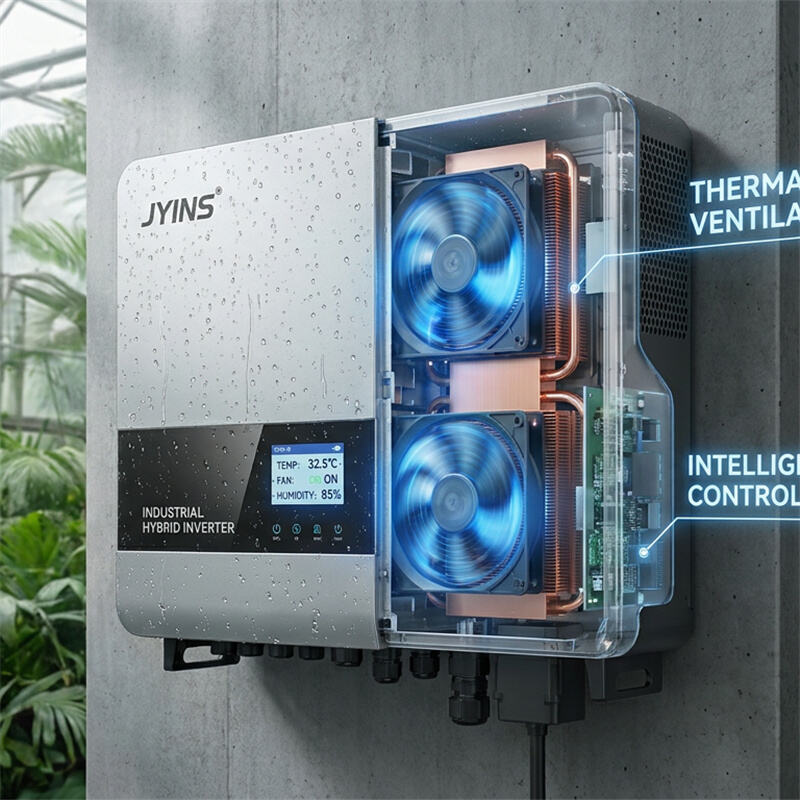
JYINS has developed a highly effective active anti-condensation system integrated directly into our tropical-grade commercial hybrid inverters. This system uses a network of high-precision humidity and temperature sensors combined with an intelligent controller to manage the internal microclimate of the inverter.
- Sensor Integration: JYINS inverters are equipped with internal relative humidity (RH) sensors and temperature sensors mounted near the most sensitive PCB components. The controller continuously calculates the real-time dew point based on these readings.
- Smart Airflow Management: During operation, the inverter generates heat, which naturally keeps the internal temperature well above the dew point. The intelligent thermal controller modulates the speed of the internal ventilation fans to maintain a safe temperature while ensuring that moist air is efficiently flushed out of the enclosure. If the ambient humidity is extremely high, the fans will run at optimized speeds to prevent stagnant humid air pockets from forming.
- Anti-Condensation Heaters: The critical danger period is when the inverter is idle, such as during the night or during maintenance shutdowns. When the system is offline and generating no heat, the internal temperature can quickly drop below the dew point. To prevent this, JYINS inverters incorporate low-power, PTC (Positive Temperature Coefficient) internal heaters. When the controller detects that the internal temperature is approaching the calculated dew point, it automatically activates these heaters, raising the internal temperature by a few degrees to keep the PCBs dry and condensation-free.
Best Installation Practices for High-Humidity Commercial Installations
While JYINS advanced technology provides robust internal protection, systems engineers must follow best installation practices to minimize environmental risks:
- Shade and Ventilation: Always install inverters in shaded areas, away from direct sunlight. This prevents extreme daytime heating, reducing the temperature differential when night falls. Ensure there is adequate clear space around the inverter to allow optimal airflow from the ventilation fans.
- Proper Cable Entry Sealing: Moisture often enters inverters through the cable entry conduits. Always use high-quality, water-tight cable glands and seal the inside of the conduits with electrical putty or expanding foam to prevent warm, humid air from being drawn into the inverter from underground trenches.
- Elevated Mounting: In tropical zones prone to heavy rains and localized flooding, mount the inverters well above the ground level. This prevents rising water vapor from creating an ultra-humid microclimate directly beneath the inverter enclosure.
Long-Term Maintenance and Sensor Diagnostics for Humidity Control
To ensure continuous, long-term protection, B2B plant operators should include the thermal control system in their routine maintenance schedules:
- Clean Ventilation Paths: Dust, pollen, and debris can clog the inverter air filters and fan grilles, reducing airflow efficiency. Clean these components regularly to ensure the smart ventilation system can function at peak performance.
- Check Heater Functionality: Use the JYINS cloud monitoring system to verify that the anti-condensation heaters are activating correctly during nighttime hours. The monitoring dashboard provides detailed historical logs of internal humidity, temperature, and heater state, allowing operators to spot any anomalies before they cause a failure.
- Inspect Seals and Gaskets: Over time, tropical heat and UV radiation can degrade rubber seals. Inspect the enclosure gaskets annually and replace them if they show signs of cracking or hardening, ensuring the physical barrier remains intact.
By combining JYINS intelligent active thermal control with professional installation and proactive maintenance, B2B operations can eliminate condensation risks, ensuring their power infrastructure delivers high performance and reliability even in the most challenging tropical climates.
Table of Contents
- The Physics of Condensation in Power Electronics
- The Destructive Consequences of Moisture on High-Voltage PCBs
- Passive vs Active Anti-Condensation Strategies in Tropical Environments
- JYINS Intelligent Thermal Control: Smart Airflow and Internal Heating
- Best Installation Practices for High-Humidity Commercial Installations
- Long-Term Maintenance and Sensor Diagnostics for Humidity Control