EN
EN


The Financial Burden of Peak Demand in Industrial Workshops
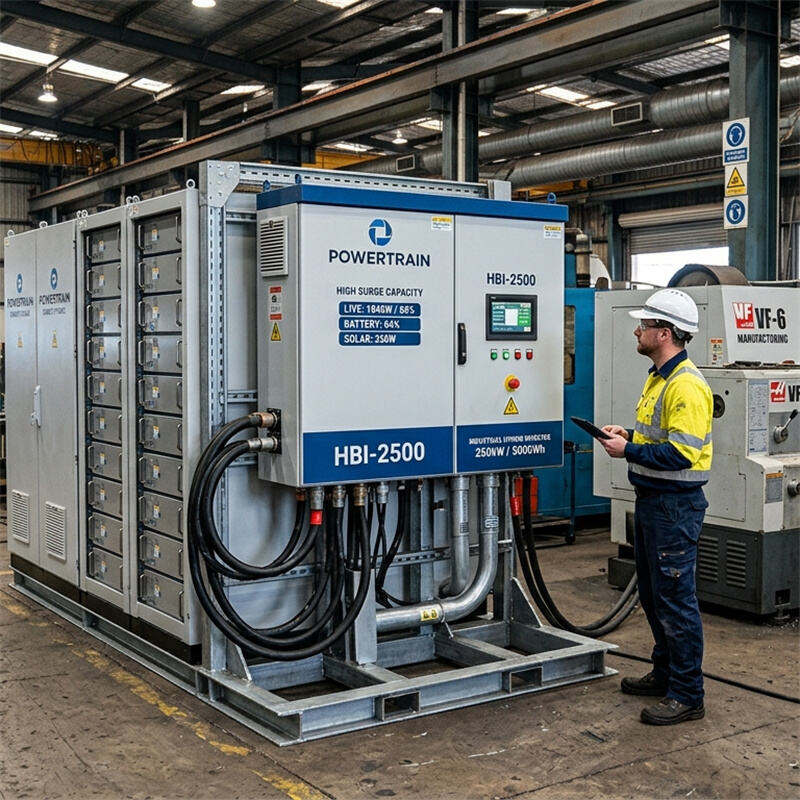
Commercial and industrial (C&I) manufacturing facilities operate in a highly competitive economic landscape where managing utility costs is critical to preserving profit margins. While energy consumption (measured in kilowatt-hours) makes up a large portion of a factory's electricity bill, many business owners are shocked to find that peak demand charges (measured in kilovolt-amperes or kilowatts) can account for up to 30% to 50% of their total utility expenses. Peak demand charges are calculated based on the single highest 15-minute or 30-minute interval of electricity usage during a billing cycle. In industrial machinery workshops, where heavy machinery such as CNC mills, stamping presses, plastic injection molders, and large compressor motors operate intermittently, these peak demand spikes are frequent and severe. Starting a single high-surge induction motor can draw five to seven times its nominal running current for several seconds. If multiple machines start up simultaneously, the resulting current spike creates a massive peak demand event that inflates the facility's electricity bill for the entire month. This guide explains how to implement load-leveling (also known as peak shaving) using advanced hybrid inverters and battery energy storage systems (BESS) to flatten these demand spikes and significantly lower operating costs.
The Mechanics of Load-Leveling and Peak Shaving
Load-leveling is an energy management strategy designed to smooth out the fluctuations in electricity demand, creating a flat and predictable grid import profile. Unlike basic self-consumption solar systems, which only generate power when the sun is shining, load-leveling requires a bidirectional hybrid inverter paired with a rapid-response battery storage bank.
How the peak-shaving control loop operates:
- Establish the Threshold: The plant manager programs a maximum grid power consumption threshold (the peak shaving limit) into the hybrid inverter's control software. This is the maximum amount of power the facility is permitted to draw from the public utility grid.
- Continuous Monitoring: A high-speed smart meter installed at the facility's main electrical service entrance continuously measures the real-time active power import. This meter communicates with the hybrid inverter multiple times per second.
- Dynamic Discharge: When a heavy machine turns on and the total workshop power consumption threatens to cross the pre-set threshold, the hybrid inverter reacts within milliseconds. It stops charging the battery (or transitions from idle) and begins discharging stored DC energy from the battery bank, converting it to AC power and injecting it into the facility's internal electrical bus.
- Flat Grid Import: Because the hybrid inverter covers the excess power demand (the peak of the spike), the power imported from the utility grid remains perfectly flat, never crossing the programmed threshold.
- Recharge during Low Demand: Once the high-surge machine finishes its cycle and the workshop's baseline load drops below the threshold, the hybrid inverter uses surplus solar power or cheap off-peak grid electricity to recharge the battery bank, ensuring it is ready for the next surge.
By dynamically buffering these high-surge start-up events, the system successfully shields the utility meter from short-term current spikes, keeping peak demand charges to an absolute minimum.
Designing and Sizing the Hybrid Storage System
Implementing a successful load-leveling system in a high-surge workshop requires careful engineering analysis and precise sizing of both the hybrid inverter and the battery bank. An undersized system will fail to capture the peaks, while an oversized system will extend the project's payback period unnecessarily.
Key steps in the design process:
- Analyze Interval Billing Data: Obtain detailed 15-minute or 30-minute interval utility data for the past twelve months. Identify the absolute highest peak demands, when they occur, and their duration. This helps determine the height and width of the peaks that must be shaved.
- Assess Motor Start-up Surges: Measure the instantaneous inrush currents of the facility's largest motors using a power quality analyzer. Standard interval data averages power over 15 minutes, which can hide extreme sub-second startup spikes. The hybrid inverter must have sufficient short-term overload capacity to handle these intense initial current draws.
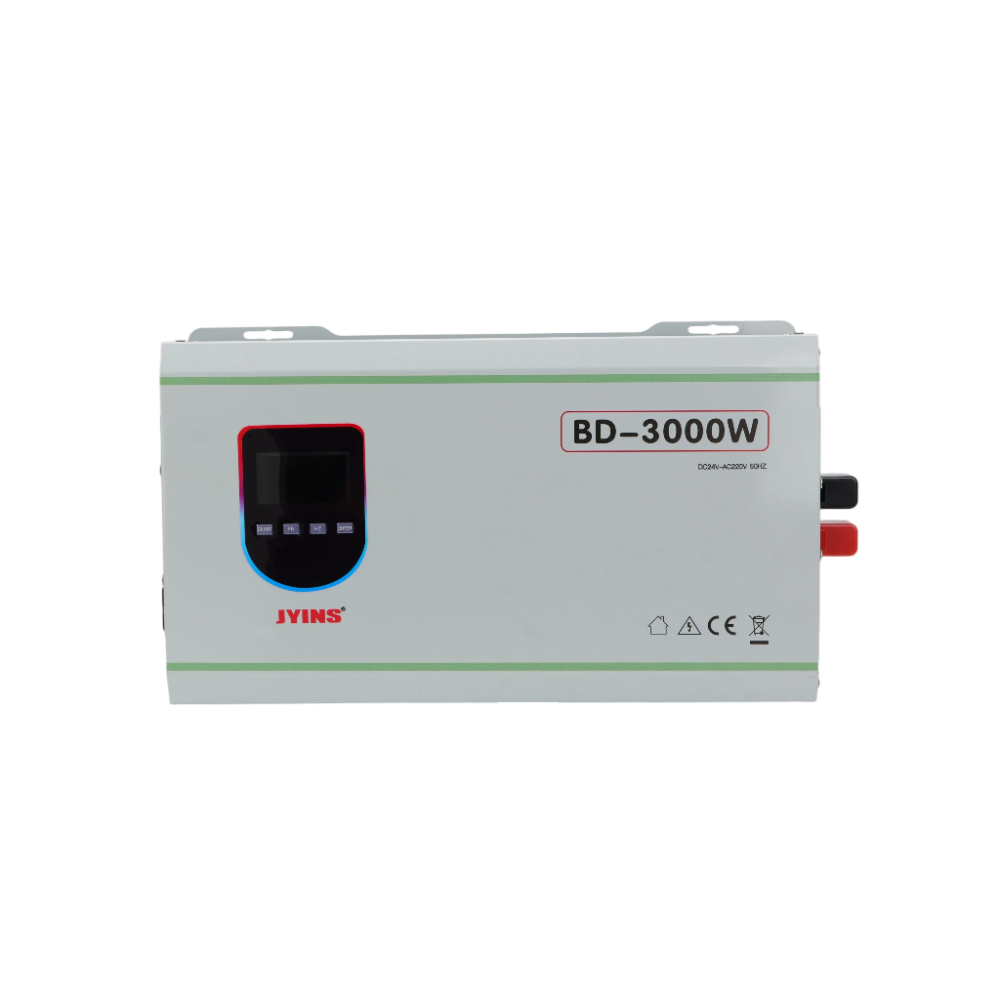
- Sizing the Inverter: The JYINS industrial hybrid inverter line features robust design with short-term overload capacities of up to 150% to 200% for ten seconds. This high overload capability is crucial for starting large inductive loads without tripping the inverter's overcurrent protection.
- Sizing the Battery Bank: The battery capacity (measured in kilowatt-hours) is determined by the total energy required to shave the peaks. For instance, if a peak exceeds the threshold by 50 kW and lasts for an average of two hours per day, the battery must deliver at least 100 kWh of usable energy, taking into account the battery's maximum Depth of Discharge (DoD) and efficiency losses.
Optimizing Inverter Configuration and Control Strategies
Once the hardware is installed, configuring the inverter's control software correctly is the key to maximizing savings and ensuring stable operation. JYINS hybrid inverters feature a highly flexible energy management system (EMS) that can be tailored for industrial workshops:
- Time-of-Use (ToU) Optimization: In regions with Time-of-Use utility rates, the inverter can be configured to charge the battery bank during low-cost off-peak hours (e.g., at night) and discharge it to shave peaks during high-cost peak-rate windows. This provides a double-saving mechanism: reducing peak demand charges while capitalizing on energy arbitrage.
- Active Phase Balancing: Industrial workshops often suffer from unbalanced loads across the three AC phases (L1, L2, L3) due to single-phase machinery. JYINS three-phase hybrid inverters feature independent phase-power control. The inverter can discharge different amounts of power on each phase to compensate for unbalanced loads, ensuring that the net demand on all three phases remains below the threshold.
- Integration with Factory SCADA: JYINS inverters support standard Modbus TCP/RTU communication, allowing them to interface with the factory's central Supervisory Control and Data Acquisition (SCADA) system. This integration allows plant operators to adjust peak-shaving thresholds remotely in response to changing production schedules or seasonal utility tariff adjustments.
Long-Term Benefits and Equipment Protection
Beyond direct financial savings on utility bills, implementing a hybrid load-leveling system provides substantial secondary benefits for industrial enterprises:
- Voltage Stability: High-current motor starts cause localized voltage drops (voltage sags) within the factory, which can cause computer-controlled CNC machines to crash, ruin materials, and disrupt automated production lines. By injecting localized battery power during surges, the JYINS inverter maintains a stable voltage bus, protecting sensitive electronic controllers.
- Thermal Protection: Repeated starting surges place immense thermal stress on the workshop's electrical cables, distribution panels, and main circuit breakers. By smoothing out these current surges, the load-leveling system reduces thermal stress, extending the life of the facility's electrical infrastructure.
- Grid Capacity Expansion: Many growing workshops find themselves limited by the capacity of their local utility connection. If they want to add new machinery, they may face high fees from the utility to upgrade the local substation transformer. A JYINS hybrid energy storage system allows the factory to expand its production capacity without upgrading its physical utility grid connection, as the battery bank covers the extra peak load.
By choosing JYINS as your partner for industrial energy storage, you are investing in highly reliable, field-tested hybrid inverter technology. Our systems provide the perfect combination of fast-response power electronics, intelligent load-leveling algorithms, and robust industrial design, ensuring that your high-surge workshop operates at maximum efficiency and minimum cost.