EN
EN


The Intersection of Solar Power and Green Hydrogen
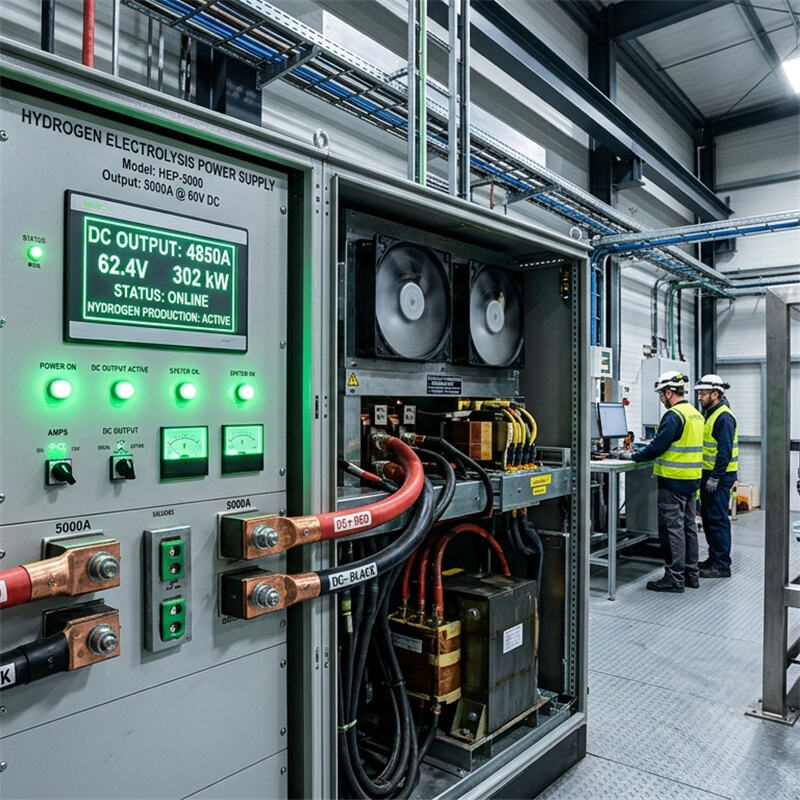
Green hydrogen has emerged as a cornerstone of the global transition to a low-carbon economy, offering a clean, versatile fuel source for hard-to-abate sectors such as heavy manufacturing, aviation, maritime shipping, and chemical production. Unlike gray hydrogen, which is produced from natural gas via steam methane reforming, green hydrogen is generated by splitting water into hydrogen and oxygen using renewable electricity through a process called electrolysis. This process is executed inside a physical device known as an electrolyzer. Because solar photovoltaic (PV) generation and battery energy storage systems are the primary sources of cheap renewable electricity, integrating high-capacity solar fields with large-scale industrial electrolyzer plants is a rapidly growing B2B market. However, the connection between the solar power system and the electrolyzer is not a simple wiring task. Electrolyzers require highly specialized Direct Current (DC) power supplies. For electrical engineers, power system designers, and B2B procurement directors, understanding the strict current ripple and voltage regulation requirements of hydrogen electrolyzers is critical to designing a high-efficiency, durable production plant. This guide explores these technical requirements and how modern power conversion technology addresses them.
The Electrochemistry of Water Electrolysis
To understand the power supply requirements, we must first look at the electrochemistry taking place inside the electrolyzer. There are two primary types of commercial electrolyzers used in large-scale green hydrogen production:
- Alkaline Electrolyzers: A mature technology that utilizes a liquid alkaline solution (such as potassium hydroxide) as the electrolyte. They are cost-effective but operate at lower current densities and have a slower dynamic response to power fluctuations.
- Proton Exchange Membrane (PEM) Electrolyzers: A newer, more compact technology that utilizes a solid polymer membrane. PEM electrolyzers operate at high current densities, offer superior energy efficiency, and feature a very fast dynamic response, making them highly suitable for coupling with intermittent solar and wind power.
Regardless of the technology, an electrolyzer is fundamentally a low-voltage, high-current DC load. When DC current is passed through the electrodes, water molecules split. The rate of hydrogen production is directly proportional to the magnitude of the DC current flowing through the cell stack. However, the electrical characteristics of the stack are highly non-linear, resembling a giant chemical diode. Once the cell voltage crosses the electrochemical reaction threshold (typically 1.4V to 1.8V per cell), a tiny increase in voltage results in a massive increase in current. Managing this sensitive relationship requires exceptionally precise power supply design.
The Threat of Current Ripple on Electrolyzer Lifespan
When converting Alternating Current (AC) from the solar inverter or grid into the high-current DC required by the electrolyzer, the resulting DC output is never perfectly flat. It contains a residual high-frequency AC component known as current ripple. In standard industrial power supplies, a moderate current ripple is acceptable. However, for hydrogen electrolyzers, excessive current ripple represents a severe operating hazard:
- Accelerated Catalyst Degradation: Electrolyzer cells utilize precious metals, such as platinum and iridium, as catalysts on their electrodes. High-frequency current ripple creates micro-cycles of voltage fluctuation across these electrodes. This rapid cycling accelerates the chemical dissolution and physical detachment of the catalyst layers, leading to a rapid decay in the electrolyzer's efficiency and hydrogen production capacity.
- Membrane Degradation: In PEM electrolyzers, the polymer membrane is highly sensitive to thermal and mechanical stresses. Current ripple causes localized high-frequency temperature fluctuations (hotspots) within the membrane. This thermal stress degrades the polymer structure, leading to localized micro-tears and gas crossover (where hydrogen and oxygen mix inside the cell, creating an explosive hazard).
- Reduced Faradaic Efficiency: The Faradaic efficiency of an electrolyzer measures how effectively the electrical current is converted into hydrogen gas. High-frequency AC ripple current does not participate in the electrochemical splitting of water; instead, it is dissipated as heat, lowering the system's overall efficiency and increasing the cooling water requirement.
To protect the electrolyzer investment, manufacturers enforce strict current ripple limits. Typically, the total harmonic distortion (THD) of the DC current must be kept under 2% to 5% across the entire operating range, with even stricter limits (under 1%) at high-frequency bands. Sourcing power supplies and rectification inverters with advanced multiphase interleaved topologies and high-order passive filters is the only way to meet these demands.
Voltage Regulation and Wide Operating Ranges
In addition to low current ripple, an electrolyzer power supply must deliver exceptional voltage regulation. This requirement is driven by several operational factors:
- Wide DC Voltage Operating Window: A single electrolyzer stack is made of hundreds of cells connected in series to achieve a practical system voltage (typically ranging from 100V to over 800V DC). As the stack operates, its internal resistance changes due to temperature variations, gas bubble accumulation on the electrodes, and long-term aging of the cell components. The power supply must be capable of dynamically adjusting its output voltage over a wide range to maintain a constant current flow.
- Fast Dynamic Load Response: Solar energy is inherently variable. As clouds pass over the solar array, the available power can plunge or soar within seconds. The electrolyzer power supply must track this variable solar output, ramping its power delivery up and down in real-time. During these rapid power shifts, the voltage regulation loop must prevent any overshoot or undershoot, as a sudden voltage spike can damage the membrane, while a voltage drop below the reaction threshold will stop hydrogen production entirely.
- Soft-Start and Hot-Standby Modes: Starting an electrolyzer from a cold stop requires a highly controlled, slow ramp-up of current (soft-start) to prevent localized thermal expansion stresses. Additionally, when solar power is extremely low, the power supply must transition the electrolyzer into a low-current standby mode, keeping the cells warm and pressurized without generating gas, ready for the next solar burst.
To meet these demands, JYINS power conversion systems integrate high-speed digital control algorithms (Proportional-Integral-Derivative, or PID controllers) implemented on dual-core digital signal processors (DSPs). These processors sample the output voltage and current at high frequencies (up to 100 kHz), allowing the system to adjust its pulse-width modulation (PWM) switching patterns within microseconds, guaranteeing flawless voltage regulation and dynamic stability under all operating conditions.
Sourcing High-Power DC Systems for Hydrogen Integration
For B2B procurement managers and system integrators designing green hydrogen facilities, selecting the right power supply partner is a critical strategic decision. The power conversion system represents a significant portion of the plant's capital cost and is the single most important factor determining the plant's overall energy efficiency and electrolyzer lifetime.
Key parameters to prioritize during sourcing:
- Multiphase Interleaved Topology: Ensure the power supply utilizes a multiphase interleaved buck converter or active rectification system. This design splits the output current across multiple parallel switching paths that operate out of phase, naturally canceling out a vast majority of the current ripple before it reaches the passive filter stage.
- High-Order LC Filtering: The power supply should feature heavy-duty inductor-capacitor (LC) filters on the DC output to further attenuate any high-frequency switching noise, delivering clean, pure DC power to the electrolyzer stack.
- Liquid Cooling Integration: High-power electrolyzer power supplies generate substantial heat. Liquid-cooled systems offer superior thermal performance compared to air cooling, enabling a more compact installation, longer component lifetimes, and complete protection from the humid, chemical environments typical of hydrogen production plants.
JYINS is a pioneer in developing advanced power conversion and high-current DC power supply systems for industrial clean energy applications. Our systems are engineered in strict compliance with international safety and performance standards, offering industry-leading efficiency, ultra-low current ripple, and robust voltage regulation. By choosing JYINS, green hydrogen developers can maximize their gas production yield, protect their valuable electrolyzer stacks, and accelerate the transition to a sustainable, carbon-free future.