EN
EN


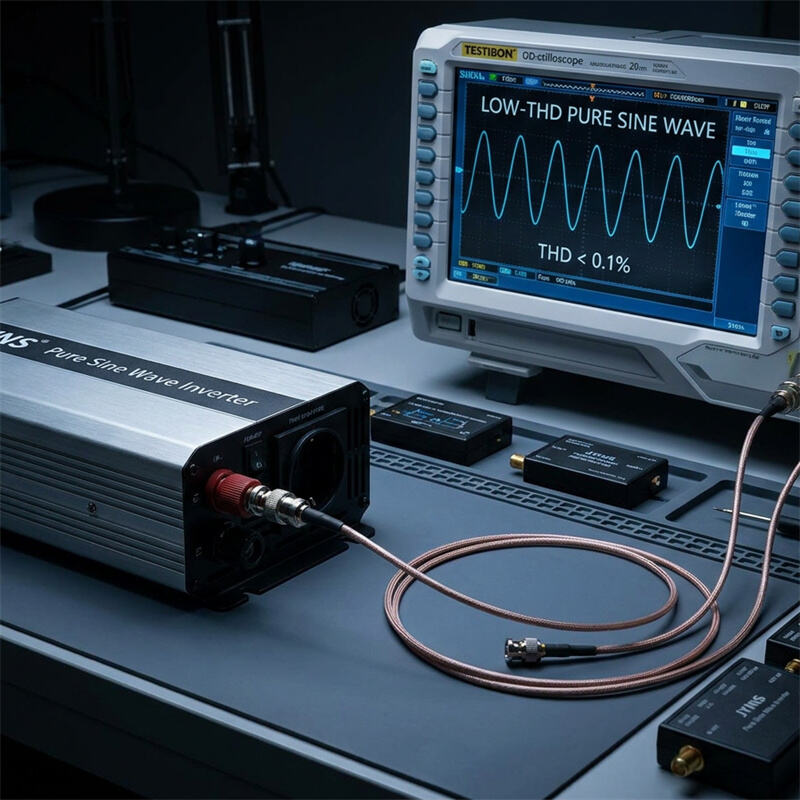
Introduction to Power Quality in Sensitive Environments
In B2B sectors such as medical diagnostics, scientific research, and high-tech product development, laboratory equipment represents a massive capital investment. Instruments such as gas chromatographs, mass spectrometers, magnetic resonance imaging (MRI) machines, and high-precision calibration scales require extremely stable and clean AC power to yield accurate, repeatable results.
One of the most critical aspects of AC power quality is wave purity, measured as Total Harmonic Distortion (THD). When powering a facility using off-grid power systems, standard utility-grid inverters, or backup power units, the presence of harmonic distortion can lead to measurement errors, equipment overheating, and premature component failure.
This article details the mathematical principles of THD, explains how to calculate it, and provides a comprehensive analysis of its impact on sensitive laboratory assets.
Question: How do we calculate Total Harmonic Distortion (THD) and analyze its impact on sensitive laboratory diagnostic instruments?
To calculate THD, engineers must perform a Fourier analysis on the voltage or current waveform, sum the squares of the root-mean-square (RMS) values of all higher harmonic frequencies, take the square root of that sum, and divide it by the RMS value of the fundamental frequency (usually 50 Hz or 60 Hz). The resulting percentage indicates wave distortion. Managing THD's impact on laboratory equipment requires selecting premium Pure Sine Wave Inverters, such as the JYINS Precision Series, which guarantee a THD of less than 3%, thereby eliminating measurement noise, thermal stress, and power-supply calibration drift.
The Mathematical Definition and Calculation of THD
In a perfect AC electrical system, voltage and current cycle in a smooth, sinusoidal pattern at a single reference frequency (the fundamental frequency, denoted as f1, which is typically 50 Hz or 60 Hz).
However, non-linear loads (such as switching power supplies, variable speed drives, and electronic ballasts) draw current in abrupt pulses rather than a smooth, continuous wave. These pulse draws introduce distorted frequencies that are integer multiples of the fundamental frequency. These multiples are called harmonics (e.g., 100 Hz is the 2nd harmonic, 150 Hz is the 3rd harmonic for a 50 Hz system).
To quantify how distorted a waveform is, engineers calculate the Total Harmonic Distortion (THD). THD can be calculated for either voltage (THDv) or current (THDi).
The mathematical formula for Voltage THD is:
THDv = sqrt( V2^2 + V3^2 + V4^2 + ... + Vn^2 ) / V1
Where:
- V1 is the RMS voltage of the fundamental frequency (e.g., 230V).
- V2, V3, V4, ... Vn are the RMS voltages of the individual harmonic components (2nd, 3rd, 4th, etc.).
- sqrt is the square root function.
- The result is multiplied by 100 to express it as a percentage.
Step-by-Step Calculation Example
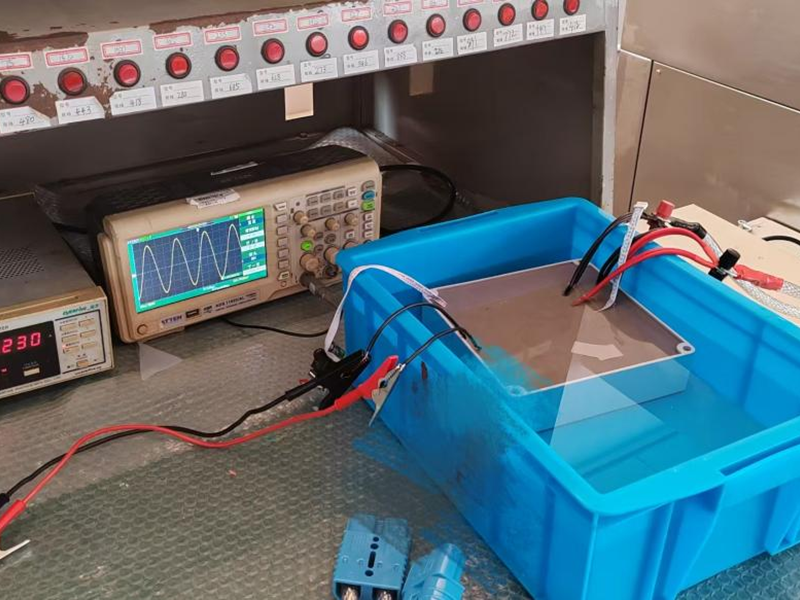
Suppose an engineer measures the AC voltage output of an off-grid inverter supplying power to a research laboratory using a Power Quality Analyzer. The analyzer provides the following RMS voltage values for the fundamental and dominant harmonic frequencies:
- Fundamental Frequency (V1) = 230.0V
- 3rd Harmonic (V3) = 8.0V
- 5th Harmonic (V5) = 5.0V
- 7th Harmonic (V7) = 3.0V
- All other harmonics are negligible.
To calculate the THDv of this system:
- Step 1: Square the RMS values of the harmonic components:
8.0^2 = 64.0
5.0^2 = 25.0
3.0^2 = 9.0
- Step 2: Sum the squared values:
64.0 + 25.0 + 9.0 = 98.0
- Step 3: Take the square root of the sum:
sqrt(98.0) = 9.899V
- Step 4: Divide by the fundamental RMS voltage (V1):
9.899 / 230.0 = 0.0430
- Step 5: Convert to a percentage:
0.0430 100 = 4.30%
In this example, the THDv is 4.30%. According to electrical engineering standards (such as IEEE 519), a voltage THD of under 5% is acceptable for general commercial loads. However, for sensitive laboratory instruments and medical electronics, a much stricter limit of under 3% is required to prevent operational interference.
How Harmonic Distortion Impacts Laboratory Equipment
When THD exceeds safe limits, sensitive laboratory instruments suffer from both physical thermal degradation and digital signal errors. The specific impacts include:
- 1. Internal Power Supply Stress and Overheating
Most modern laboratory devices use switched-mode power supplies (SMPS). High-frequency harmonics pass easily through input filter capacitors, causing them to draw excess current. This leads to overheating, dielectric breakdown, and premature failure of the power supply's internal components.
- 2. Electromagnetic Interference (EMI) and Measurement Noise
High-frequency harmonic currents radiate electromagnetic waves. This radiated noise can couple into the sensitive analog measurement circuits of instruments like spectrophotometers or pH meters. This results in signal drift, calibration errors, and random 'noise' on diagnostic output graphs, rendering scientific data invalid.
- 3. Transformer and Motor Overheating
Lab equipment containing internal pumps, compressors, or centrifuges (such as ultra-low-temperature freezers or centrifuges) relies on induction motors. Harmonic voltages create high-frequency rotating magnetic fields inside the motor windings. These fields rotate in opposite or abnormal directions, causing physical vibration, excessive heat generation, and a significant drop in motor efficiency.
- 4. Logic Controller Glitches
Laboratory automation systems utilize programmable logic controllers (PLCs) and microprocessors. Distorted voltage waves can shift the zero-crossing detection points of the AC power line. Many electronic timing circuits use these zero-crossing points as synchronization references. A shift in zero-crossings can cause software glitches, system reboots, and communication failures between laboratory instruments and databases.
The Engineering Solution: Premium Pure Sine Wave Technology
To protect valuable laboratory assets, systems integrators must avoid modified sine wave inverters or low-quality grid-tie bypass systems. Modified sine wave units produce a stepped square wave that can have a THD of 30% to 40%, which will instantly destroy or disrupt sensitive electronics.
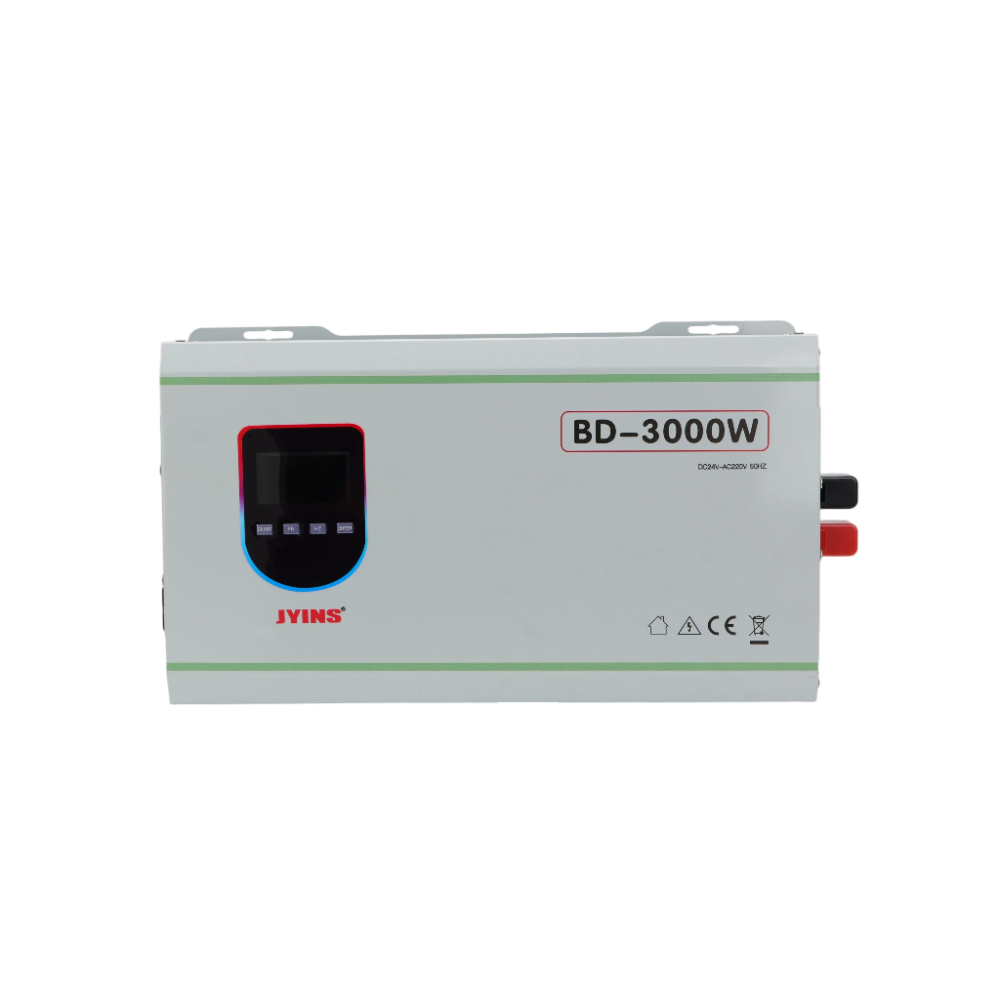
The professional solution is to deploy high-grade Pure Sine Wave Inverters, such as the JYINS Precision Series. These inverters are engineered with advanced multi-stage LC filters (inductor-capacitor networks) on their AC output terminals.
JYINS inverters continuously monitor the output waveform and use high-speed microprocessor control to adjust the switching sequence of their power stages. This feedback loop ensures that the output AC wave remains a smooth, continuous curve, keeping the voltage THD below 3% under all nominal load conditions, even when powering highly non-linear laboratory loads.
Conclusion
Calculating and managing Total Harmonic Distortion (THD) is a critical task for engineers designing power systems for laboratories, hospitals, and high-tech facilities. By using the standard THD formula and deploying power analyzers, technicians can monitor power quality. When off-grid or backup power is required, specifying JYINS Pure Sine Wave Inverters ensures that THD remains well below the strict 3% threshold. This high-purity electrical output safeguards sensitive diagnostic tools, prevents costly measurement errors, and extends the operational lifetime of expensive B2B laboratory assets.
Table of Contents
- Introduction to Power Quality in Sensitive Environments
- Question: How do we calculate Total Harmonic Distortion (THD) and analyze its impact on sensitive laboratory diagnostic instruments?
- The Mathematical Definition and Calculation of THD
- Step-by-Step Calculation Example
- How Harmonic Distortion Impacts Laboratory Equipment
- The Engineering Solution: Premium Pure Sine Wave Technology
- Conclusion