EN
EN


The Threat of DC Arc Faults in B2B Rooftop Solar
Commercial and industrial rooftop solar arrays are increasingly popular for B2B operations looking to lower carbon emissions and operational costs. However, these large installations bring distinct safety challenges. Among these, Direct Current (DC) arc faults present the highest risk of electrical fires. Unlike Alternating Current (AC) systems, where the voltage crosses zero twice per cycle and naturally extinguishes small arcs, DC systems maintain a continuous electrical potential. Once an arc is established in a DC circuit, it will not extinguish itself unless the circuit is physically broken or the electrical potential drops below a specific threshold. For safety officers and systems engineers, understanding how modern DC Arc Fault Circuit Interrupter (AFCI) logic operates is essential for protecting valuable assets and ensuring building safety.
Understanding the Physics of DC Arcing in Photovoltaic Systems
A DC arc fault occurs when electrical current flows through an unintended gap in a conductor. In rooftop solar arrays, these arcs typically fall into two categories: series arcs and parallel arcs. Series arcs occur when a connection along a single string of panels becomes loose or broken, such as from degraded connectors, cracked solder joints within a PV module, or damaged cables. Parallel arcs occur when there is an insulation breakdown between two conductors of opposite polarity, or between a positive conductor and the system ground.
In both cases, the air gap becomes ionized, turning into a highly conductive plasma channel. The temperature of a DC arc can quickly exceed 3000 degrees Celsius. This extreme heat can melt conduits, ignite nearby roof materials, and cause catastrophic fire damage. Because solar panels continue to generate voltage as long as they are exposed to sunlight, a DC arc fault on a roof can burn continuously for hours if not detected and isolated immediately by the system inverter.
The Mechanics of JYINS AFCI Detection Logic
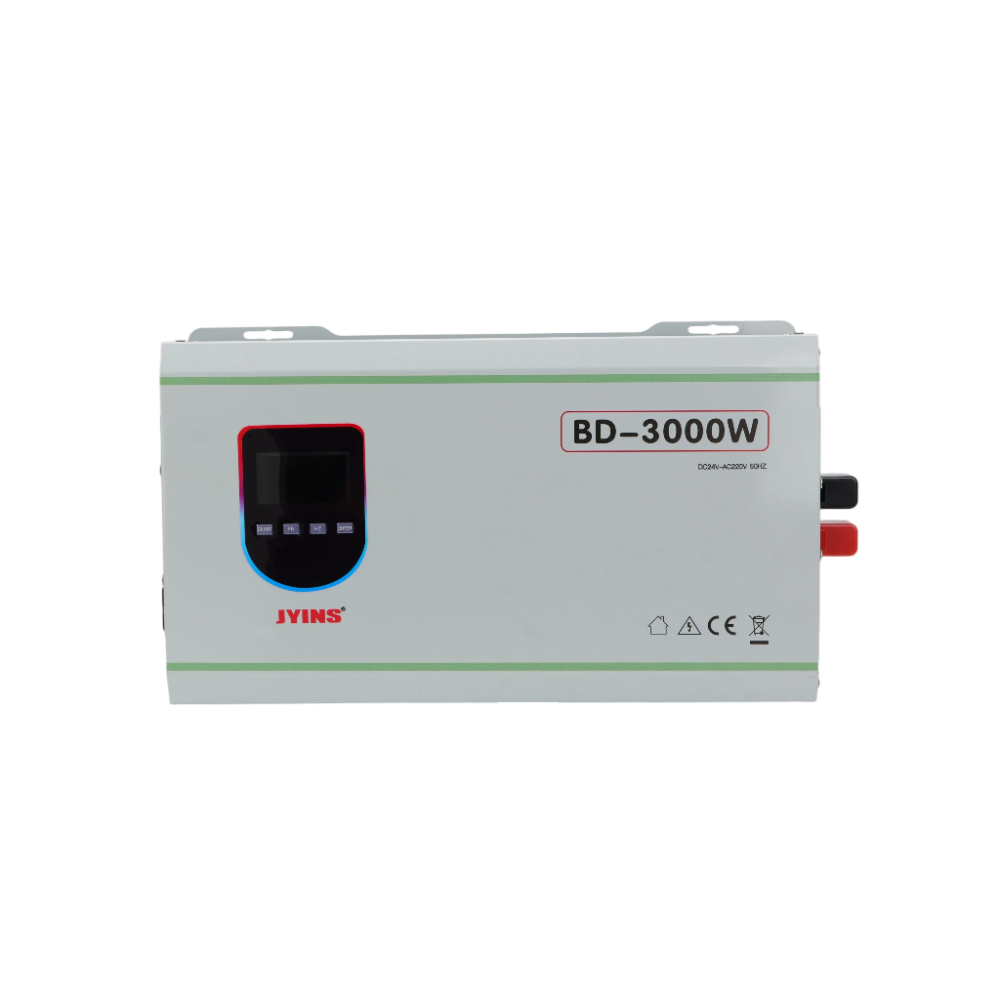
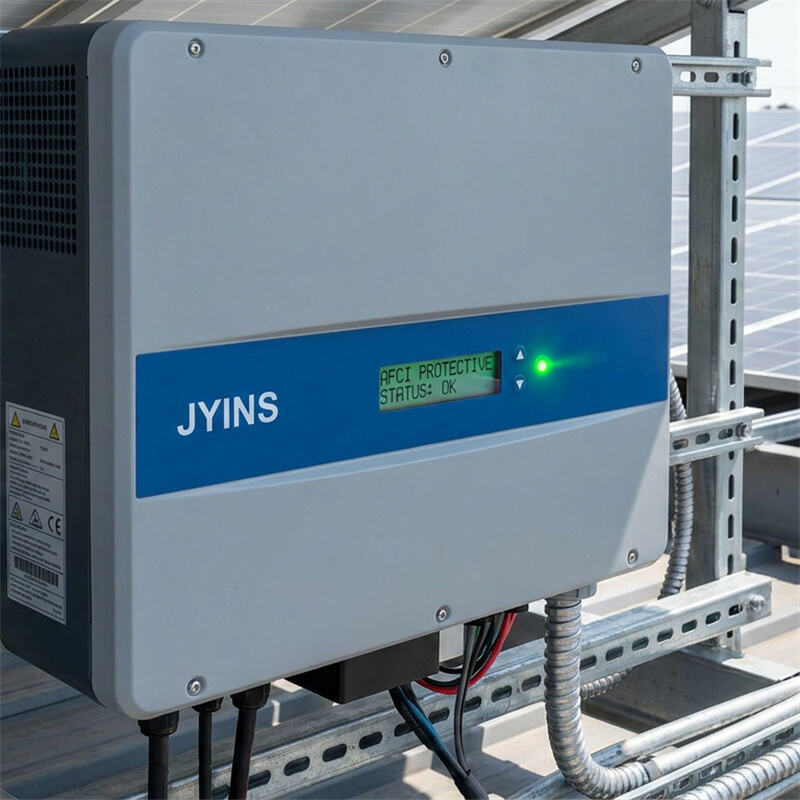
Traditional overcurrent protection devices, such as fuses and circuit breakers, are designed to protect against massive short circuits. They are completely blind to series arc faults, because an arc fault does not increase the overall current; in fact, the resistance of the arc often decreases the loop current slightly. This is where DC Arc Fault Circuit Interrupter (AFCI) logic, integrated directly into JYINS commercial inverters, becomes critical.
JYINS AFCI logic relies on advanced Digital Signal Processing (DSP) and high-frequency current analysis. When an arc fault initiates, it creates a unique electrical noise signature. This noise is characterized by high-frequency spectral components that propagate back along the DC cables. The JYINS AFCI system constantly monitors the high-frequency current fluctuations in the range of 10 kHz to 100 kHz.
By utilizing specialized algorithms, the internal processor analyzes the wave characteristics in real-time. The logic searches for specific spectral density patterns, sudden changes in signal amplitude, and duration thresholds that match the known signature of a DC arc. Once the system identifies a matching arc signature, the AFCI controller triggers a shutdown signal in less than 500 milliseconds, opening the DC contactors inside the inverter to break the loop and extinguish the arc.
Distinguishing True Arc Faults from Grid Noise and Harmonics
One of the greatest challenges for systems engineers in B2B solar installations is nuisance tripping. Commercial buildings are full of electrical noise generated by variable frequency drives (VFDs), heavy machinery, elevator motors, and even the inverter's own high-frequency switching circuits. If an AFCI system is too sensitive, it will interpret this ambient noise as an arc fault, causing frequent, unnecessary shutdowns that disrupt power production and hurt the owner's return on investment.
To prevent nuisance tripping while maintaining maximum safety, JYINS engineers have implemented multi-point validation algorithms within our AFCI logic. Instead of relying on simple amplitude thresholds, our logic evaluates three distinct parameters:
- Frequency Domain Analysis: The system analyzes the specific spectral shape of the noise, checking if the energy is distributed across a wide band, which is typical of plasma arcs, or concentrated in specific harmonic bands typical of VFD noise.
- Time Domain Persistence: True DC arcs are continuous and turbulent. The logic ensures that the signal persists over a defined number of monitoring frames, distinguishing a continuous arc from a momentary surge or switching event.
- Dual-Loop Verification: The inverter cross-references current noise with voltage fluctuations. A true arc fault will display a concurrent high-frequency noise in the current loop and a corresponding micro-drop in DC voltage.
This intelligent filtering ensures that JYINS inverters achieve near-zero false alarms, maintaining maximum system uptime without compromising rooftop fire safety.
Designing B2B Rooftop Solar Systems for Maximum AFCI Efficiency
While intelligent inverter logic is the primary defense, systems engineers must design and install the solar array with AFCI functionality in mind. Proper physical layout can significantly reduce the complexity of arc detection and prevent signal attenuation. Engineers should focus on several design standards:
- Minimize DC Cable Lengths: High-frequency arc signals attenuate over long distances. Placing the inverters closer to the solar array helps preserve the signal strength, making it easier for the AFCI system to detect anomalies.
- High-Quality Connectors: A vast majority of series arc faults occur at cable joints. Using high-quality MC4 connectors from reliable manufacturers, and ensuring they are crimped with professional tools, is the best preventive measure.
- Separate AC and DC Conduits: Running DC cables alongside high-noise AC lines can inject noise into the DC loop, making AFCI analysis more difficult. Keeping DC runs clean and isolated helps the inverter filter out background noise.
By combining these physical installation standards with JYINS advanced AFCI technology, safety officers can achieve an unparalleled level of safety and reliability for their commercial PV investments.
The JYINS Integration and Compliance Advantage
JYINS is committed to delivering the highest level of industrial safety. Our commercial-grade AFCI logic is designed in strict compliance with international safety standards, including UL 1699B and IEC 63027. These standards mandate rapid detection and system shutdown when a series arc is detected in a PV circuit.
Our inverters feature automatic diagnostic routines that test the AFCI circuit every time the system boots up, ensuring the protection system is fully functional before power generation begins. If a fault is detected during this self-test, the inverter will lock out and send an immediate alert to the plant manager via our cloud monitoring portal.
By integrating JYINS inverters with robust AFCI logic into your B2B solar arrays, you are not just complying with local electrical codes; you are protecting your structural assets, ensuring business continuity, and providing safety for the personnel working beneath the solar roof.
Table of Contents
- The Threat of DC Arc Faults in B2B Rooftop Solar
- Understanding the Physics of DC Arcing in Photovoltaic Systems
- The Mechanics of JYINS AFCI Detection Logic
- Distinguishing True Arc Faults from Grid Noise and Harmonics
- Designing B2B Rooftop Solar Systems for Maximum AFCI Efficiency
- The JYINS Integration and Compliance Advantage