EN


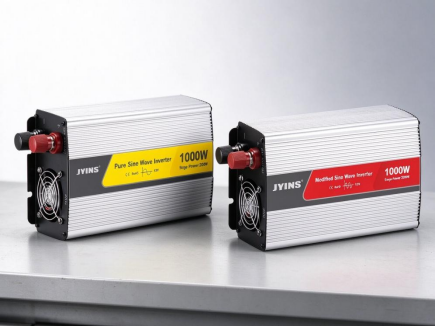
The choice between pure sine wave and modified sine wave output is a cost-versus-compatibility decision, and getting it wrong is expensive in both directions. Specifying pure sine wave everywhere raises the bill unnecessarily; specifying modified sine wave to save money can damage motors, upset electronics and generate warranty claims. This guide gives B2B buyers a clear basis for the decision.
What the Two Waveforms Actually Are
• Pure sine wave output reproduces a smooth sinusoidal AC waveform that closely matches utility mains. Total harmonic distortion is low and the waveform works with essentially any load that would run on grid power.
• Modified sine wave output approximates a sine wave with a stepped or square-like waveform. It is cheaper to produce and acceptable for simple resistive loads, but its higher harmonic content changes how inductive and electronic loads behave.
Load Compatibility Matrix
Match the waveform to the load, not the other way round:
• Resistive loads such as heaters, incandescent lamps and simple tools: both types work.
• Induction motors, pumps, fans and compressors: pure sine wave is strongly preferred. Modified sine wave causes extra heating, torque ripple, audible buzzing and reduced motor life.
• Switch-mode power supplies, chargers, audio and medical equipment: pure sine wave. A modified waveform can cause overheating, buzzing or failure to start.
• Variable-frequency drives and precision instruments: pure sine wave only.
• Microwaves, laser printers and some power tools with timing circuits: usually pure sine wave.
Where Modified Sine Wave Still Makes Sense
Modified sine wave remains a rational choice when the load is genuinely simple and cost is the dominant driver:
• Basic lighting, heaters and resistive loads.
• Some small universal motors and non-critical tools.
• Cost-sensitive consumer or entry-level products where the load list is known and limited.
• Retrofit or replacement situations where the existing load already tolerates the waveform.
For industrial, medical, telecom and mixed-load installations, the engineering risk of modified sine wave usually outweighs the price difference.
Cost, Efficiency and Reliability Trade-offs
• Acquisition cost: modified sine wave units cost less for the same VA rating.
• Load efficiency: motors and transformers run less efficiently on a modified waveform, so more energy is wasted as heat and the effective runtime on a battery drops.
• Reliability: the extra heating and stress shortens the life of inductive loads and can age capacitors in connected equipment.
• Derating: a modified sine wave inverter often has to be oversized for a given inductive load, which erodes its cost advantage.
Standards and Certification Signals
Certification is a practical proxy for build quality and helps satisfy procurement due diligence:
• IEC 62109 confirms the electrical safety of the inverter itself.
• EMC Class B confirms acceptable emission behaviour for light-commercial and residential environments.
• CE, SAA, RoHS, FCC and TUV marks indicate the unit has been evaluated against the relevant regional regimes.
• ISO 9001, ISO 14001 and ISO 45001 on the manufacturer confirm management-system discipline behind the product.
Ask for the test reports, not just the logo. A manufacturer with a documented OEM/ODM process and a long trading history is a lower risk source than an unknown one.
Selection Workflow for Procurement
• Step 1: Build the load list and classify each item as resistive, inductive or electronic.
• Step 2: If any inductive or sensitive electronic load is present, set the default to pure sine wave.
• Step 3: Size the unit on apparent power and starting current, not watts alone.
• Step 4: Match DC input (12 V, 24 V or 48 V) and AC output (220 to 230 V, 50 or 60 Hz).
• Step 5: Use modified sine wave only when every load is confirmed simple and the saving is real.
• Step 6: Confirm certifications, request the datasheet surge rating and verify OEM support.
Field Verification and Troubleshooting
• Listen for buzzing or humming after commissioning; it usually points to a waveform mismatch on a motor or transformer.
• Measure motor and transformer case temperature under load; excessive heating indicates a modified waveform being asked to run an inductive load.
• Check that timers, clocks and touch panels behave correctly; erratic behaviour is a classic modified sine wave symptom.
• Confirm the inverter does not nuisance-trip on inrush from the largest motor.
Key Takeaways
Pure sine wave is the safe, standards-aligned default for motors, electronics, medical and mixed loads. Modified sine wave is a legitimate low-cost option only where the load list is simple and controlled. Decide on the load, size on apparent power, and always confirm certification and surge ratings before issuing the purchase order.