EN
EN


Understanding the Regulatory Landscape of Brazilian Solar
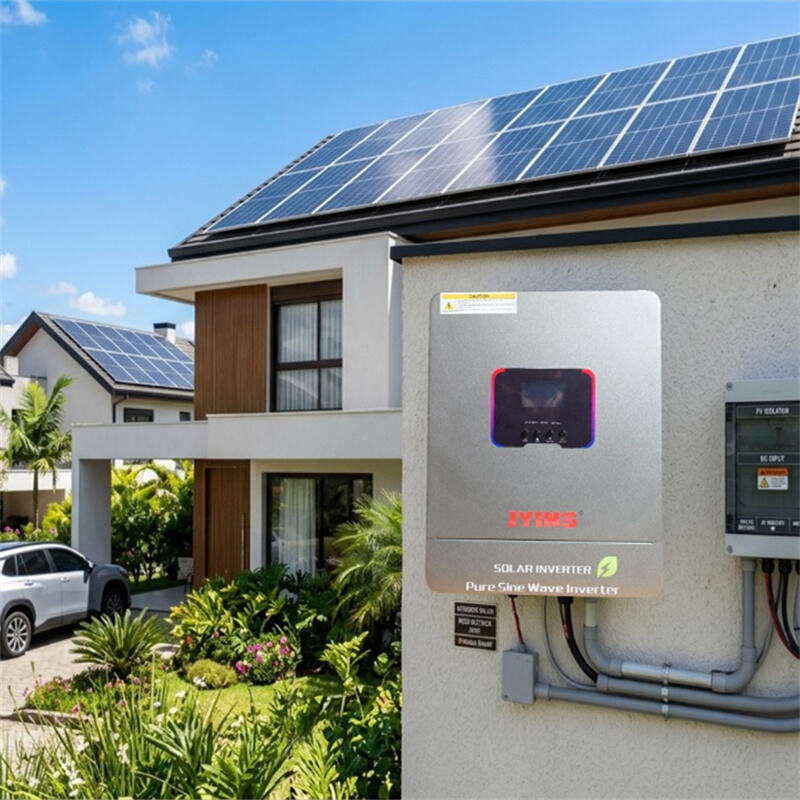
Brazil has established itself as one of the fastest-growing solar energy markets in the world, driven by abundant sunlight and supportive net-metering policies. However, entering this market or executing large-scale residential projects requires strict adherence to national quality and safety standards. The National Institute of Metrology, Quality and Technology (INMETRO) is the regulatory body responsible for certifying electrical equipment in Brazil. For solar grid-tie inverters used in residential clusters, compliance with INMETRO Portaria 140/2022 (which superseded Portaria 004/2011) is mandatory. This certification ensures that inverters operate safely, protect the local utility grid, and maintain power quality for end users. For B2B procurement managers and engineering, procurement, and construction (EPC) firms, configuring these inverters correctly is key to project approval and long-term reliability.
Residential clusters represent a unique challenge for grid-tied solar systems. When dozens or hundreds of homes in a close geographic area export power simultaneously, the local low-voltage distribution network experiences voltage rise and harmonic distortion. To prevent grid instability and potential blackouts, local utilities require strict enforcement of INMETRO parameters. This guide outlines how to configure these essential settings on your JYINS grid-tie inverters to ensure full compliance and seamless grid integration.
Core Voltage and Frequency Ride-Through Parameters
The primary focus of INMETRO compliance is the inverter's behavior during grid voltage and frequency fluctuations. Inverters must remain connected during minor transients but disconnect quickly if the grid goes beyond safe operating limits. These limits are defined by Brazilian grid codes and verified through INMETRO testing.
Voltage Protection Settings:
- Overvoltage Level 2 (OVP2): This is the absolute upper limit, typically set at 110% to 115% of the nominal voltage (e.g., 242V for a 220V grid). The inverter must disconnect in less than 0.2 seconds if voltage reaches this level.
- Overvoltage Level 1 (OVP1): Set around 105% to 110% of nominal voltage (e.g., 231V to 242V). The inverter is allowed a slightly longer trip time, typically 1 to 2 seconds, to ride through momentary swells.
- Undervoltage Level 1 (UVP1): Set at approximately 80% of nominal voltage (e.g., 176V). The inverter should trip within 2 seconds.
- Undervoltage Level 2 (UVP2): Set at 50% to 70% of nominal voltage. Immediate disconnection is required, usually within 0.1 to 0.2 seconds, as this indicates a severe fault on the local grid.
Frequency Protection Settings:
- Overfrequency (OFP): The nominal grid frequency in Brazil is 60 Hz. The upper trip limit is set at 62 Hz, with a mandatory disconnection time of less than 0.2 seconds.
- Underfrequency (UFP): The lower trip limit is set at 57.5 Hz, also requiring a rapid trip within 0.2 seconds.
When configuring JYINS inverters for residential clusters, these parameters can be set via the local LCD interface or remotely through the monitoring platform. It is vital to select the Brazil Grid standard template, which automatically loads these threshold values. This minimizes manual setup errors during commissioning.
Anti-Islanding Protection and Reconnection Dynamics
Anti-islanding is a critical safety feature that prevents the inverter from feeding power into a localized portion of the grid when the utility supply is lost. This is essential for protecting utility workers who may be performing maintenance on what they assume are de-energized lines. INMETRO requires robust active anti-islanding detection in accordance with ABNT NBR IEC 62116.
JYINS inverters employ active frequency drift and reactive power variation techniques to detect islanding conditions within 2 seconds. In residential clusters where multiple inverters are connected to the same transformer, there is a risk of active anti-islanding signals interfering with each other, leading to a failure to detect an island. To mitigate this, JYINS inverters utilize synchronized frequency shift algorithms that ensure all units on the same network work in harmony, quickly identifying any grid disconnection.
Once the grid is restored and the voltage and frequency return to normal operating limits, the inverter must not reconnect immediately. INMETRO mandates a reconnection delay time (also known as a observation time) of 180 seconds (3 minutes). During this window, the inverter must continuously monitor the grid to ensure stability. If the grid parameters remain stable for the entire 180 seconds, the inverter is allowed to ramp up its power export. The ramp-up rate is also restricted to a soft-start power gradient, typically 10% of rated capacity per minute, to prevent sudden voltage steps on the residential grid.
Mitigating Voltage Rise in Residential Clusters
One of the most common issues in Brazilian residential clusters is voltage rise. Because low-voltage distribution lines in residential areas often have high impedance, exporting large amounts of solar power raises the local voltage level. If the voltage rises above the OVP1 threshold, the inverters will trip, leading to lost generation and complaints from homeowners.
To address this, INMETRO-compliant JYINS inverters support advanced power quality functions, specifically Volt-VAr and Volt-Watt control:
- Volt-VAr Control: This function allows the inverter to absorb reactive power when the grid voltage rises, which effectively helps pull the voltage down. Conversely, if the voltage drops, the inverter can inject reactive power to boost it. By enabling the Volt-VAr curve, the inverter dynamically stabilizes the local line voltage without cutting active power output.
- Volt-Watt Control: If Volt-VAr control is insufficient and the voltage continues to approach the trip limit, Volt-Watt control actively curtails the inverter's active power output. This is a last-resort measure to prevent the inverter from tripping offline entirely. It keeps the inverter operating at a reduced output, preserving system uptime and protecting the local network.
B2B developers should work closely with utility engineers to model the residential cluster and program the specific slopes for these voltage response curves on the JYINS inverters prior to commissioning.
Commissioning and Utility Inspection Best Practices
After configuring the grid-tie parameters, the commissioning phase is crucial for securing final utility approval (Parecer de Acesso). Brazilian distribution utilities, such as Enel, CPFL, and Neoenergia, require comprehensive proof of compliance before they will swap the traditional electricity meter for a bidirectional one.
Step-by-step checklist for B2B installers:
- Firmware Verification: Ensure that the inverter is running the latest INMETRO-certified firmware version, as listed on the INMETRO certificate of conformity.
- Parameter Lock: Once the parameters are set, they should be password-protected to prevent unauthorized modification by end-users.
- Field Testing: Conduct a manual grid-disconnection test to verify that the inverter shuts down within the 2-second limit and does not reconnect before the 180-second delay has elapsed.
- Document Preparation: Provide the utility with the inverter's INMETRO certificate, the test report showing the configured parameters, and the ART (Anotacao de Responsabilidade Tecnica) signed by a registered Brazilian engineer.
By sourcing JYINS inverters, which are fully certified and designed with Brazilian grid challenges in mind, B2B distributors can offer their clients a smooth path to project approval, ensuring high-performing and compliant residential solar clusters across Brazil.