Get a Free Quote

Our representative will contact you soon.
Email
Mobile
Name
Company Name
Message
0/1000
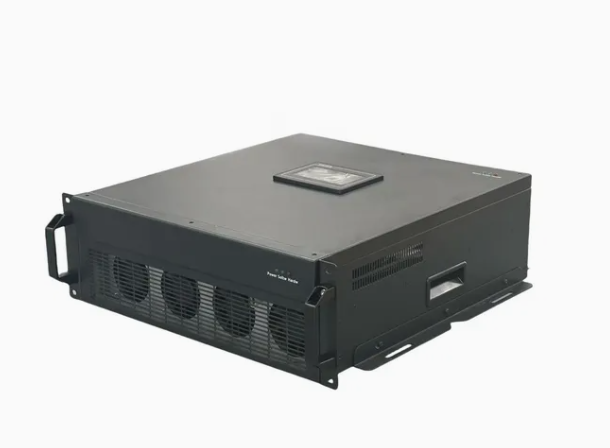
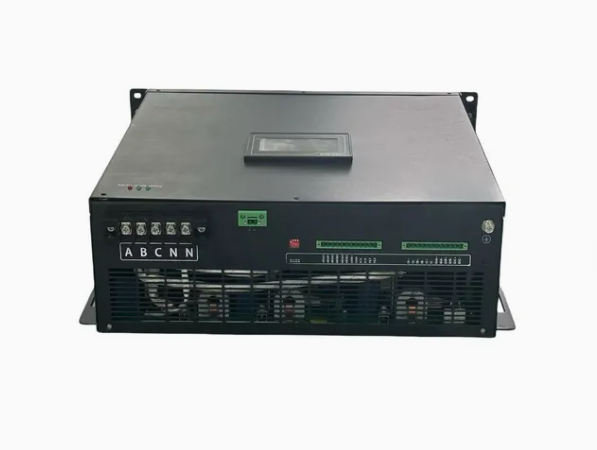
precision three phase imbalance correction for smooth operations-1

Active Harmonic Filter / AHF APF

Home >  Products >  Active Harmonic Filter / AHF APF

Products

Precision Three-Phase Imbalance Correction for Smooth Operations

  1. Multi-Functional Compensation Modes
  2. Harmonic Suppression Capability
  3. Reactive Power Regulation
  4. Three-Phase Imbalance Correction
  5. Capacitor Bank Switching Contro
Brand:
Jyins
Product Description

Rated Capacity

50-900kva

Phase System

3P3W/3P4W

Main Frequency

50/60Hz ± 5%

Circuit Topology

Three-level

Multiple Compensation Modes

Harmonic, reactive power, three-phase load imbalance compensation

Filter Range

2 to 50 odd harmonics (by order or full compensation)

Harmonic Filtering Rate

≥98%

Filtering Performance

Typically, THDi ≤ 5% at rated loads

Three-Phase Load Balancing Effect

≤ 5% to mitigate negative and zero sequence currents

Target Power Factor

System PF>0.98 after compensation (atrated capacity)

Neutral Linear Filtering Capability

3 times the rated filter current (in case of 4-wire equipment)

SVG Swithing/controlfrequency

25.6kHz

SVG Response Time

≤5ms

Capacitor Control Interface

16 ways

Capacitor Response Time

≤1s

system ActiveLoss

≤2.5 perceant

Output Current Limit

Automatic output limitation within 100% of rated capacity

Control Algorithm

Intelligent FFT, ADALINE, Fast Fourierand Instantaneous Reactive Power Algorithms

Controller

DSP+FPGA

Protection

Hardware protection, software protection

Control Connections

Electrical Connections

Human Machine Interface

4.3" / 7" / 10" Touch TFT LCD HMI

Noise

<60db (<45db at low speed operation)

Installation Method

Module embedded (rack), wall-mounted, floor-mounted

Protection Level

IP43 maximum

Cooling Method

Speed controlled intelligent air-cooled PWM fan

Colour

RAL 7035 Industrial Grey/Black

Ambient Temperature

-20~55℃

Relative Humidity

95% max, no condensation

Installation Height

Rated capacity at altitude ≤2000m, appropriate load shedding at altitude >2000m

Qualification

CE, IEEE61000, Type test report, ISO9001:2015

Conformity Standard

IEEE 519, ERG5/4

Communication Protocol

Adopts Modbus RTU remote communication protocol and TCP/IP protocol; Two channel RS485 and CAN bus, support mobile APP operation, support Ethernet

Working Principle of APF (Active Power Filter)

1. Core Concept

APF generates a compensation current with the same amplitude but opposite phase to the harmonic and reactive current produced by nonlinear loads. This compensating current is injected into the power grid to counteract distorted load current, leaving only standard sinusoidal fundamental current on the grid side.

2. System Composition

The APF system consists of three core parts:
  1. Harmonic Detection Unit
    Samples load current and grid voltage in real time, and separates harmonic, reactive and negative-sequence current components.
  2. Current Tracking Control Unit
    Takes extracted distorted components as compensation reference signals and outputs PWM drive pulses.
  3. Main Power Inverter Unit
    Composed of three-phase PWM converter and DC energy storage capacitor. It outputs reverse compensation current according to drive signals.

System Logic Flow

Power grid → Nonlinear loads (rectifiers, inverters, welders that generate harmonics)
↓
Current transformer sampling → Harmonic detection algorithm → Compensation current reference
↓
PWM inverter (DC capacitor for voltage stabilization) → Output reverse compensation current
↓
Compensation current injected at load terminal to eliminate harmonics

3. Detailed Module Principles

(1) Harmonic Current Detection: ip-iq Instantaneous Reactive Power Theory

This is the mainstream detection algorithm for industrial APFs:
  1. Collect three-phase load current \ convert signals to α-β stationary coordinate system via coordinate transformation;
  2. Decompose signals into DC active component (fundamental active power), DC reactive component (fundamental reactive power) and AC pulsating component (all harmonics);
  3. Filter out DC fundamental components; the remaining AC pulsating signal is the required compensation reference current \
Optional Compensation Modes:
  • Harmonic-only compensation: Eliminate AC harmonic components only;
  • Comprehensive harmonic & reactive compensation: Compensate both harmonics and reactive power simultaneously;
  • Three-phase unbalance mitigation: Add negative-sequence current compensation reference.

(2) Current Closed-Loop Tracking Control

Adopts PI control, repetitive control or model predictive control to make actual output current of inverter rapidly track the reference compensation current, ensuring fast dynamic response.

(3) Main Circuit Inverter Principle

The DC-link capacitor maintains stable DC voltage. By switching IGBTs with PWM pulses, the converter converts DC voltage into AC compensation current that matches the required waveform, then feeds it back to the AC grid to offset load distortion.

4. Advantages of APF

  1. Dynamic real-time compensation, adaptable to variable load distortion;
  2. Capable of harmonic, reactive power and three-phase unbalance integrated governance;
  3. No resonance risk with grid impedance (different from passive LC filters);
  4. Wide compensation frequency range for multiple harmonic orders.
Why APF Is Required

1. Problems Caused by Nonlinear Loads Without APF

Modern industrial loads such as frequency converters, rectifiers, welding machines, UPS and charging piles are nonlinear. They generate severe harmonic distortion, bringing multiple hazards:
  1. Distort grid voltage and current waveforms, deviate from standard sine waves
  2. Produce extra heat loss in transformers, cables and motors, shorten equipment service life
  3. Trigger misoperation of protective relays, PLC and precision instruments
  4. Cause resonance with traditional passive LC filters, amplify harmonic pollution
  5. Lead to low power factor, generate large reactive power fines from power supply bureau
  6. Cause three-phase current unbalance, neutral line overheating and burnout

2. Limitations of Traditional Passive LC Filters

Passive filters can only suppress fixed-order harmonics and have obvious defects:
  • Only target specific harmonic frequencies, unable to cope with variable load harmonics
  • Easy to resonate with grid impedance, cause harmonic amplification accident
  • Bulky, heavy, occupy large installation space
  • Poor dynamic response, cannot follow fast-changing load distortion
  • Single function: only filter harmonics or compensate reactive power separately

3. Unique Advantages That Make APF Indispensable

(1) All-in-one comprehensive governance

APF can simultaneously realize three core functions: harmonic suppression, reactive power compensation and three-phase unbalance adjustment. One device solves multiple power quality problems at the same time.

(2) Excellent dynamic real-time response

It detects load distortion current and outputs counteracting compensation current in microsecond level. It adapts instantly when load power or harmonic components change frequently, which passive filters cannot achieve.

(3) No resonance risk with power grid

APF outputs compensation current actively as a controlled current source, will not form resonant circuit with grid inductance or capacitance, completely avoid harmonic amplification accidents.

(4) Wide compensation frequency band

It suppresses 2nd ~ 50th order harmonics simultaneously, suitable for complex working conditions with mixed multiple harmonic orders.

(5) Steady compensation effect under fluctuating grid

Compensation performance will not deteriorate when grid voltage fluctuates or load current varies greatly. Automatic adjustment without manual parameter modification.

(6) Small floor space, flexible installation

Modular design allows parallel expansion; compact size saves cabinet space compared with bulky LC filter cabinets.

4. Economic Benefits of Installing APF

  1. Eliminate power factor penalty charges from power grid companies
  2. Reduce extra power consumption and heat loss of distribution equipment, lower electricity cost
  3. Extend service life of transformers, motors and precision control equipment, cut maintenance and replacement cost
  4. Avoid production shutdown losses caused by equipment misoperation or burnout due to poor power quality
APF Application Cases

Case 1: Automotive Welding & Coating Production Line

Load Source

A large auto manufacturing plant uses hundreds of DC welding machines, thyristor heating furnaces and variable frequency drives (VFDs) on assembly lines.

Original Problems

  1. Severe 5th,7th,11th harmonic distortion; THDi reached 70%
  2. Three-phase current severe unbalance, neutral line overheating
  3. Frequent tripping of PLC, relay protection and capacitor bank burnout
  4. Power factor as low as 0.72, heavy power factor penalty every month

APF Solution

Installed two sets of 600A three-phase four-wire modular APF at main low-voltage busbar

Post-Operation Effect

  1. THDi dropped from 70% to 4.4%, fully complies with IEEE 519 standard
  2. Three-phase unbalance rate reduced from 102% to 6.1%
  3. Power factor stabilized above 0.99, penalty charges eliminated
  4. No unexpected production line shutdown caused by power quality interference
image
Auto welding workshop
image
Current waveform before & after
image
Harmonic spectrum comparison

Case 2: Large Telecom Data Center

Load Source

Thousands of 6-pulse UPS, server switching power supplies, liquid cooling frequency converters

Original Problems

  1. Massive 3rd harmonic accumulated on neutral wire, hidden fire risk
  2. Harmonic resonance between capacitor cabinets and grid, voltage distortion
  3. Frequent crash of storage servers and communication equipment

APF Solution

10 modular APF units with total compensation capacity 4000A, centralized installation in power distribution room

Post-Operation Effect

  1. Neutral line 3rd harmonic current reduced by over 90%
  2. Filter response time ≤5ms, suppress 2nd–51st order harmonics
  3. Support remote cloud monitoring, match unmanned data center operation
  4. Zero server abnormal reboot failure after renovation

Case 3: Commercial Shopping Mall & Complex

Load Source

Mass LED screens, LED lighting, elevator inverters, central air-condition VFDs, charging piles

Original Problems

  1. Mixed multi-order harmonics from scattered distributed nonlinear loads
  2. Transformer extra heat loss, high electricity consumption
  3. Elevator control system misoperation, light flicker

APF Solution

Wall-mounted modular APF installed on each floor power distribution cabinet, decentralized compensation

Post-Operation Effect

  1. THDi controlled below 5%, voltage waveform smooth sine wave
  2. Transformer temperature drop 8–12℃, annual power loss reduced by 7%
  3. Eliminate light flicker and elevator control faults
image
Wall-mounted APF cabinet

Case 4: EV Fast Charging Station Cluster

Load Source

High-power DC fast charging piles with large rectifier modules

Original Problems

  1. Instant sharp fluctuation of harmonic and reactive current when vehicles charge/depart
  2. Grid voltage drop, harmonic interference to nearby residential power supply
  3. Power department power quality rectification notice

APF Solution

Parallel APF at charging station incoming cabinet, integrated harmonic + reactive + unbalance compensation

Post-Operation Effect

  1. Dynamic track fast-changing charging load within microseconds
  2. Grid side power factor always above 0.98
  3. No power quality complaints from surrounding residents

Case 5: PV & LNG Industrial New Energy Plant

Load Source

Grid-tied solar inverters, compressor VFDs, rectifier loads of LNG production line

Original Problems

  1. PV inverters inject high-frequency harmonics into factory internal grid
  2. Traditional passive LC filter easy to resonate with PV system
  3. Grid-connected power quality fails power grid access standard

APF Solution

Shunt APF installed at 400V low-voltage side of photovoltaic combiner cabinet

Post-Operation Effect

  1. Completely avoid resonance risk between filter and new energy grid
  2. Meet grid harmonic access requirements, pass power bureau acceptance
  3. Stabilize plant voltage during PV output fluctuation

Case 6: Hospital & Medical Precision Equipment Room

Load Source

MRI, CT, X-ray high-power rectifier equipment, medical UPS, life-support devices

Original Problems

  1. Harmonic noise distorts medical imaging data
  2. Interference to life-support equipment, potential safety hazard for patients

APF Solution

Small-capacity wall-mounted APF installed separately for medical equipment power supply loop

Post-Operation Effect

  1. Clean power supply without electrical noise
  2. Stable medical image signal, zero equipment abnormal alarm

Case 7: Metallurgy & Electric Arc Furnace Factory

Load Source

Electric arc furnace, rolling mill high-power rectifier loads with violent random current fluctuation

Original Problems

  1. Severe voltage flicker, large negative-sequence current
  2. Transformer aging acceleration, heavy maintenance cost

APF Solution

High-current cabinet-type APF matched with SVG for hybrid compensation

Post-Operation Effect

  1. Suppress flicker and negative-sequence current synchronously
  2. Extend transformer service life by more than 5 years

Get a Free Quote

Our representative will contact you soon.
Email
Mobile
Name
Company Name
Message
0/1000
precision three phase imbalance correction for smooth operations-6

Get a Free Quote

Our representative will contact you soon.
Email
Mobile
Name
Company Name
Message
0/1000