EN


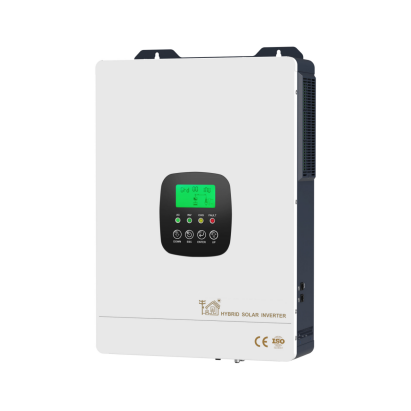
A hybrid solar inverter manages three energy streams at once: PV input from the array, grid charging from the mains, and battery support to the load. Commercial backup design is essentially the art of balancing those three streams so that the load never drops, the battery is never abused, and the energy bill stays low. JYINS (Hisolar) hybrid solar inverters are built for grid-tie operation combined with battery backup for home and commercial use, and they expose the parameters an engineer needs to tune this balance. This guide walks through sizing, configuration and verification.
The Three Energy Streams in a Hybrid System
PV input is variable and free. Grid charging is reliable but costs money. Battery support is the bridge that carries the load when the grid disappears. A well-configured hybrid inverter decides, moment by moment, which stream feeds the load and which stream charges the battery, so the three never fight each other. The design objective is simple to state and hard to perfect: cover the daytime load with solar, keep the battery ready for outages, and buy grid energy only when it is cheapest.
Sizing the PV Input
PV input should serve the daytime load and replenish the battery within the available sun hours. A simple energy balance is the starting point.
• Daily load energy (kWh) = average load (kW) × operating hours.
• Daily charge energy (kWh) = battery capacity (kWh) × depth of discharge × (1 ÷ round-trip efficiency).
• Required PV energy = the share of daily load that PV should cover + daily charge energy.
• Array size (kWp) = required PV energy ÷ equivalent sun hours.
Keep the array within the inverter PV input window and never exceed the maximum input voltage. Because the inverter also accepts DC input at 12 V, 24 V or 48 V, confirm the battery bank voltage before finalising the array.
Grid Charging Strategy
Grid charging is the safety net that keeps a backup system ready. Configure it deliberately instead of leaving the defaults.
• Set a grid-charge trigger SOC: charging begins when the battery falls below this level.
• Set a charge-current limit that respects the site supply rating and the battery datasheet.
• Use off-peak charging where a time-of-use tariff applies, so the battery is refilled at the cheapest hours.
• Decide whether the grid may also serve the load directly (Grid-First) or only charge the battery.
• Confirm that the charging path and the load path do not exceed the inverter rated power at the same time.
Battery Support and Discharge Control
Battery support defines how the load behaves during an outage and how the battery ages.
• Statuere limen descensus (minimam SOC) ut evitentur cycli profundi et amissio praematura capacitatis.
• Confirmare ut continuus currentus descensus maneat intra valorem continuum bateriae.
• Dimensionare bateriam pro autonomia requirita: autonomia (h) = energia utilis (kWh) / onus medium de subsidio (kW).
• Accipere in rationem efficacitatem inversoris dum convertitur ex DC ad AC, quae typice paucos procentus amissae energiae significat.
Ordo Configurationis
• Gradus 1: Eligere modellem hibridam invertoris solarii pro onere et confirmare voltam banci DC.
• Gradus 2: Statuere output mains ad 220–230 V et ad frequentionem rectam, sive 50 Hz sive 60 Hz.
• Gradus 3: Inserere parametres PV (in fenestra input) et confirmare polaritatem et voltam catenae.
• Gradus 4: Statuere SOC activatoris pro replectione ex rete et limitem currentus replectionis.
• Gradus 5: Statuere limen descensus bateriae et prioritatem oneris.
• Gradus 6: Activare operationem parallelam si descriptio unitates in stratum pro potentia commerciali altiore.
• Gradus 7: Facere experimentum commissionis sub quattuor conditionibus: rete praesens, rete absens, PV tantum, et bateria tantum.
Exemplum resolutum
Considerare parvum armarium commerciale cum onere subsidii mediocris 2 kW quod debet operari per 4 horas.
• Energia utilis requisa = 2 kW × 4 h = 8 kWh.
• Ad profunditatem descensus 80 percentuum, capacitas nominalis bateriae = 8 ÷ 0.8 = 10 kWh.
• Addens paucos percentus pro amissione inversoris, specificare circa 10.5 kWh utiles.
• Cum 4 horis solis efficacibus, dispositio PV debet ferre fere 10.5 ÷ 4 = 2.6 kWp ut plene recaricetur in die, plus partem oneris diurni quam directe sustinet.
Haec numeri sunt punctum initiale; semper confirmare contra vera chronica onerum ante emptionem.
Normae et Conformitas
• Referre ad IEC 62109-1 et IEC 62109-2 pro tutela apparatus conversionis energiae.
• Sequi IEC 60364 pro installatione, terrae connexione, et coordinatione protectionis.
• Verificare la compatibilità elettromagnetica (EMC) secondo le norme EN 61000-6-1 ed EN 61000-6-3 nei siti sensibili, e confermare il rispetto dei limiti di emissione CISPR 11 Classe B. Gli inverter bidirezionali JYINS sono stati testati per la classe EMC B.
• Confermare la marcatura CE e, ove applicabile, le certificazioni SAA, RoHS, FCC e TÜV.
Index Comparationis
• Confermare il tipo di inverter solare ibrido e la potenza continua rispetto a quella di picco.
• Confermare l’ingresso in corrente continua (12 V / 24 V / 48 V) e l’uscita sulla rete elettrica a 220–230 V con commutazione a 50/60 Hz.
• Confermare la finestra di ingresso fotovoltaico (PV) e la tensione massima di ingresso.
• Confermare che il controllo della ricarica dalla rete e le soglie di stato di carica (SOC) siano regolabili.
• Confermare la possibilità di collegamento in parallelo per l’accumulo di potenza.
• Confirmare fasciculum certificationum et subsidium OEM/ODM.
Con oltre 30 anni di produzione dal 1993 e spedizioni in più di 50 paesi, JYINS (Hisolar) supporta gli integratori con parametri documentati e flessibilità OEM/ODM, consentendo di ottimizzare un progetto commerciale di sistema di backup invece di procedere per tentativi.