EN


EMC Class B is one of the most frequently quoted and least understood specifications on an inverter datasheet. For EPC engineers, system integrators and facility managers, understanding what the classification actually limits, and what it does not, is the difference between a specification that protects sensitive equipment and one that merely looks good on a proposal. This guide explains the standard behind the claim, how to select a compliant inverter, and how to install it so the tested performance survives on site.
What EMC Class B Actually Limits
EMC Class B is an emission classification, not a marketing badge. It defines the maximum conducted and radiated disturbance an item of equipment may produce so that it can operate in residential, commercial and light-industrial environments without interfering with nearby equipment. In practice, Class B is a stricter emission limit than Class A, which is intended for industrial environments where a higher disturbance level is tolerated. When an inverter is marked Class B, it has been tested to keep its emissions under those tighter limits across the relevant frequency range.
Why Sensitive Environments Expose Weak Inverters
Sensitive environments are where a switching inverter is most likely to cause trouble. The inverter is itself a high-frequency switching power stage, and without careful filtering it can inject noise into the very circuits a facility depends on. Typical sensitive settings include:
• Hospitals and clinics with patient monitoring equipment.
• Laboratories with precision measurement instruments.
• Broadcast, telecom and data rooms with low-level signal cabling.
• Automation lines where PLC and sensor signals share cable trays with power.
• Residential buildings where the inverter shares a supply with audio and networking equipment.
In these locations the symptom is often not a hard failure but an intermittent fault: a flickering sensor, a dropped data packet, an unexplained reading error. EMC Class B testing is what reduces that risk.
The Standards Behind the Claim
A credible Class B claim references specific standards. Buyers should ask for the test reports, not only a logo.
• EN 61000-6-3 sets emission requirements for equipment in residential, commercial and light-industrial environments.
• EN 61000-6-1 sets immunity requirements for the same environments.
• CISPR 11 Class B defines conducted and radiated disturbance limits for industrial, scientific and medical equipment.
• IEC 62109-1 and IEC 62109-2 cover the safety of power converters used in photovoltaic systems.
• IEC 60364 governs the low-voltage installation itself, including earthing and separation.
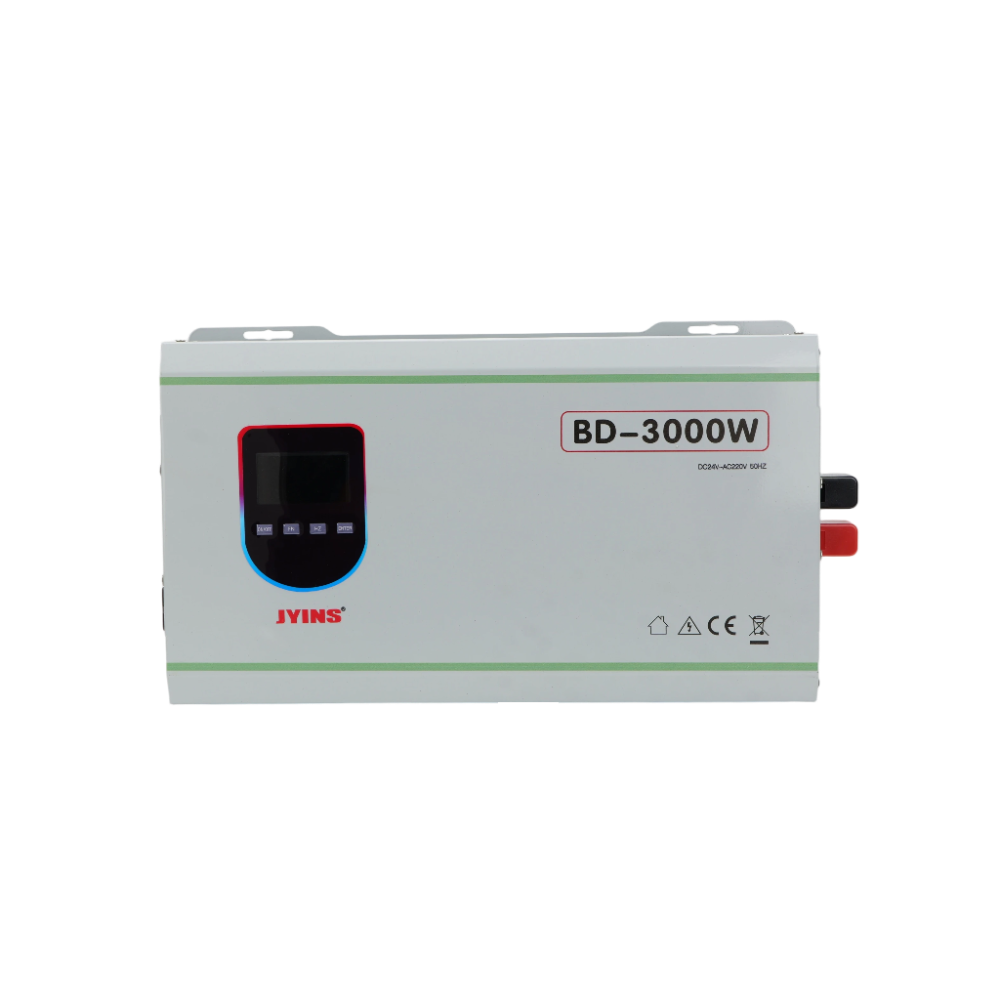
JYINS (Hisolar) bidirectional inverters are EMC Class B tested, and the wider range carries CE, SAA, RoHS, FCC and TUV certification where applicable.
Selection Criteria
• Match the emission class to the environment: specify Class B for any location with sensitive electronics.
• Confirm the test standard and the class on the certificate, not only on the datasheet headline.
• Check the enclosure and filtering design; a metal enclosure with proper input and output filtering supports conducted and radiated compliance.
• Confirm the DC input (12 V / 24 V / 48 V) and the mains output of 220-230 V with 50/60 Hz switching to match the site.
• Confirm parallel capability if power stacking is planned, because every parallel unit must remain compliant.
• Ask for OEM/ODM support if a specific filtering or enclosure configuration is required.
Installation Practices That Preserve Class B Performance
A compliant inverter can be made non-compliant by poor installation. Preserve the tested performance with disciplined wiring practice.
• Keep DC and AC power cables separated from signal and control cables; never run them in the same tray.
• Use shielded cable for sensitive signal runs and earth the shield at one end only.
• Keep cable loops small; large loops both radiate and pick up noise.
• Earth the inverter enclosure to the building earthing system with a short, low-impedance conductor.
• Route the mains output away from audio, data and instrumentation cabling.
• Follow the manufacturer minimum clearances so ventilation and shielding remain effective.
• Terminate cable screens and glands correctly at the enclosure entry.
Testing and Verification
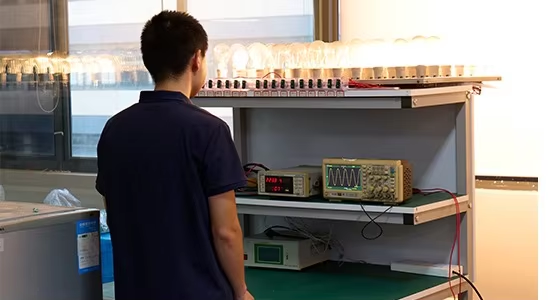
• Request the type-test reports for conducted and radiated emissions against CISPR 11 Class B and EN 61000-6-3.
• If the site is unusually sensitive, commission with a spectrum check on the affected circuits.
• Re-test after any parallel expansion or major wiring change.
• Document the compliance evidence in the O&M file for the facility manager.
Procurement Checklist
• Confirm the emission class: specify EMC Class B for sensitive environments.
• Confirm the standards named on the certificate (EN 61000-6-3, CISPR 11 Class B).
• Confirm the inverter family: Power Inverter or Hybrid Solar Inverter.
• Confirm the DC input and the 220-230 V, 50-60 Hz output.
• Confirm parallel capability and enclosure construction.
• Confirm the full certification pack and OEM/ODM support.
EMC Class B is one of the clearest signals that an inverter was engineered for real-world sensitivity rather than only for a laboratory bench. Combined with three decades of manufacturing since 1993, exports to more than 50 countries and ISO 9001, ISO 14001 and ISO 45001 management systems, JYINS (Hisolar) gives EPC engineers and facility managers a compliant foundation to build on. Selecting the right class and installing it correctly are what keep sensitive equipment running cleanly.